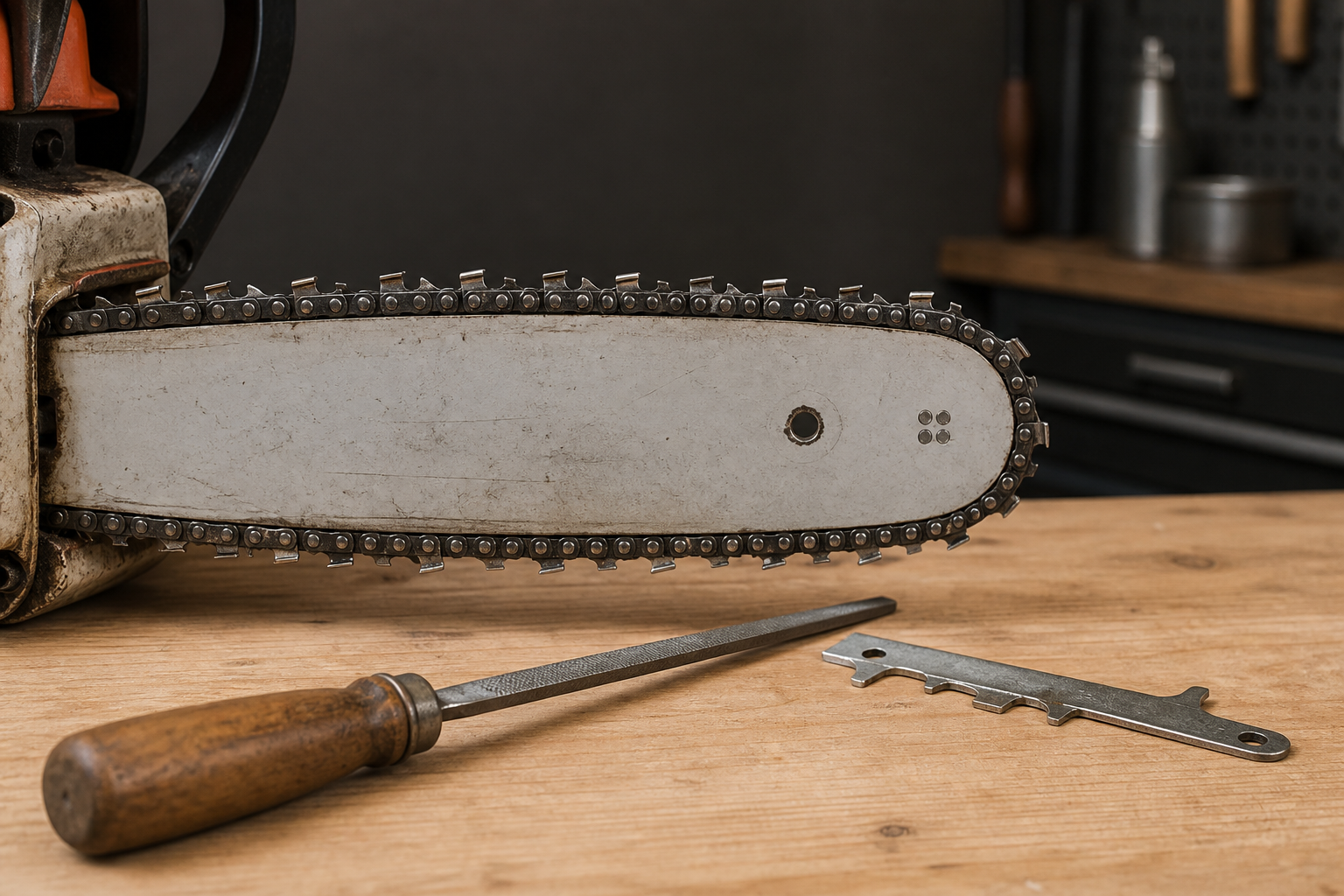
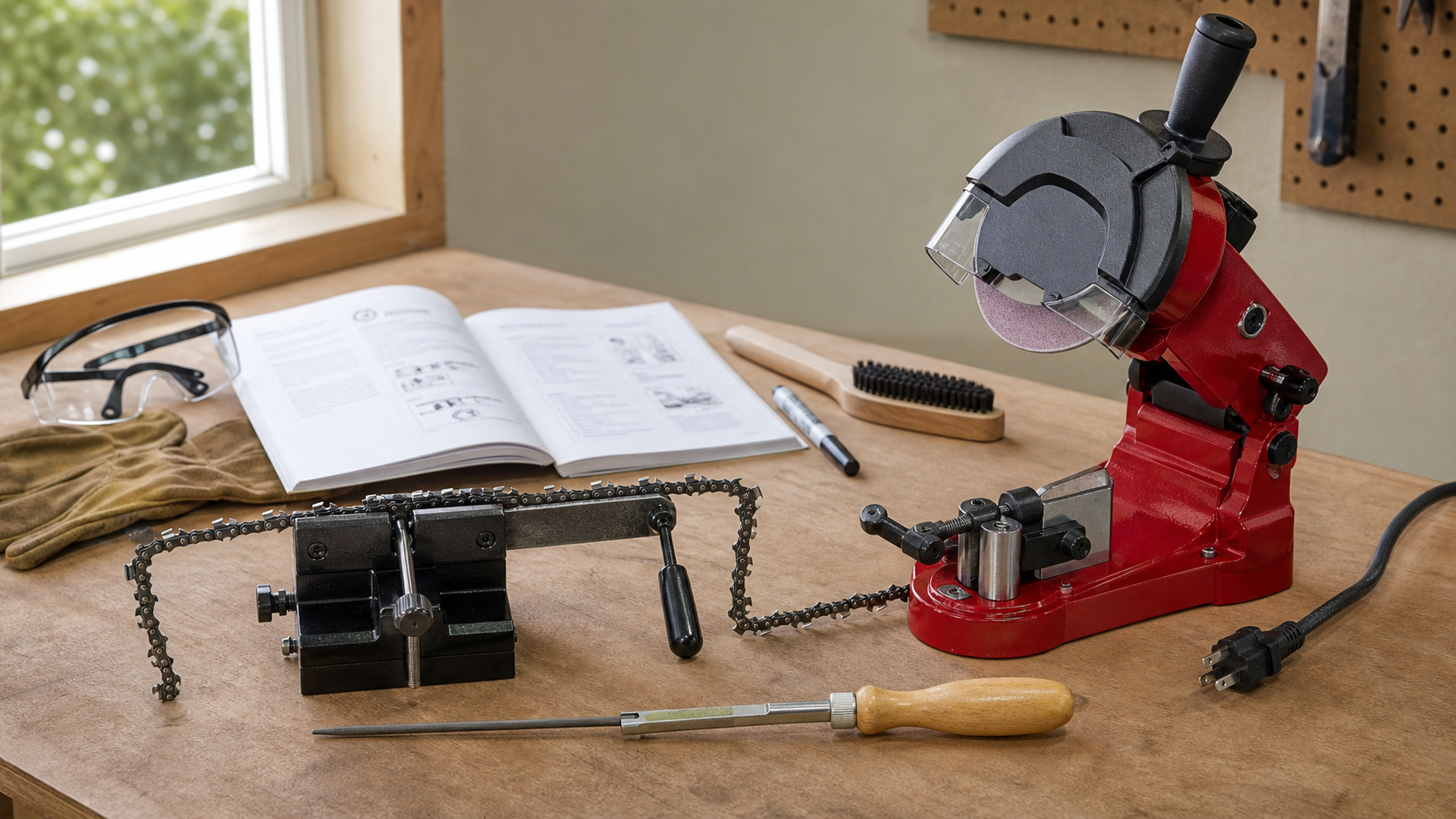
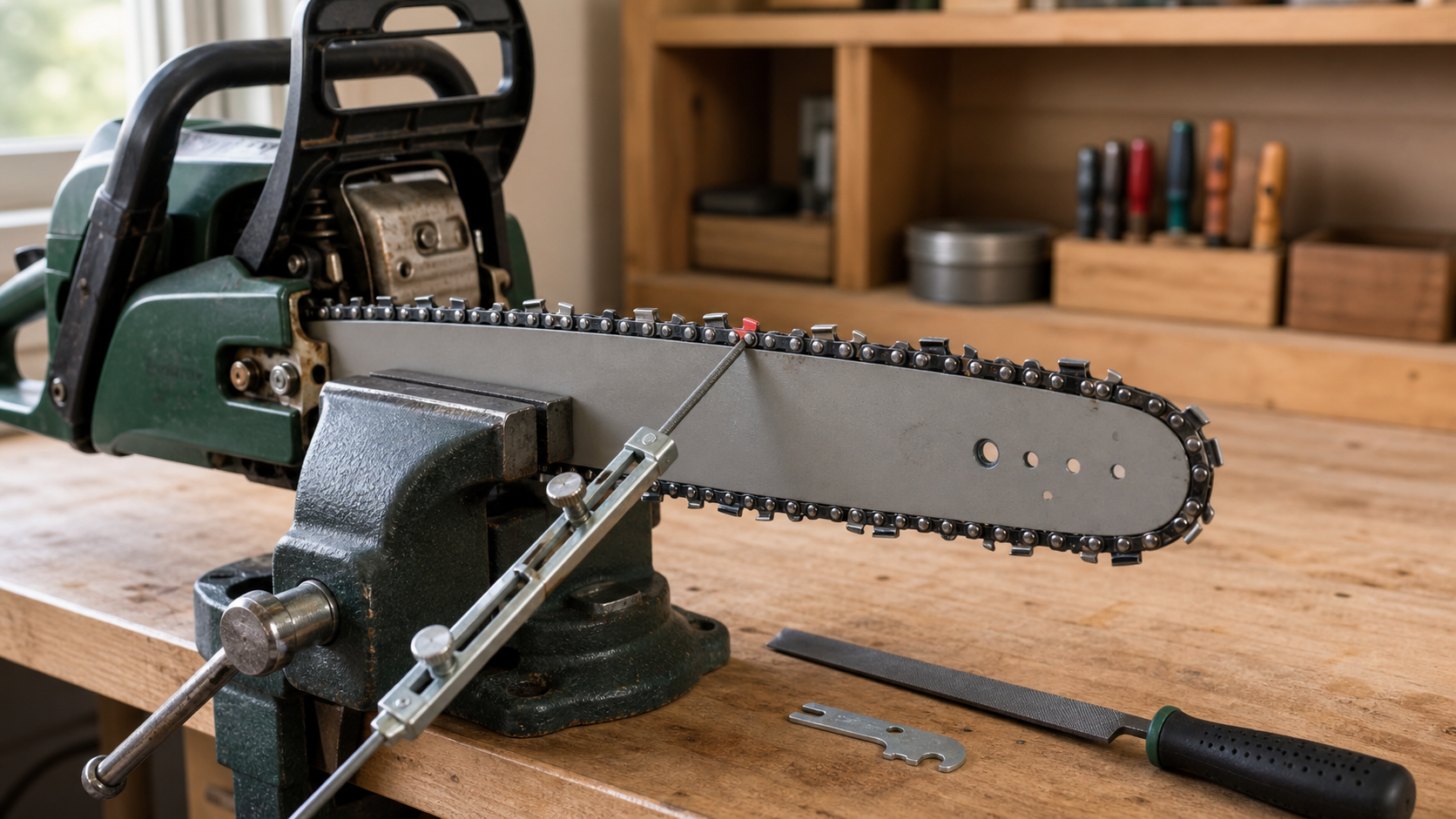
Replace a chainsaw file when it is damaged or remains ineffective after cleaning and checking that its specification and filing setup are correct. Visible debris calls for a cleaning check first; the number of chains sharpened alone is not a reliable replacement rule.
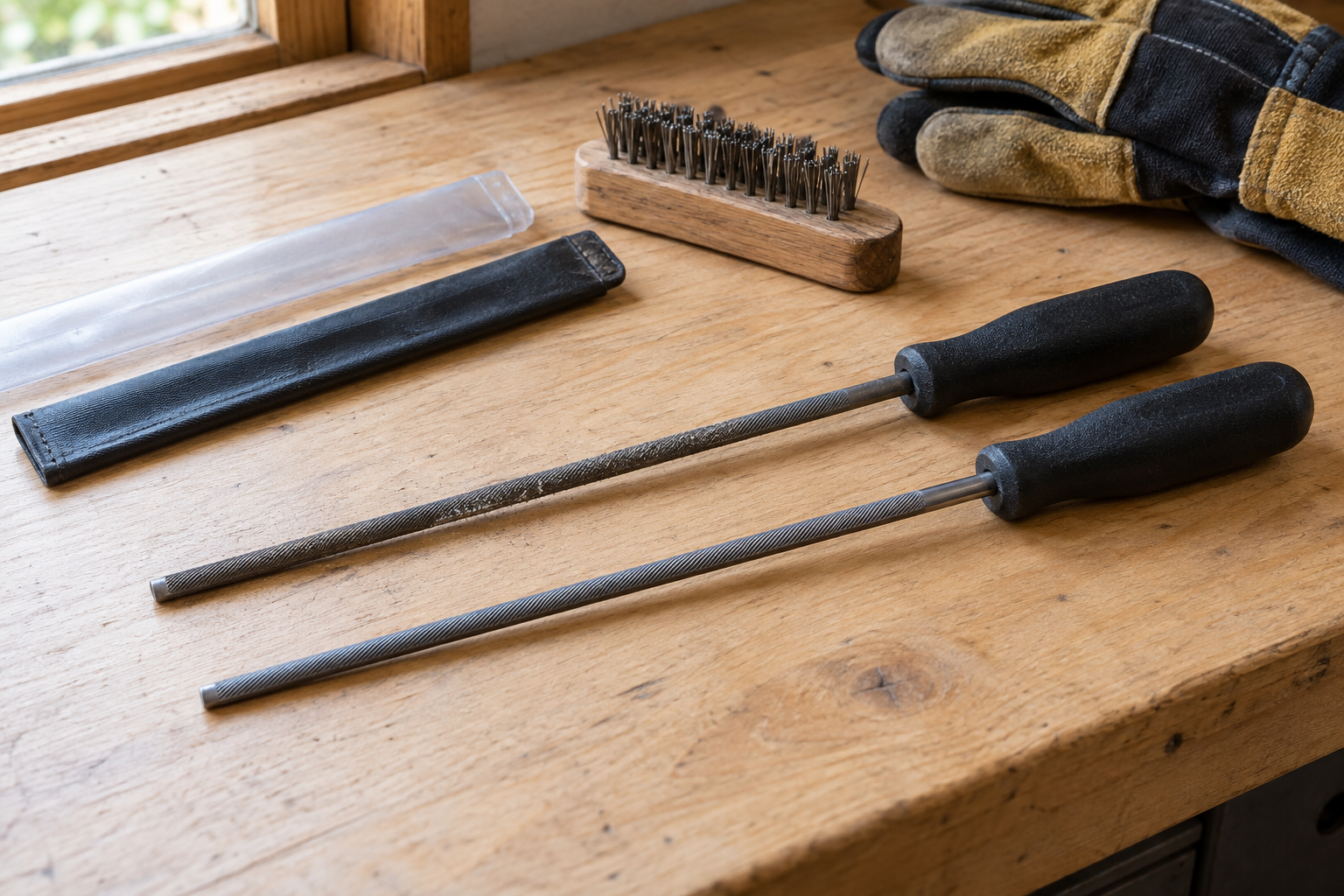
This guide is for an owner deciding what to do with an ordinary round saw-chain file already in the tool kit. Special cutter systems need their own specified tools. The cover illustrates an inspection setup, not a measured comparison between a serviceable file and a worn-out one.
Sort the problem before ordering a replacement
Look at the file, its handle and its identification separately. CCOHS recommends inspecting hand tools before use, replacing or repairing defective tools, and avoiding excessive force. A damaged handle needs attention even when the steel still cuts.
Use this decision card with the tool at rest:
| What you can establish | Decision now | What must be resolved before use |
|---|---|---|
| The file itself is visibly damaged | Take it out of service and replace it | Confirm the new file’s type and specification |
| The handle is cracked, broken or insecure | Stop using the assembly | Fit the correct sound handle or replace the assembly according to its maker |
| Chips or residue obscure the file teeth, with no visible damage | Clean and reassess | Follow the file maker’s cleaning method; do not assume dirt proves wear |
| The file diameter or intended cutter system is unknown | Pause the replacement decision | Identify the fitted chain and its required file |
| The clean, correctly specified file still will not remove material with the prescribed technique | Stop forcing it; replace the suspect file or have the setup checked | Confirm that cutter damage or incorrect guide position is not the remaining problem |
This is an editorial decision aid built from manufacturer care instructions and hand-tool safety guidance. It is not a calibrated wear test. It deliberately leaves an unresolved result unresolved: resistance to a file does not identify a metallurgical fault, and a new file does not certify that a chain is safe.
Clean the file before deciding
PFERD advises cleaning the cutting set before sharpening and cleaning files and other tools afterward. Its file catalogue also describes a file brush for removing chips from clogged teeth. That supports cleaning visible loading before condemning an otherwise intact file.
Use the cleaning method specified for your file. Keep the file supported and your fingers away from its teeth; use suitable eye protection. Inspect the working length after cleaning rather than judging only the end nearest the handle. If residue remains or the metal appears damaged, stop and consult the maker or replace the file. Do not turn an uncertain cleaning result into an extended restoration experiment.
Keep file cleaning separate from chain cleaning. Cleaning a file while leaving a dirty cutter in front of it does not establish a useful starting point. Conversely, a clean chain does not prove that the file teeth are clear. Check both surfaces before deciding that greater hand pressure is the missing ingredient.
Before any filing recheck, stop the saw, let it cool and isolate its power source as its manual directs. Secure the cutting attachment using the manufacturer’s filing setup. Wear appropriate gloves when handling the chain. Do not assess file performance on a loose chain held in your palm.
Separate tool wear from a setup that cannot work
First confirm the file against the fitted chain, not simply the saw model or bar length. Husqvarna directs owners to the manual, chain packaging or dealer for the correct diameter. If that information is uncertain, use the chain-specific file-size guide before buying another file that merely resembles the old one.
STIHL distinguishes saw-chain files from ordinary workshop files. A round shape alone does not make a tool suitable. Check the guide or holder as well: its instructions must agree with the file and chain you intend to maintain.
With those details settled, follow the chain maker’s filing instructions. PFERD calls for light, even forward pressure, and STIHL advises lifting the file clear on the return and rotating it periodically to avoid one-sided wear. Neither instruction is a reason to keep forcing a file that no longer works.
If cleaning restores normal material removal in the prescribed setup, dirt was at least part of the problem; there is no reason to retire the file solely because it has reached an arbitrary sharpening count. If it remains ineffective, stop that attempt. A correctly specified replacement is a reasonable next step, but if the replacement also struggles, have the cutter and setup assessed rather than cycling through files or increasing pressure.
A file that removes metal can still leave a poorly sharpened chain if position or geometry is wrong. If the tool works but cutting performance remains poor, follow the separate still-dull-after-sharpening diagnostic. Do not use repeated cuts in wood as a file-life test.
Accept the replacement before putting it to work
Keep a small purchasing record with the chain packaging. It should answer four questions:
- Which chain is this for? Record the maker and exact chain family or part number.
- Which file is specified? Copy the required file type and diameter from the applicable instructions.
- Which holder will it enter? Record the holder model and its replacement-file requirements, including length where specified.
- What arrived? Compare the replacement’s label with the record before discarding the packaging or installing it.
An unidentified loose file is a poor reference for the next purchase. If the retailer cannot confirm a required dimension or holder fit, leave that purchase unresolved. Do not assume that a file sold for the same nominal chain pitch fits every chain family or every combined filing tool.
For owners assembling a portable manual kit, the KonKell Chainsaw Sharpening File Set Kit is presented as a field touch-up and backup maintenance setup. Its current page does not specify individual file diameters, file lengths or replacement-holder compatibility. Confirm those details against your record before choosing it; the listing alone cannot establish that it replaces the particular file you have worn out.
Store the next file so its identity survives
CCOHS recommends keeping hand tools clean, dry and properly stored. PFERD offers individual file sleeves to protect against damage, dirt and corrosion. Use suitable protection and keep the specification label with the tool rather than returning it to a loose pile of unidentified files.
A purchase date can help organize spares, but it is not a discard deadline. None of the technical sources reviewed here provides one universal number of chains, tanks of fuel or sharpening sessions after which every file should be replaced. At the next maintenance session, inspect its condition and verify its identity again. Keep rejected files clearly separate from serviceable sharpening tools so they do not return to the kit by accident.