Wash chainsaw chaps only by the method on their care label and model-specific instructions: machine washing and tumble drying are permitted for some garments and prohibited for others. Inspect them first; cuts, exposed protective material or suspected damage need a manufacturer-led service or replacement decision, not simply another wash.
This guide helps an occasional firewood cutter choose the care route for an existing pair. It does not establish whether an unidentified garment is suitable for a particular saw or certify that washed chaps retain their original protection.
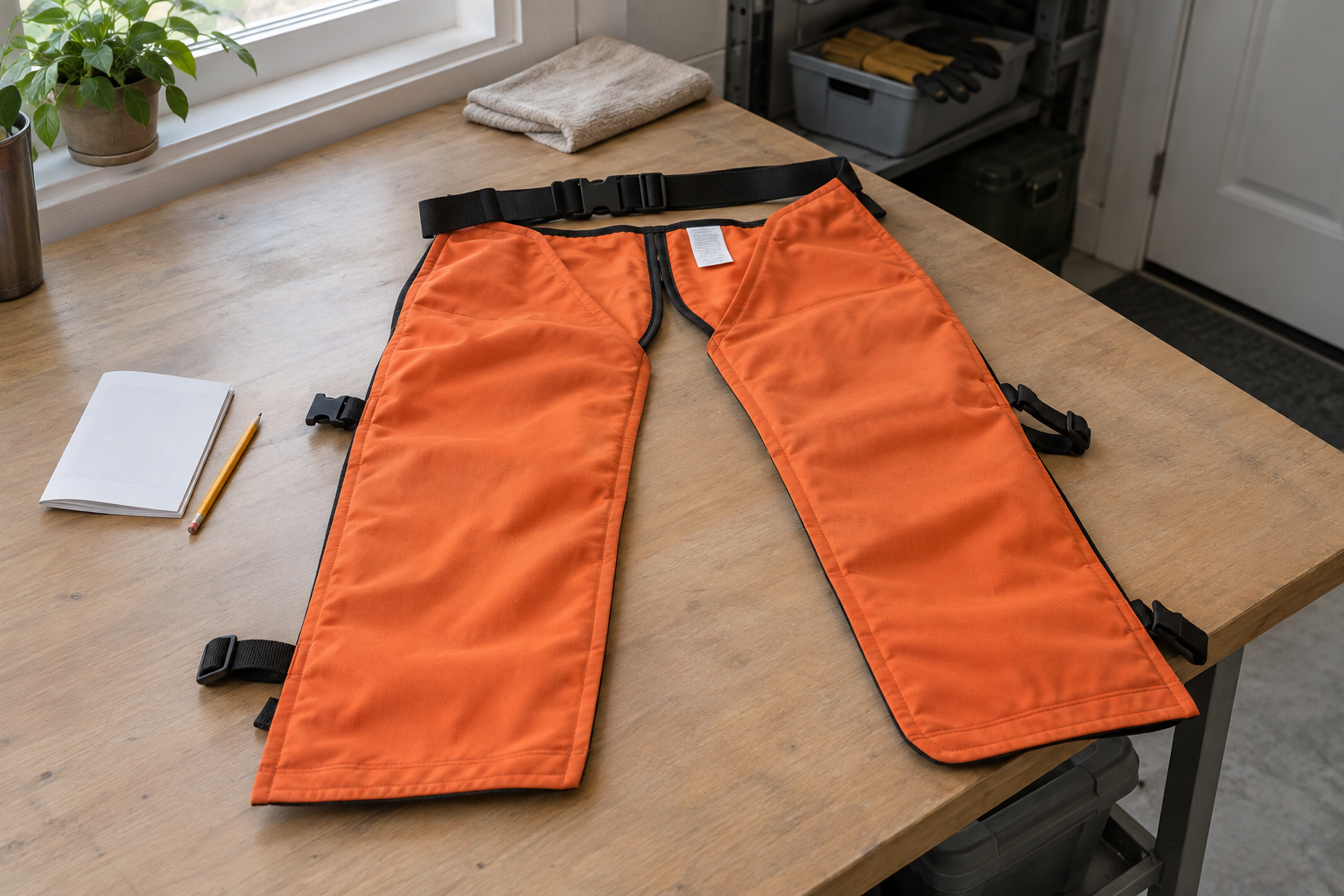
Care-preparation illustration; the pictured label is not a source of washing settings or product certification.
Why do washing instructions disagree?
Protective garments differ in their fabrics and construction. Clogger explicitly directs owners to the instructions supplied with their product for that reason. A search result saying “machine washable” is incomplete until you know which garment it describes.
These examples show why borrowing a wash setting from another brand is unreliable:
| Guidance actually read | Washing and drying route described | Boundary for the reader |
|---|---|---|
| STIHL US Chaps Guide | Warm machine wash with mild detergent; tumble drying is listed as permitted | Check the instructions for your exact STIHL garment, including the drying setting |
| Arborwear Protection Care | Cold, gentle machine or hand wash; hang or line dry, avoiding direct heat | Follow the applicable Arborwear garment instructions, not the STIHL example |
| USDA Forest Service specification 6170-4L | No machine washing, pressure washing or machine drying; specified cleaning route and complete line drying | Applies to the chaps covered by that specification, not every orange pair |
Clogger’s general FAQ recommends a gentle wash with non-chlorine detergent and drying in shade, while still referring owners to their product instructions. Its tentative discussion of a dryer is not a substitute for explicit permission for your model.
Find the maker, product identification and care label before choosing the machine cycle. If the label is missing or unreadable, send photographs and any purchase details to the maker or dealer. Ask for the matching instructions rather than copying the care symbols from a similar-looking pair. If a current webpage and the garment label appear to conflict, resolve that conflict with the manufacturer before washing.
Is washing the right next action?
Lay the chaps out so you can inspect the fabric, seams, waist belt, leg straps and buckles. The Forest Service’s end-user instructions call for checks before use, after cleaning and before storage, including cuts, burns, abrasions, broken parts and exposed inner material.
Use this routing card to keep an ordinary laundry job separate from a protection problem. It is an editorial decision aid, not a test of cut resistance.
- Identity or care method unknown: pause the wash. Record the missing information and obtain the applicable instructions.
- Soiling, with no damage found in the prescribed inspection: use the garment’s approved cleaning method, then inspect again.
- Cut, burn, exposed fibres, failed fastening or uncertain contamination: remove the garment from use while you follow its damage and retirement instructions. Do not count a cleaner appearance as a repair.
- Washed and dried: complete the maker’s post-care inspection before putting it back with ready-to-use equipment.
For the Forest Service construction, retirement criteria include protective fibres pulled through the shell, debris inside the layers, stitching through the protective pad and oil entering the pad through a hole. Those are not ordinary surface stains. Do not improvise a stitched patch through the protective layers.
Husqvarna likewise warns that sweat and oil can reach the protection layer, and that improper repair can reduce its function. It advises regular label-directed cleaning, prompt washing after heavy soiling, inspection for wear or tears, and dealer advice when there is doubt.
If an incident caused the damage, record what happened before cleaning obscures the evidence. A useful enquiry says where the defect is, whether inner material is visible, what contaminant was involved and which garment you have. “Can I wash this?” alone leaves the service provider without the information needed to separate care from retirement.
Carry out the approved method without mixing instructions
Once the garment passes the pre-wash decision, copy its care requirements into one short note. Keep the wash and drying instructions together; permission to use a washing machine does not also grant permission to use a dryer.
Record these fields before starting:
- Garment: maker, model and the label or instruction document used.
- Preparation: what must be emptied, brushed off, closed or secured.
- Wash: hand or machine method, permitted temperature or cycle, and allowed cleaner.
- Dry: permitted method and any stated heat or location restriction.
- Release: the inspection required after care and any unresolved finding.
Leave an unknown field visibly unanswered. That makes it a question to resolve, rather than a setting chosen from memory. Keep the note with the care instructions for the next wash.
Preparation details also vary. Arborwear tells owners to empty pockets, close fastenings and brush away excess debris. STIHL’s guide calls for closing hook-and-loop fasteners and zippers. Apply the instructions to the features actually present on your chaps.
Check the cleaner as well as the appliance. STIHL excludes bleach and fabric softener; Arborwear specifies non-chlorine detergent and warns against harsh detergents and softeners. An everyday laundry product is not automatically suitable because it is already beside the washer. Read its ingredients and intended use against the garment instructions.
For oily or resinous soiling, obtain the maker’s specific method if ordinary care instructions do not cover it. Do not assemble a recipe from one brand’s cleaner, another brand’s soak time and a third brand’s machine cycle. Tell the maker what spilled and what cleaning has already been attempted.
What completes the care job?
Follow the stated drying method, then repeat the garment’s inspection. Arborwear includes restoring the garment and protective padding to their original shape as part of its post-wash care, and warns against direct heat. Do not substitute a radiator or a hotter dryer setting to meet a planned cutting time.
Check any observation recorded before washing. If a defect or contamination remains unresolved, keep the chaps out of the ready-to-use set and obtain the maker’s decision. A clean surface does not resolve an unknown care history.
Before cutting again, complete the full firewood PPE check, including fit and how the items work together. If this is end-of-season care, handle the saw separately using its storage preparation guide. Keep any outstanding garment issue written down so the next person collecting the equipment knows why it has not been released for use.