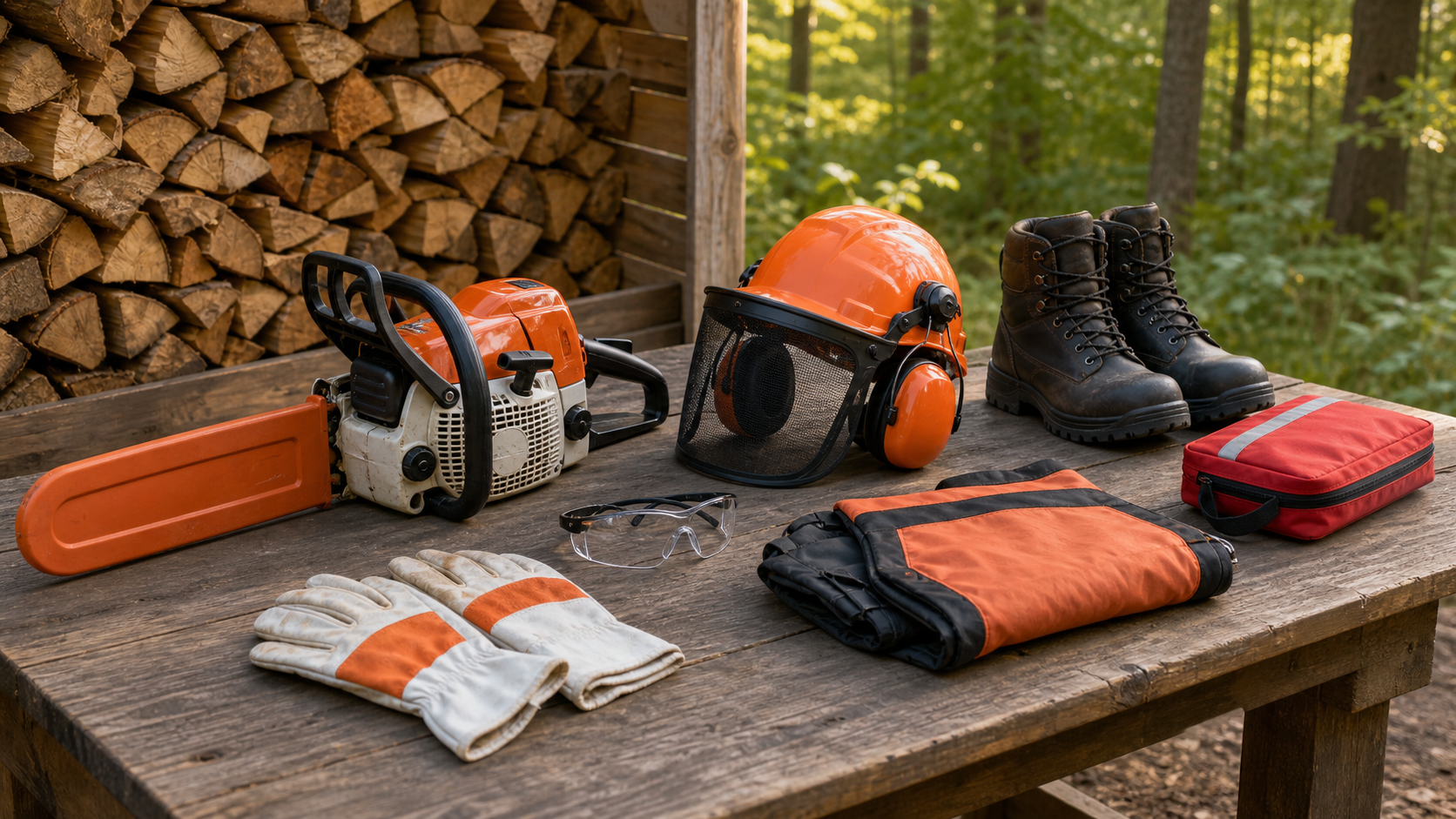
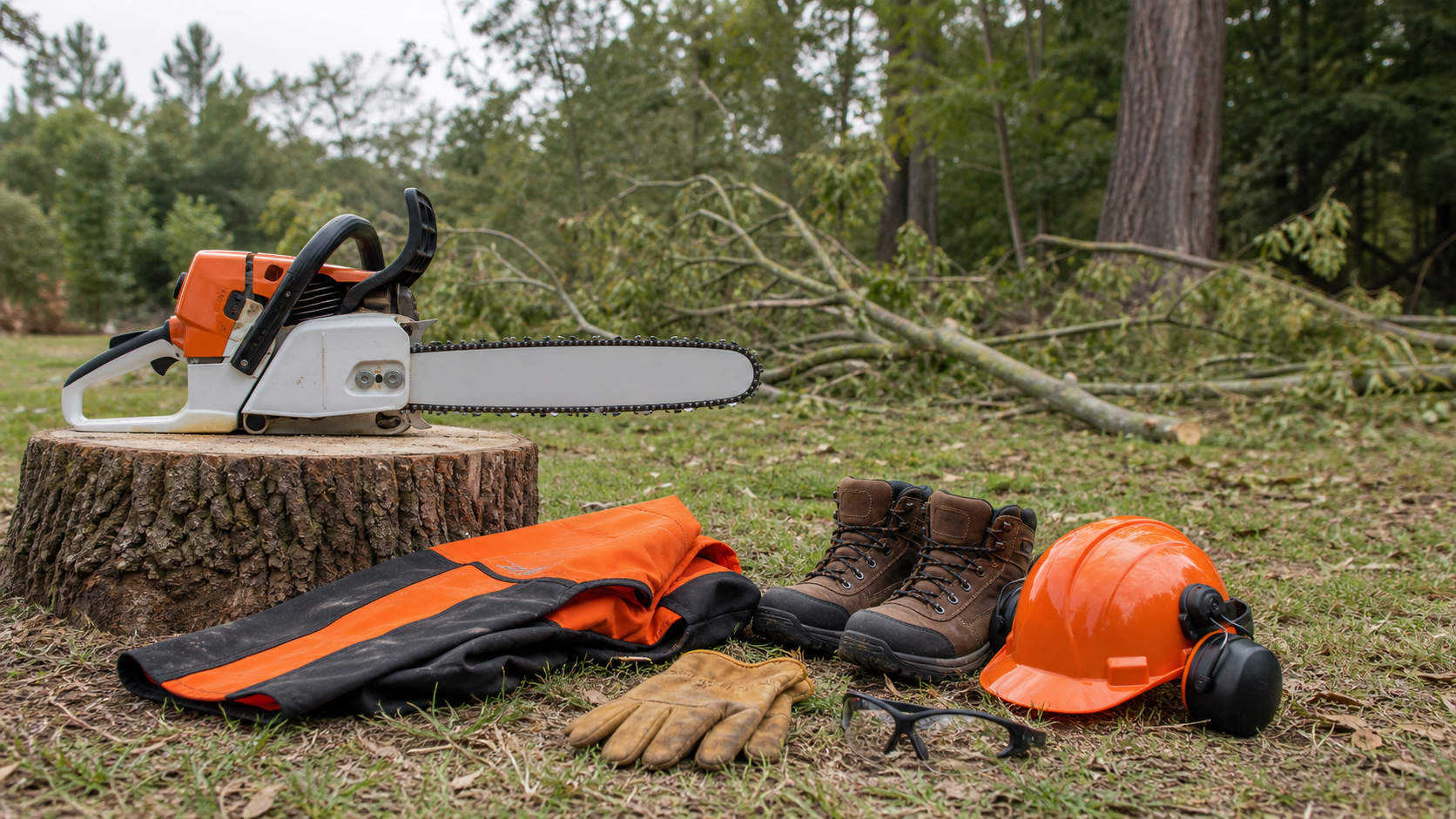
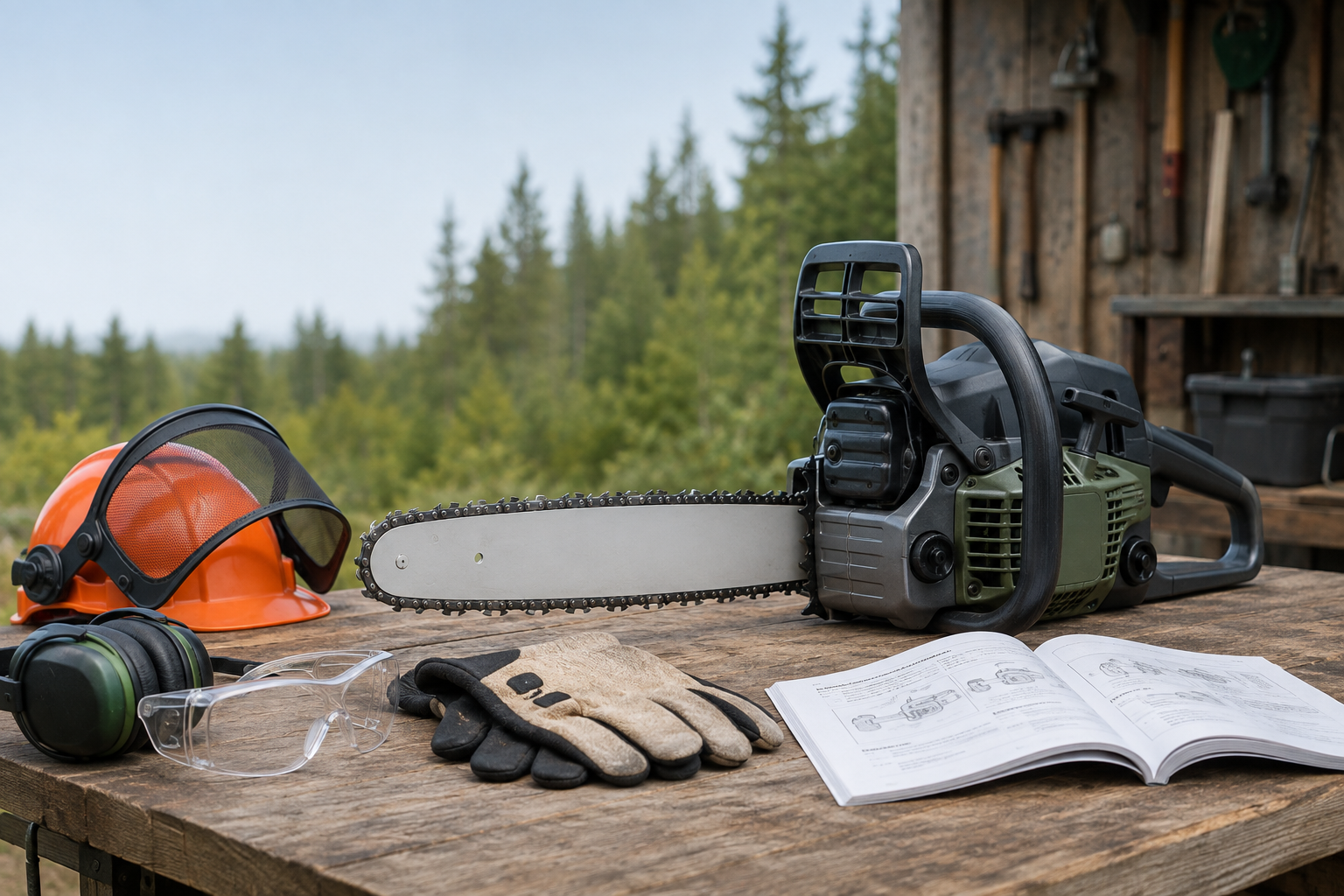
To test a chainsaw chain brake, first inspect the cooled, disabled saw, then perform only the stationary and functional checks specified in the operator manual for that exact model. Do not cut with the saw if the brake will not engage or release as documented, the hand guard or brake parts are damaged, its action has changed, or the chain fails to stop during the manufacturer’s prescribed check.
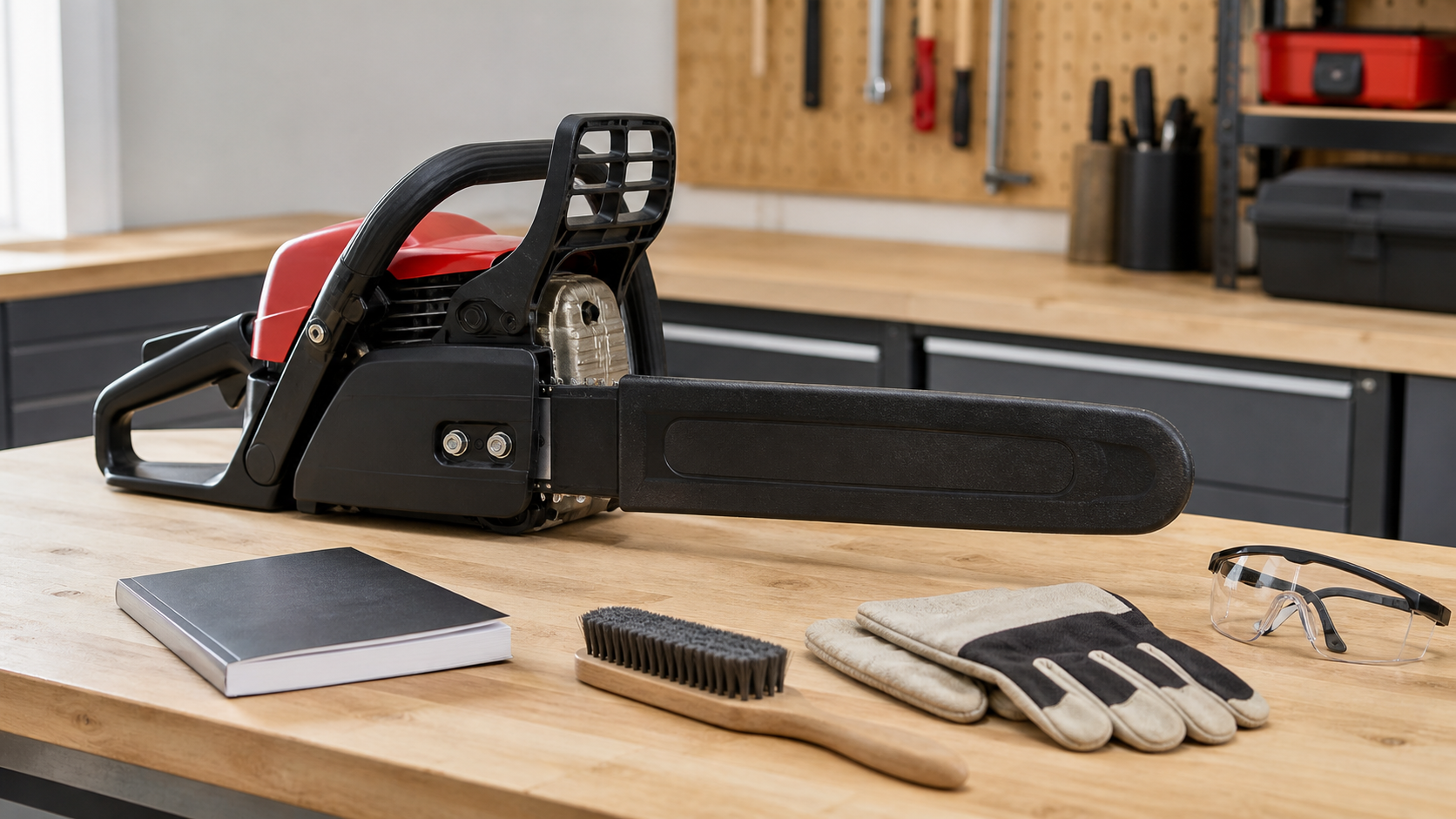
There is no reliable universal sequence for every gasoline, battery, and corded chainsaw. Manuals differ on how to disable the power source, which hand-guard and inertia checks the owner should perform, whether a powered check is required, and when the saw must go to a dealer. The useful test is therefore a controlled path from observation to the exact manual, not a generic trick copied from another machine.
Start with the exact model and manual
Find the model and product number on the saw’s identification label, then retrieve the current operator manual from the manufacturer. Do not rely on a manual that merely looks similar: two saws in the same family can use different controls, startup procedures, or inspection instructions.
Search the manual for chain brake, front hand guard, inertia brake, safety equipment, and before use. Identify four things before touching the mechanism:
- How the maker tells you to prevent an accidental start.
- Which checks are assigned to the owner.
- The required working area, grip, protective equipment, and test order.
- The exact failure condition that means stop using the saw.
If the manual cannot be identified, limit yourself to spotting obvious external damage and take the saw to a qualified service provider. A video for another model is not a substitute.
Inspect the brake area with the saw cool and disabled
Switch the saw off and let it cool. Remove the battery, unplug the cord, or disable a gasoline saw exactly as its manual directs. Keep the guide-bar scabbard fitted while positioning the saw and reading the instructions; remove it only if the manual requires access for a stationary check. Wear gloves whenever the cutting chain will be exposed.
Use good light and look at the front hand guard, its mounting points, the clutch-cover area, and every brake component the manual identifies for owner inspection. You are looking for evidence, not taking the brake apart:
- a cracked, bent, loose, or missing hand guard;
- restricted guard travel or a guard that does not remain in the documented position;
- packed sawdust, oil, or resin around an area the manual permits the owner to clean;
- a changed click, travel, resistance, or release compared with the documented action;
- heat damage, abrasion, loose hardware, or a damaged cover; and
- any need to remove springs, a brake band, or parts beyond the manual’s owner-maintenance procedure.
Husqvarna’s daily-maintenance guidance includes checking that the chain brake and other controls work smoothly. Its broader safety-inspection guidance also separates cleaning and checking the brake area from repairs that belong with a servicing dealer. STIHL warns that dirt, grease, wear, and other contamination can reduce brake effectiveness and says a change in operating characteristics is a reason for trained inspection.
Clean only by the method and to the depth described in the manual. Removing loose external debris with the specified brush is different from opening a spring-loaded brake mechanism. If you cannot clean the area thoroughly without exceeding the owner instructions, stop there.
Use the observe, verify, stop decision card
This card keeps a simple hand-guard movement check from being mistaken for proof that the complete braking system works.
| Stage | What to do | Decision |
|---|---|---|
| Observe | With the saw cool and disabled, inspect the hand guard, visible brake area, cover, fasteners, travel, and contamination named in the manual. | Damage, binding, missing parts, or a changed action means no cutting and qualified service. |
| Verify | Locate each owner check in the exact manual. Follow its order and conditions without borrowing a speed, drop height, grip, or procedure from a different saw. | Continue only when every prescribed check produces the documented result. |
| Stop | End the test if the brake will not engage or release, the chain does not stop as required, the mechanism cannot be cleaned as directed, or access would become a brake repair. | Disable the saw, fit the scabbard when appropriate, mark it out of service, and arrange inspection. |
Moving the front hand guard through a stationary manual check can confirm only what that check is designed to confirm. It does not by itself prove that the inertia function, brake band, clutch drum, or chain-stopping performance passes every check required for the model.
Perform the model-prescribed functional check
Some manuals separate several checks: hand-guard action, inertia activation, and a powered chain-stopping check. Others specify a different sequence for an electric or battery saw. This is where generic online instructions become risky, because a test condition that is correct for one model may be incomplete or wrong for another.
If the manual assigns a powered check to the owner, carry it out outdoors in the clear working area, with the personal protective equipment, footing, starting method, grip, engine or motor condition, and brake action it specifies. Keep people and loose objects away. Do not improvise a throttle setting, drop test, one-handed grip, or substitute test material.
Watch only for the pass condition stated by the manufacturer. Do not repeat a failed powered check to see whether the result improves, and do not make a test cut first. The Canadian Centre for Occupational Health and Safety advises testing the saw and brake before cutting and having the saw serviced if the brake does not stop the chain during the prescribed check.
A successful test is not a guarantee against kickback or injury. A chain brake is one part of the saw’s safety system; correct chain, bar, tension, sharpness, technique, work positioning, and protective equipment still matter. Review the broader chainsaw PPE checklist for firewood cutting before moving from inspection to work.
Treat these results as an immediate service decision
Do not use the saw when any of the following is true:
- The hand guard is cracked, loose, bent, missing, or does not move and hold as the manual describes.
- The brake cannot be engaged or released by the documented method.
- The chain continues moving beyond the pass condition in the specified functional test.
- The brake action, sound, resistance, or travel has changed since the last successful check.
- Oil, dirt, or sawdust cannot be removed by the permitted owner-cleaning method.
- The cover, brake band, spring, clutch area, or related safety part appears worn or damaged.
- Diagnosis would require disassembly or adjustment not included in owner maintenance.
Do not try to compensate with a tighter chain, a sharper chain, a different operating technique, or a second test. Those actions do not repair a brake fault. Tag or separate the saw so someone else does not start it, then use the manufacturer or a qualified service provider.
Even without an obvious failure, periodic trained inspection may be required. STIHL’s general safety manual gives service intervals based on usage level and calls for immediate maintenance when the brake cannot be cleaned thoroughly or its behavior changes. Use the schedule for your manufacturer and model rather than transferring another brand’s interval.
Put the brake check into the pre-use routine
The brake check belongs before cutting, not after a symptom appears in the wood. Pair it with the other manual-required safety controls, chain catcher, handles, fasteners, cold-chain tension, guide bar, cutting-chain condition, and lubrication checks. The bar and chain maintenance guide covers those cutting-attachment observations without turning them into brake diagnosis.
Record a failed or unusual result in plain language: for example, “front guard will not remain in the engaged position” or “chain did not stop in the manual’s functional check.” A specific observation helps a service technician reproduce the fault and is more useful than “brake feels bad.”
After service, repeat the complete procedure the manufacturer requires before returning the saw to work. Do not assume that replacing or cleaning one visible part proves the whole safety system passes.
Frequently asked questions
Should you test a chainsaw chain brake before every use?
Yes, when the manufacturer includes it in the pre-use inspection. Husqvarna advises checking the chain brake and inertia function each time a chainsaw is used, while CCOHS advises testing the saw and brake before cutting. The exact checks and sequence still come from the manual for the saw in front of you.
Can you fully test a chain brake with the engine off?
An engine-off or power-disabled check can reveal external damage, contamination, restricted hand-guard travel, and some engagement or release faults. It cannot automatically verify every function. If the model manual requires an inertia or powered chain-stopping check, a stationary hand-guard check alone is incomplete.
Can cleaning fix a chain brake that does not work?
Cleaning may remove contamination only when the manual assigns that work to the owner and the mechanism then passes every required check. Cleaning does not repair a worn brake band, damaged guard, spring fault, or changed braking behavior. If the brake cannot be thoroughly cleaned as directed or still fails, stop using the saw and arrange service.