If a battery chainsaw cuts out while cutting, release the trigger, move clear of the cut, and use the saw’s instructions to switch it off and remove its battery before inspection. A stop under load can involve the cutting attachment, the work, a temperature or battery indication, or an internal fault; it does not identify one cause on its own.
This is a record-and-route guide for a saw that runs and then stops in a cut. It does not replace the exact operator manual, indicator meanings, battery conditions, or service procedure for a particular model.
Start with a cutout record, not a diagnosis
After the saw is safely disabled, write down what happened before changing anything. The same phrase—“it cuts out”—can describe a chain that bogs down in wood, a battery-related indication, or a saw that will not run again. Mixing those observations makes the next step less clear.
| What you observed | Keep the next check limited to | Stop boundary |
|---|---|---|
| It runs freely, then stops only after entering the cut | The model manual’s stationary checks for chain condition, lubrication, tension, and the intended cutting use | Do not force the saw through the wood or keep restarting it to compare stops |
| It stops and the approved battery or saw display gives an indication | Identify the exact model and read that indication in its own manual or support material | Do not borrow a light pattern, waiting time, or reset from another brand or battery |
| It remains stopped after the manual’s prescribed cooling or restart route | Record the model, indication, work being cut, and the checks already completed | Leave electrical, battery, motor, and controller diagnosis to the manufacturer or service provider |
The card is an editorial tool, not a new diagnostic test. It preserves the difference between a cutting-load observation and an internal-fault claim.
Make the saw safe before looking at the cutting attachment
Follow the manufacturer’s shutdown and battery-removal sequence, then let the cutting attachment cool before touching it. The Harbor Freight cordless-chainsaw manual, for example, requires the battery to be disconnected before service; your saw may specify additional steps.
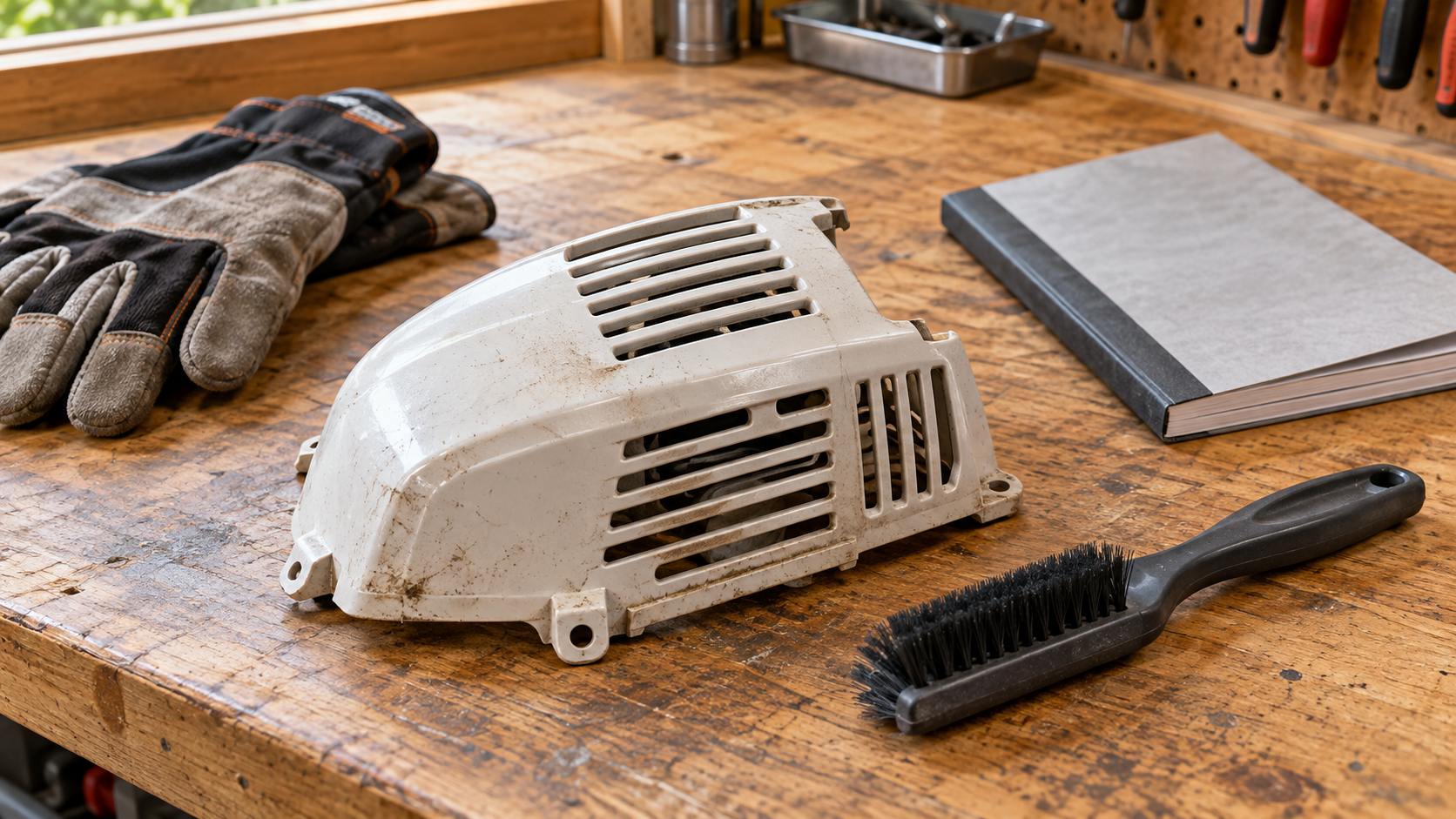
Do not try to free a jam, clear debris, alter tension, or inspect the bar with the battery installed. Wear suitable gloves when handling the chain. If the chain is trapped, damaged, repeatedly derails, or cannot move as its manual describes after power is removed, keep the saw out of service rather than treating the cutout as a battery-only problem.
For a complete stationary inspection order, use the chainsaw chain maintenance checklist. It keeps chain, bar, oil-path, and drive-system evidence separate before a sharpening or replacement decision.
If it stops only when the chain enters wood, read the cutting evidence
Manufacturer support pages repeatedly start with the load placed on the cutting system. Husqvarna connects a loss of cutting power with chain sharpness and bar-and-chain lubrication. Its battery support also distinguishes smoke or poor cutting at the bar and chain from a general electrical conclusion. RYOBI’s support material similarly directs owners to look at chain tension, dullness, excessive feed pressure, lubrication, and the work within the saw’s intended capacity.
That does not mean every cutout has the same mechanical cause. Use only the inspection and adjustment method assigned to your model. A dull chain, incorrect tension, inadequate lubrication, damaged cutting parts, and a cut that demands more than the saw is intended to handle can create different evidence, and one observation should not be used to declare a battery or motor faulty.
Avoid a tempting test: pushing harder into the wood to see whether the saw stays running. A forced cut can add friction and obscure what happened first. If the cutting attachment is visibly damaged, hot, smoking, binding, or its condition cannot be confirmed by the manual, stop there.
If the pack or saw indicates heat or a battery condition, keep it model-bound
A warm battery after use is not a universal fault code. RYOBI describes thermal interruption on relevant models and directs the owner to a model-appropriate cooling or battery route. The required temperature, indicator meaning, waiting period, compatibility rule, and permitted retry vary by tool and pack.
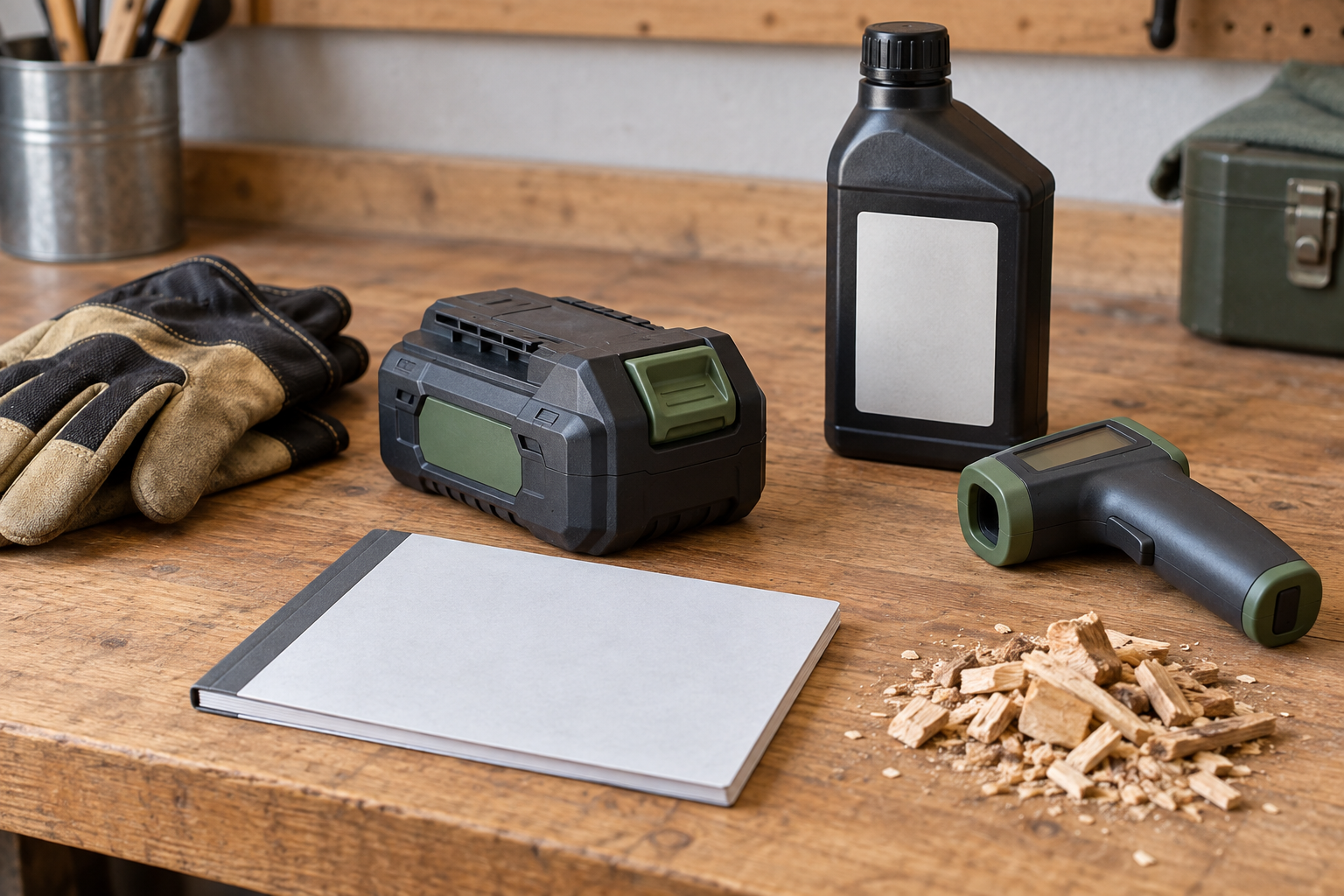
Record the battery model, saw model, charger model if charging is involved, and the exact steady or flashing indication. Do not open a pack, bridge contacts, substitute an unapproved battery, or attach an external power supply. A pack that is cracked, deformed, leaking, unusually damaged, or subject to an instruction-manual stop condition needs manufacturer handling guidance rather than another operating attempt.
If the actual complaint is that the pack will not charge, rather than that the saw stops under cutting load, use the separate battery-not-charging observation record. It covers equipment pairing and charge indications without treating them as proof of an in-cut fault.
Give service a useful record
When the manual reaches its service boundary, send the observations rather than a guessed repair history:
- saw and battery model labels;
- whether the stop happens only in a cut or also away from the work;
- the exact display or indicator, if one appears;
- material being cut and the cutting-attachment condition observed with power removed; and
- the manual-directed checks already completed.
This leaves internal electrical and mechanical diagnosis with the documentation and equipment it requires. It also helps keep a repeat cutout from becoming a series of unrecorded restart attempts.