menu
KONKELL CHAINSAW SHARPENER
Page 3 of 5
How to Store a Chainsaw: Gas, Battery, and Corded Checklist Maintenance

How to Store a Chainsaw: Gas, Battery, and Corded Checklist

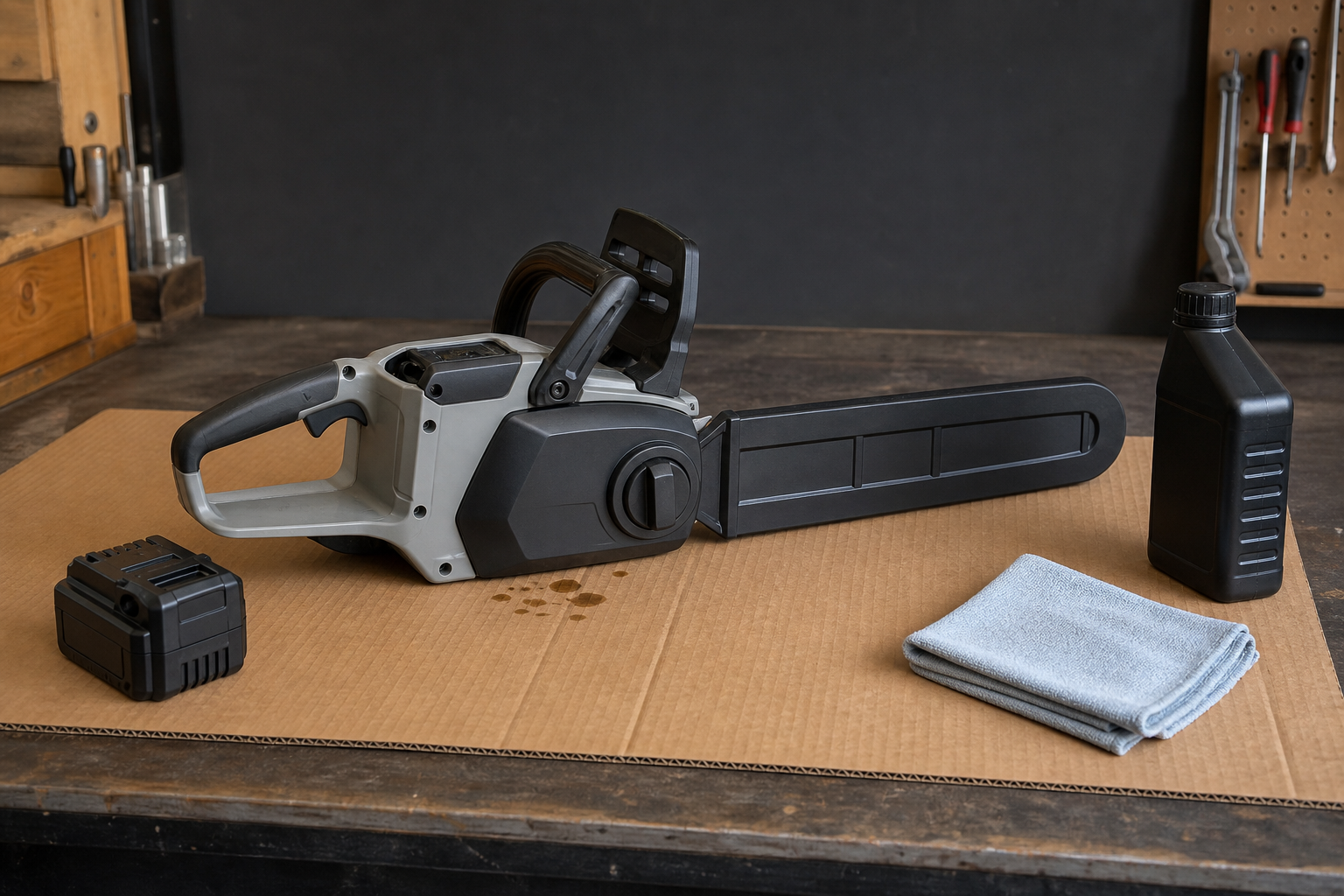
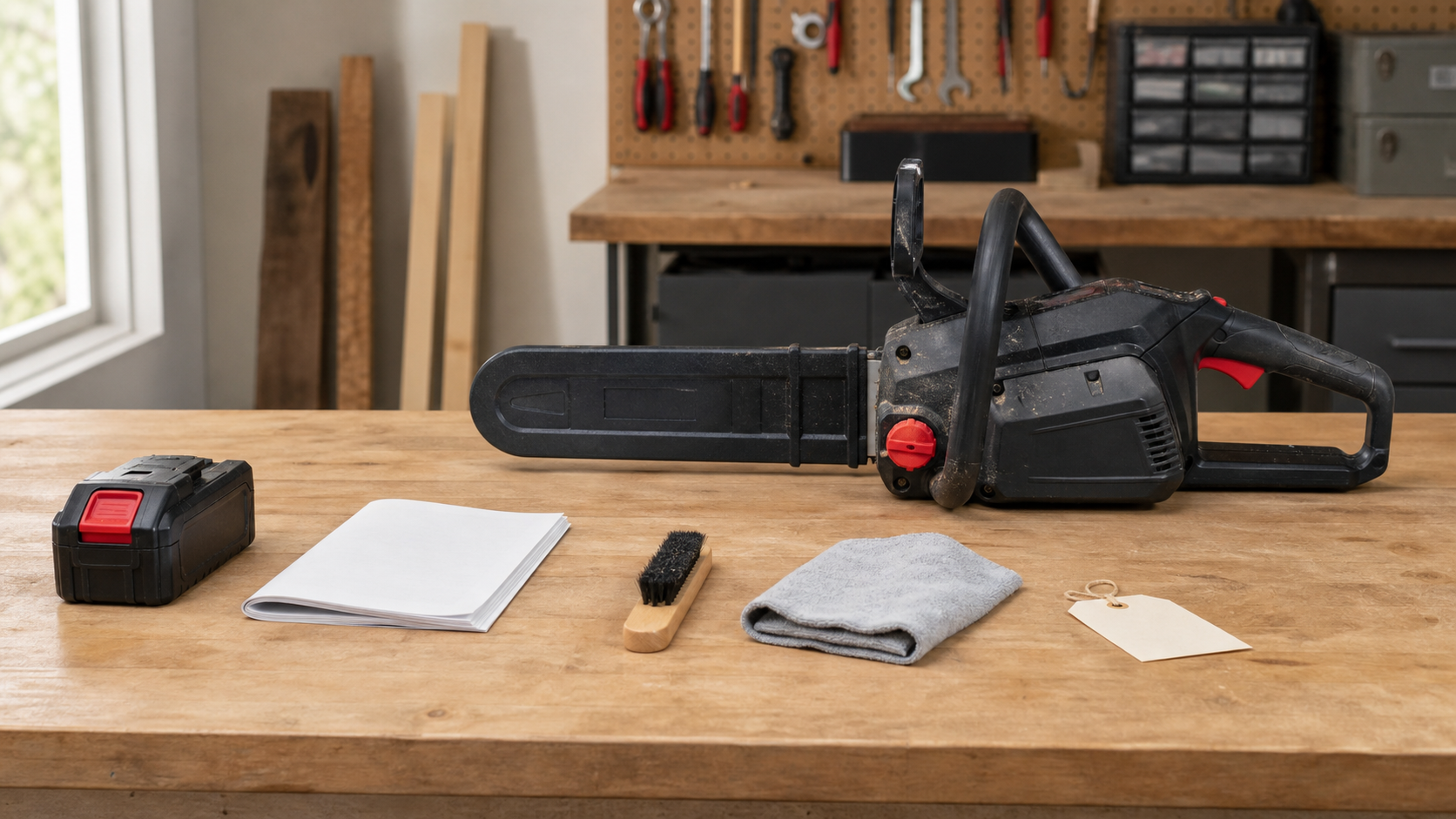
To store a chainsaw, disable and separate its power source, clean and inspect the cutting attachment, fit the guide-bar scabbard, and keep the saw dry and secured. For fuel treatment, battery charge, storage temperature, and bar-oil level, follow the exact saw and battery manuals—manufacturers give different instructions. Write down four instructions before touching the saw Find the storage section in the saw manual and, for a cordless model, the separate battery and charger manuals. Record four answers on a tag:

Read More arrow_forward
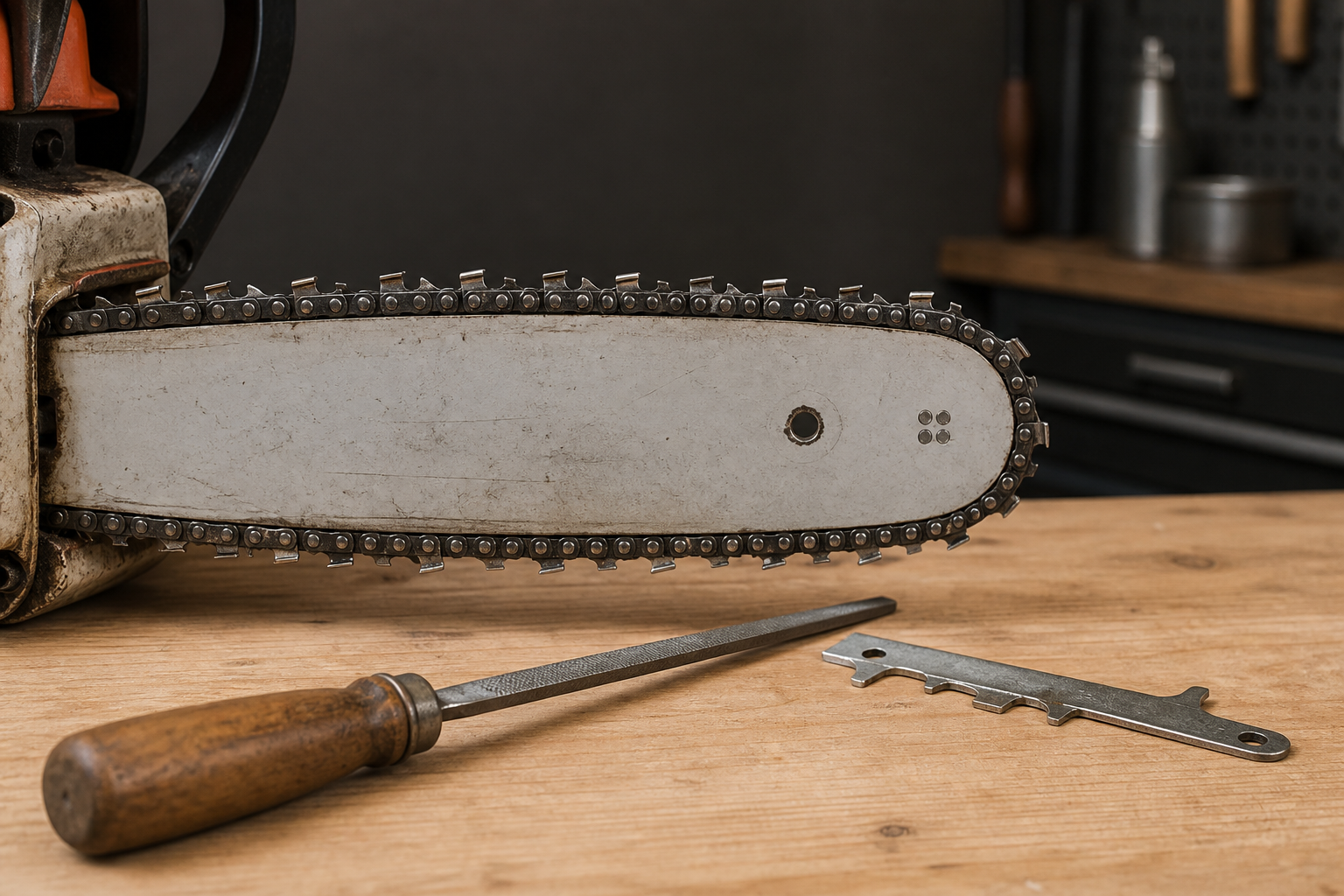
Chainsaw Depth Gauge Symptoms: Too High, Too Low, or Not the Cause? Chainsaw Sharpening

Chainsaw Depth Gauge Symptoms: Too High, Too Low, or Not the Cause?

Depth gauges that sit too high can limit how much wood the cutters take; gauges filed too low can make the chain grab, chatter, and cut too aggressively. Those symptoms are clues, not proof—inspect the stopped chain with the correct manufacturer-specified gauge before removing any more metal. Read the cut, then verify the chain A depth gauge is the raised part immediately ahead of each cutter. Its height relative to that cutter controls the bite. Because sharpening shortens the cutter, the relationship changes even when the depth gauge itself has not been touched.

Read More arrow_forward
Chainsaw Oil Leaks When Stored? Trace the Drip Before Repairing Maintenance

Chainsaw Oil Leaks When Stored? Trace the Drip Before Repairing

A few oil spots under a recently used chainsaw can be bar oil draining from the guide-bar groove, chain, clutch-cover area, or recesses in the saw body. A clean spot that keeps growing, begins away from the cutting attachment, or returns after the saw has been cleaned and left unused deserves a model-specific inspection rather than an assumed repair.

Read More arrow_forward
How to Identify a Chainsaw Chain Before Buying a Replacement Maintenance

How to Identify a Chainsaw Chain Before Buying a Replacement

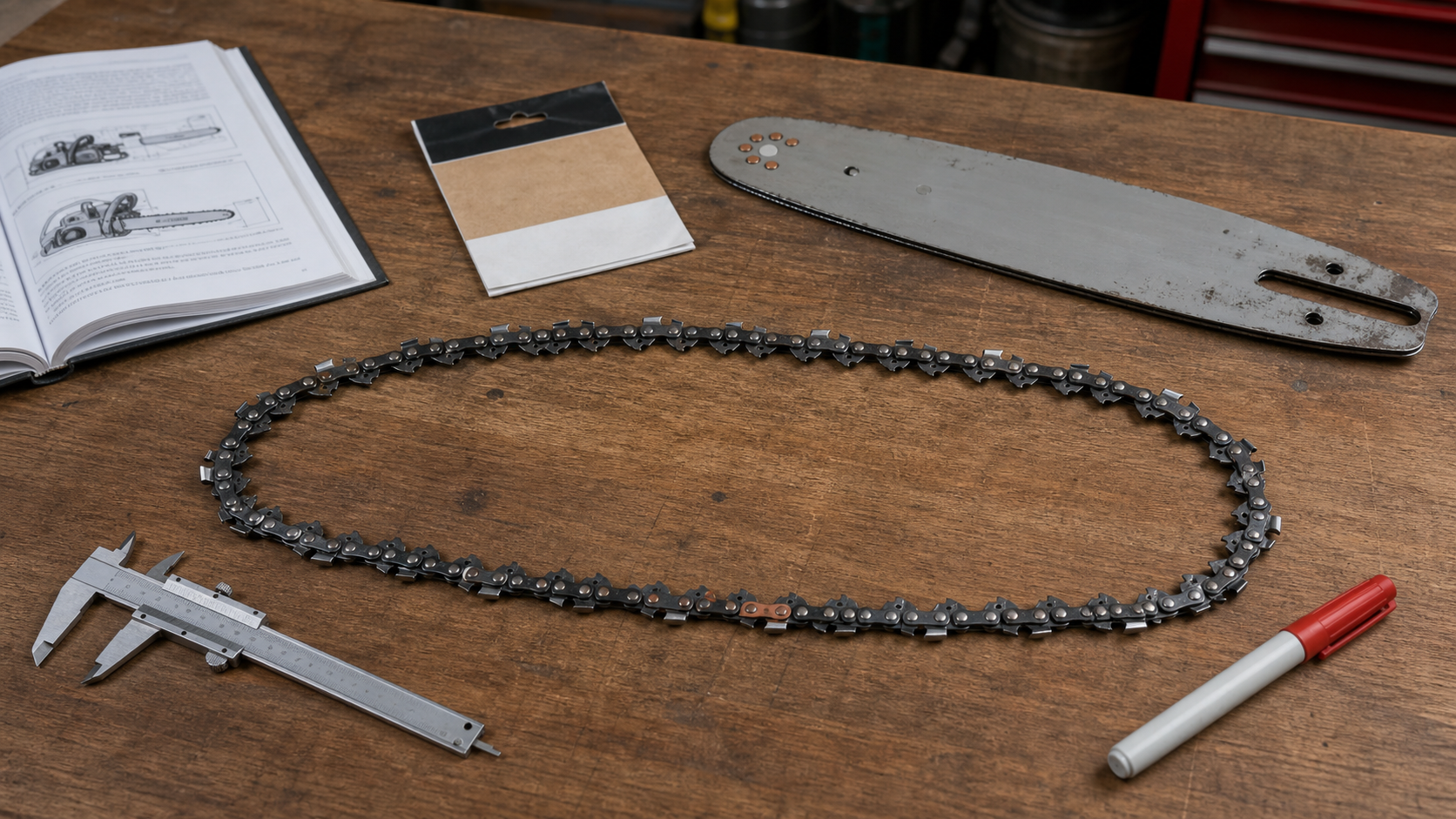
To identify a chainsaw chain for replacement, confirm three values: pitch, drive-link gauge, and the number of drive links. Read them from the guide bar, chain markings, packaging, manual, or manufacturer lookup before attempting to measure a worn chain. Bar length alone is not a chain size. Two saws described as having the same bar length can use different drive-link counts, and a pitch label does not tell you the gauge.

Read More arrow_forward
Chainsaw Storm Cleanup Safety: Decide What Not to Cut Chainsaw Safety

Chainsaw Storm Cleanup Safety: Decide What Not to Cut

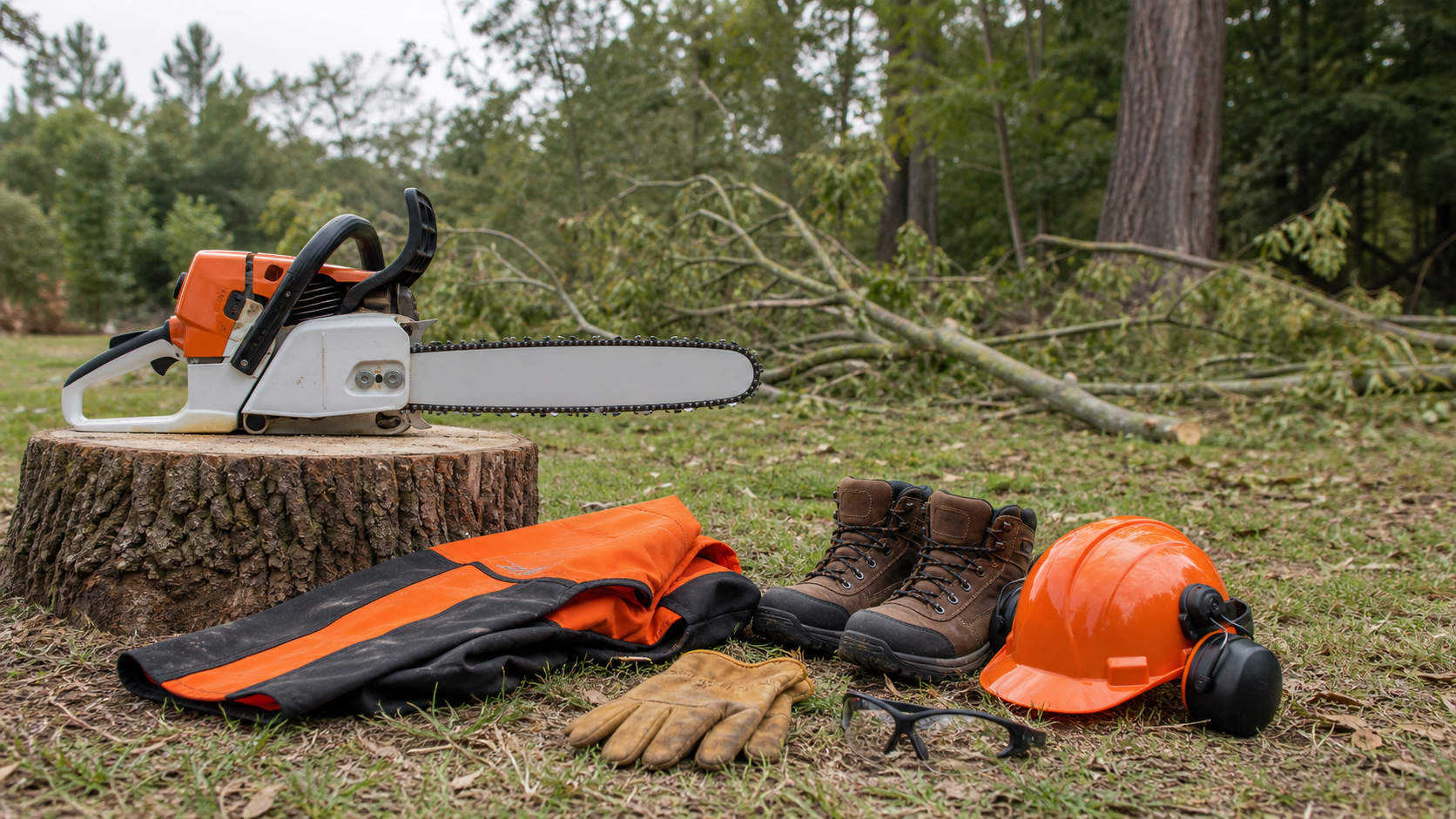
Safe chainsaw storm cleanup starts by deciding what not to cut. Leave anything near a utility line, overhead, standing or leaning, tangled, under visible tension, or attached to an unstable root plate for the utility or a qualified tree professional; an experienced homeowner’s possible work area is limited to stable, separated debris on the ground. Storm damage is not ordinary firewood. Limbs can be bent under other limbs, broken tops may remain overhead, logs can roll when support is removed, and an uprooted tree can shift toward its old position. A sharp chain and a familiar saw do not remove those hazards.

Read More arrow_forward
Why Is My Chainsaw Cutting Crooked? Isolate the Chain or Bar Troubleshooting

Why Is My Chainsaw Cutting Crooked? Isolate the Chain or Bar

A chainsaw usually cuts crooked because the left- and right-facing cutters are not removing wood evenly, or because the guide bar no longer supports the chain squarely. Stop forcing the cut: inspect the chain first, then use a known-good chain to separate a sharpening fault from bar wear. Read the curve before changing anything Make one observation in sound, clean wood only if the saw is otherwise safe to operate. Let the chain feed without twisting the rear handle or leaning on the bar. If the kerf begins straight and then curves, or the saw consistently steers to one side, stop and note the direction—but do not use that direction alone to decide which cutters to file.

Read More arrow_forward
Chainsaw Sharpener for Beginners: Choose a Setup You Can Repeat Chainsaw Sharpening

Chainsaw Sharpener for Beginners: Choose a Setup You Can Repeat

The best chainsaw sharpener for a beginner is a chain-matched guided file for occasional touch-ups, or a bench grinder when several removable chains need the same repeatable fixture. Choose only after identifying the chain and deciding whether the real job is portable maintenance, routine bench work, or recovery from uneven damage. Motor power and accessory count cannot answer that question. The useful beginner choice is the tool whose file or wheel, holding method, and instructions all match the chain—and whose first-cutter result can be inspected before the setup is repeated.

Read More arrow_forward
How to Sharpen a Chainsaw Chain by Hand Without Guessing Chainsaw Sharpening

How to Sharpen a Chainsaw Chain by Hand Without Guessing

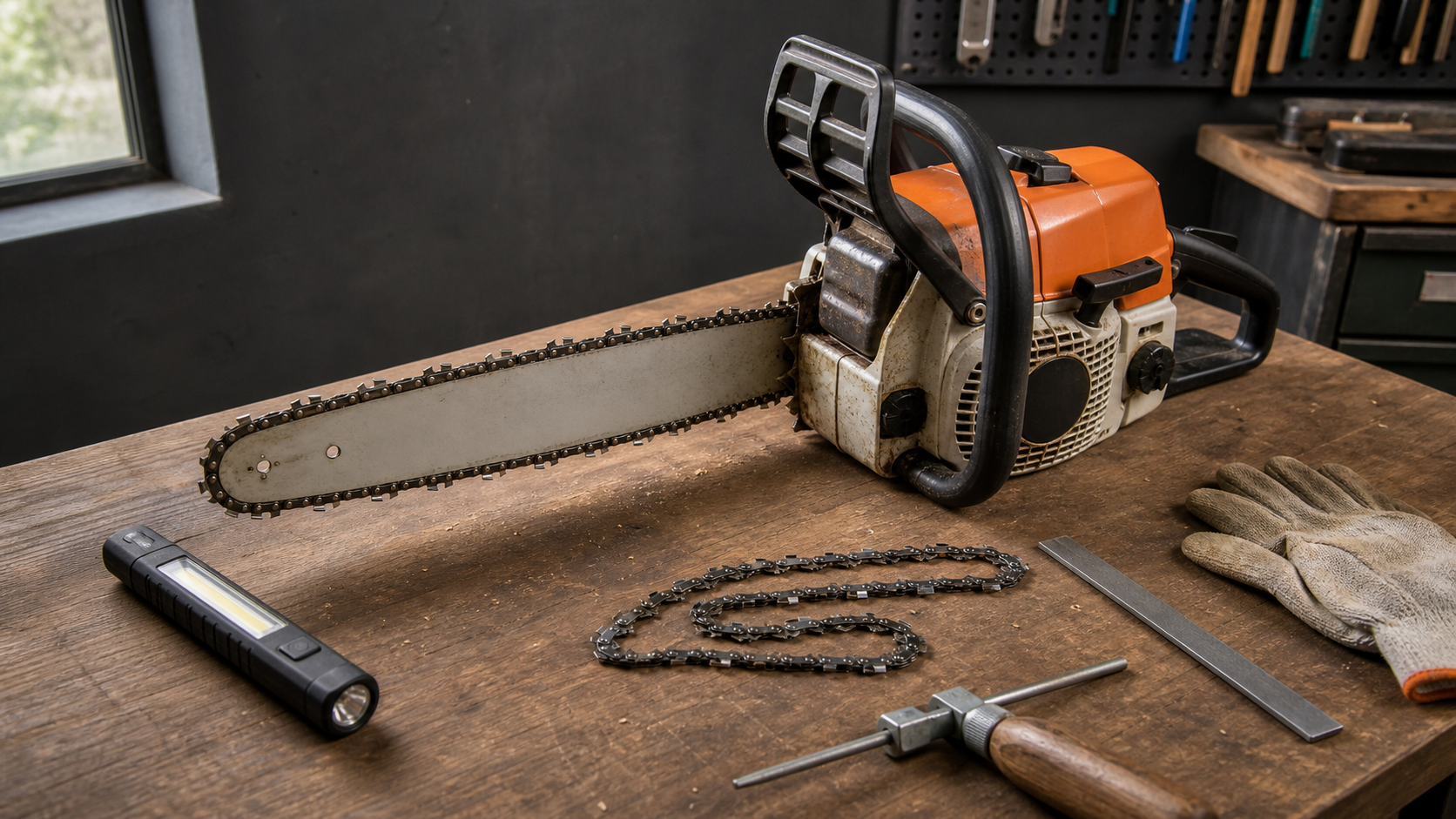
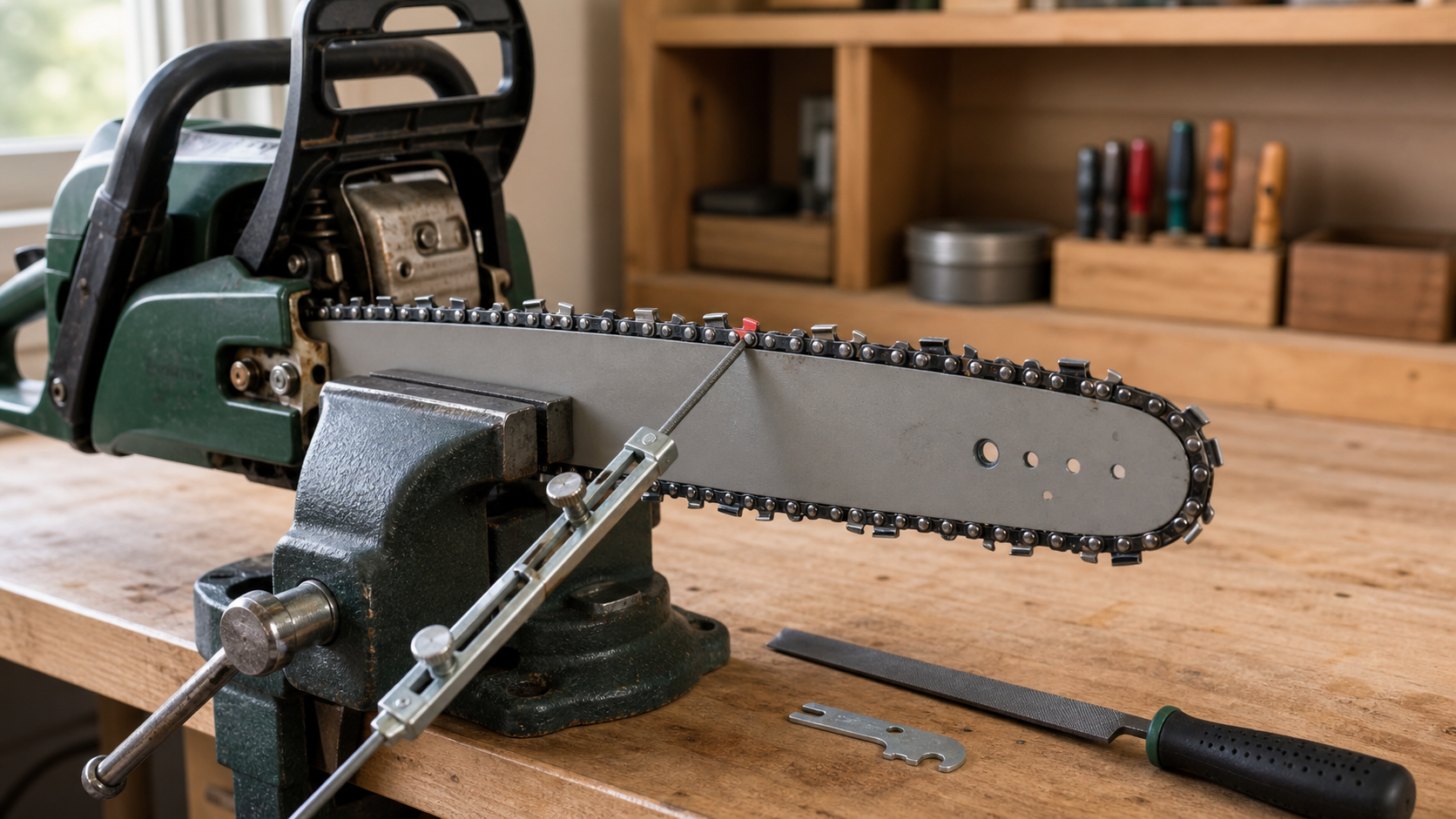
To sharpen a chainsaw chain by hand, identify the exact chain, use the round file and guide specified for it, secure the stopped saw, and sharpen a marked reference cutter before matching the others. Check the depth gauges with the matching gauge after the cutters; do not lower them by eye or use a universal angle for every chain.

Read More arrow_forward
How to Sharpen a Chainsaw in the Field: Touch Up or Swap the Chain? Chainsaw Sharpening

How to Sharpen a Chainsaw in the Field: Touch Up or Swap the Chain?

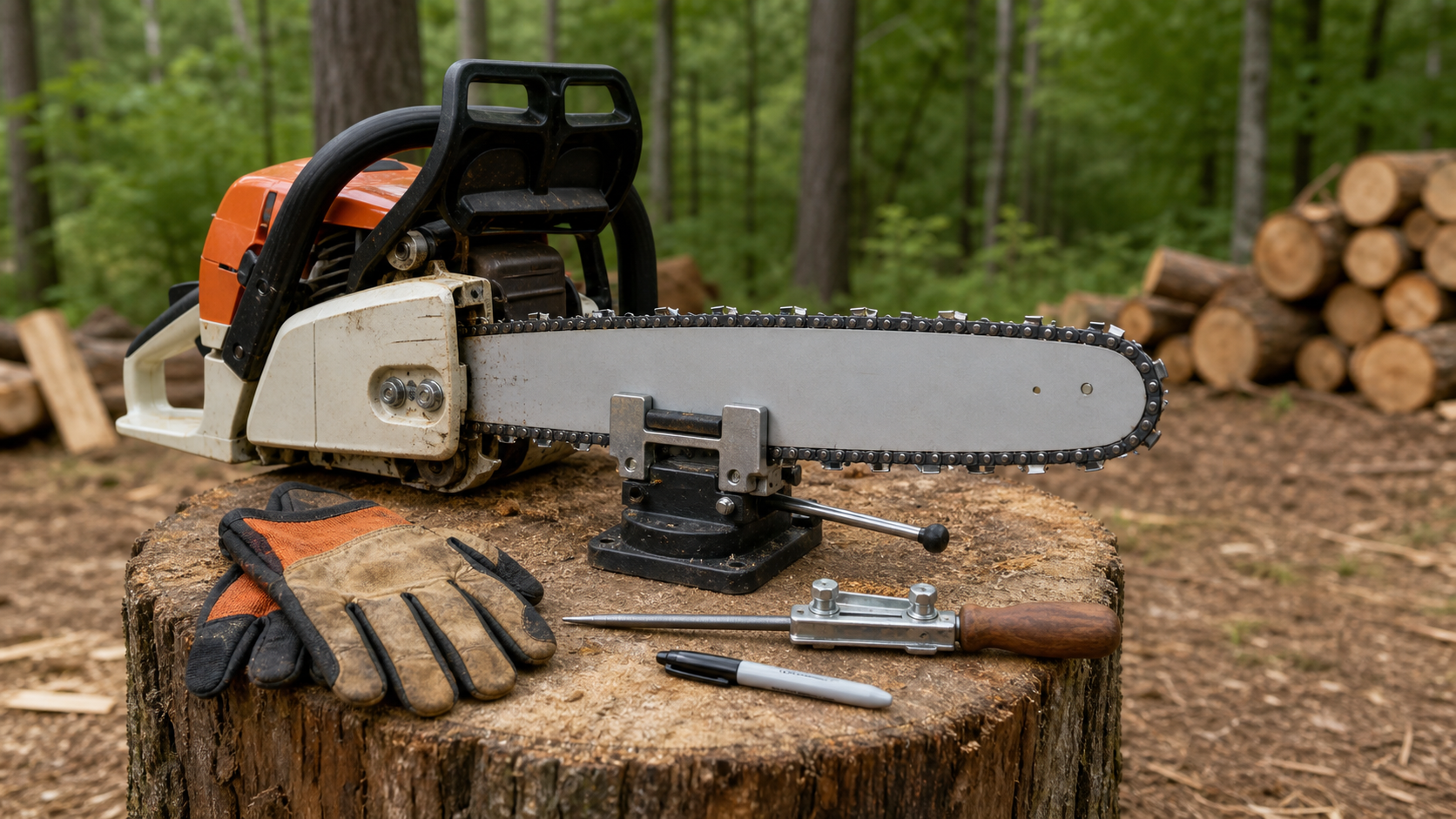
To sharpen a chainsaw in the field, stop and cool the saw, secure the guide bar so both hands are free, and use the file and guide specified for the exact chain. Treat field filing as a light edge touch-up; swap the chain or stop work when you find cracks, damaged links, uncertain chain identity, or cutters that need major correction.

Read More arrow_forward
home Home shopping_cart Shop menu_book Guides construction Tools person Account