menu
KONKELL CHAINSAW SHARPENER
Category Archive

Chainsaw Sharpening

How to Sharpen a Chainsaw Chain by Hand Without Guessing

How to Sharpen a Chainsaw Chain by Hand Without Guessing

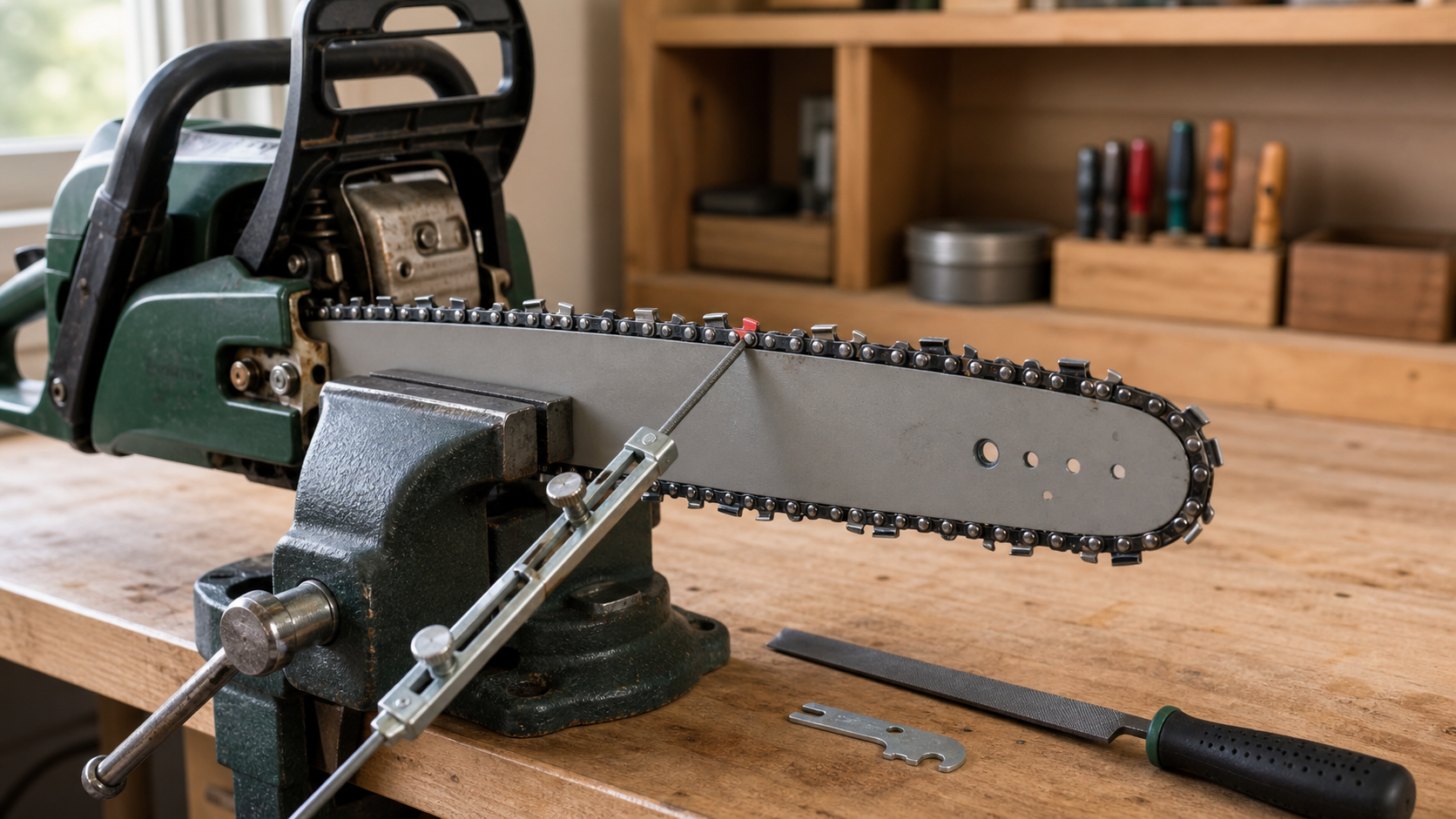
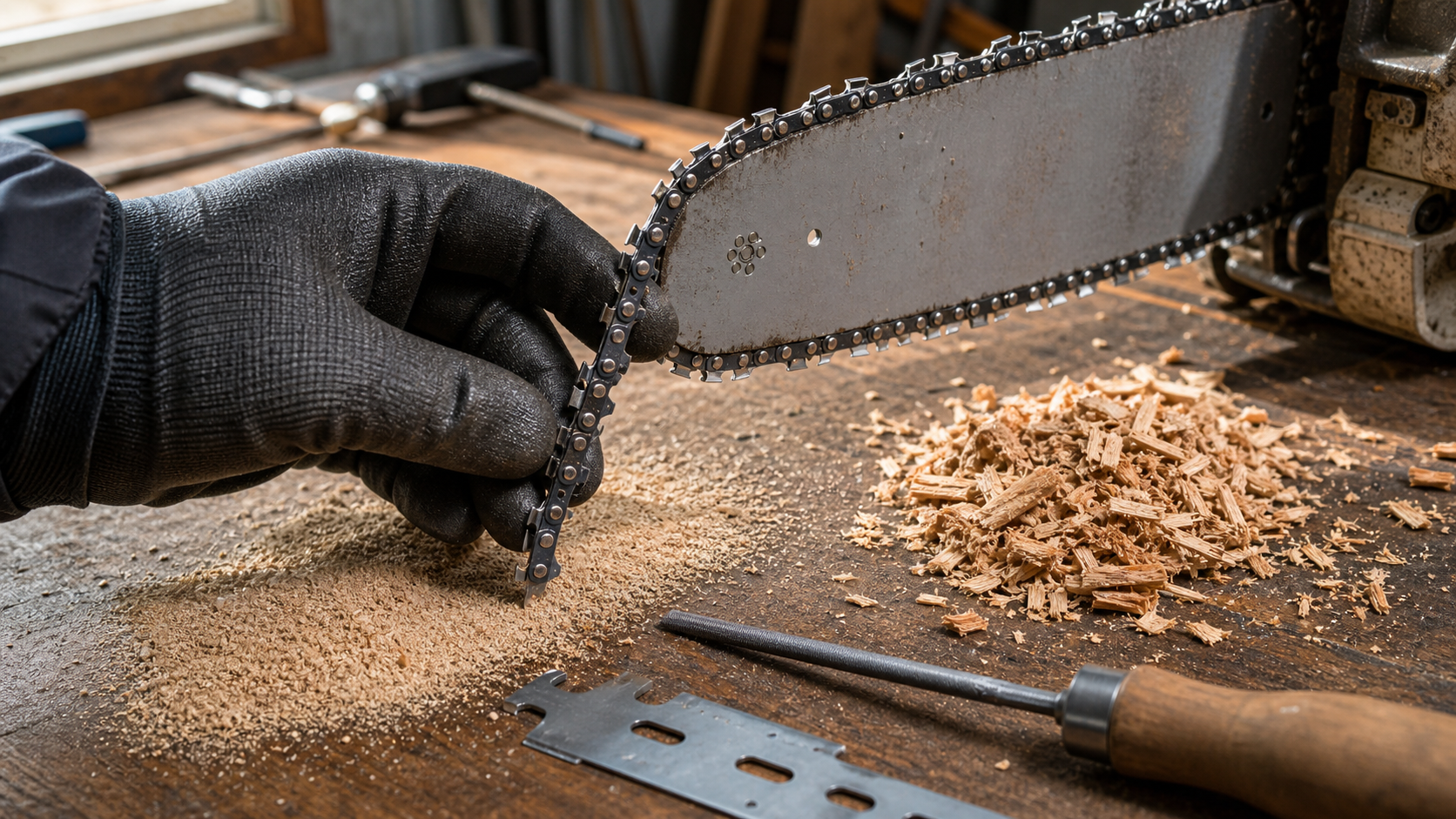
To sharpen a chainsaw chain by hand, identify the exact chain, use the round file and guide specified for it, secure the stopped saw, and sharpen a marked reference cutter before matching the others. Check the depth gauges with the matching gauge after the cutters; do not lower them by eye or use a universal angle for every chain.

Read More arrow_forward
Chainsaw File Size Guide: Match the Chain, Not Just the Pitch

Chainsaw File Size Guide: Match the Chain, Not Just the Pitch

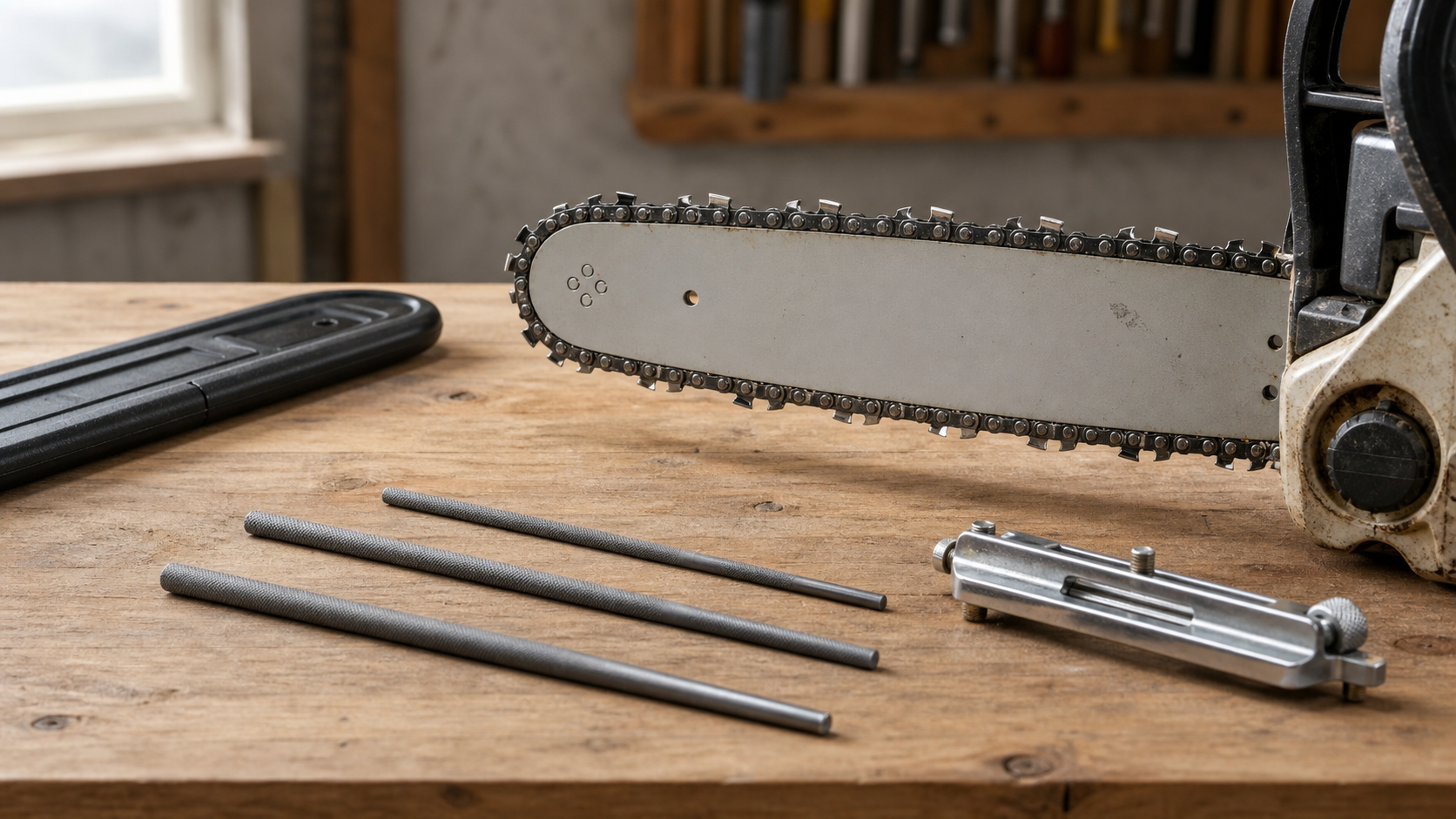
The correct chainsaw file size is the diameter specified for your exact chain model, not a size guessed from bar length or pitch alone. Find the chain code on the cutter or drive link, the package, or the saw manual; then confirm it in that chain maker’s current filing chart before touching the cutter. Use this identification order A pitch label narrows the search, but it may not finish it. STIHL, for example, specifies different files for standard 3/8-inch chain and 3/8-inch PICCO chain. Husqvarna’s current chart likewise separates mini chain families from full-size chains.

Read More arrow_forward
Chainsaw Chain Chatters After Sharpening: What to Check

Chainsaw Chain Chatters After Sharpening: What to Check

A chainsaw chain that chatters after sharpening is usually taking an uneven or overly aggressive bite. Stop cutting and inspect the chain before trying to force it through another log. The common causes are depth gauges filed too low, hooked cutter profiles, inconsistent cutter lengths, incorrect tension, or a worn guide bar that no longer supports the chain squarely. Do not diagnose the problem while the chain is moving. Shut the saw down, let it cool, isolate its starting system as directed in the manual, and wear gloves while handling the chain. A short workshop inspection can separate a sharpening error from a bar, sprocket, or chain-condition problem.

Read More arrow_forward
Why Does My Chainsaw Chain Dull So Quickly?

Why Does My Chainsaw Chain Dull So Quickly?

A chainsaw chain that dulls quickly is usually touching abrasive material, leaving the sharpener with a weak or incomplete edge, or running with poor lubrication or an incorrect setup. Do not sharpen it again until you identify which one. Repeatedly removing metal may hide the evidence and shorten a chain that was not the original problem. Start with the last few cuts. Soil on the underside of a log, gritty bark, a stone, or hidden metal can round a fresh edge in seconds. If the cutting path was clean, move to the cutter shape, oil delivery, tension, guide bar, and the chain’s remaining condition.

Read More arrow_forward
Chainsaw Making Sawdust After Sharpening: What to Check First

Chainsaw Making Sawdust After Sharpening: What to Check First

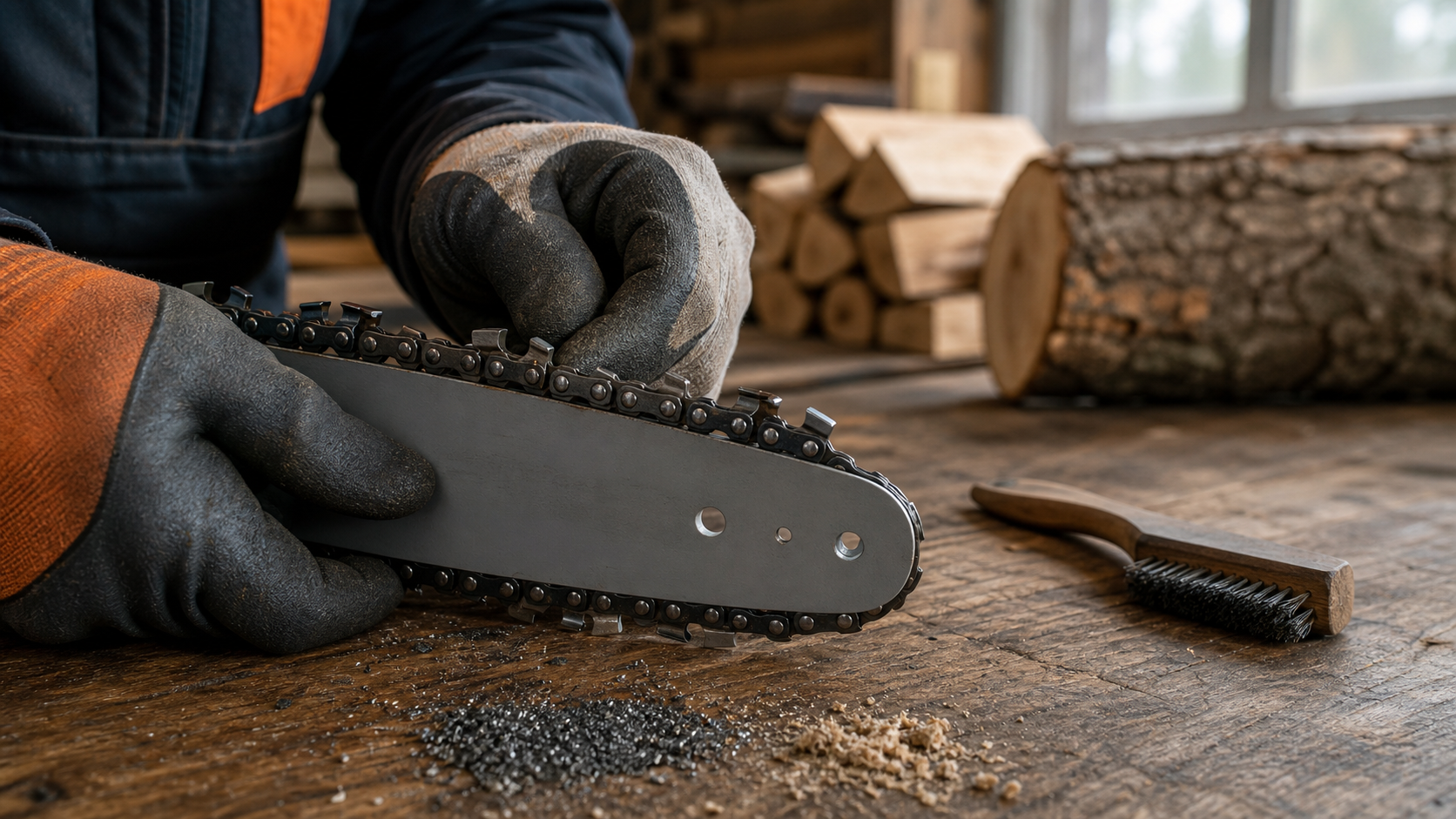
A chainsaw that makes fine dust after sharpening is usually not taking a clean bite, even if the cutter tips feel sharp to your finger. A good chain should pull itself into the wood and throw recognizable chips. Powdery dust means something in the cutter edge, depth gauge, bar setup, or cutting conditions is holding the chain back. This guide is for homeowners, firewood cutters, and small-shop users who sharpen their own chains and need a practical bench check before removing more metal.

Read More arrow_forward
Bench Mounted Chainsaw Sharpener Setup: A Practical First-Chain Checklist

Bench Mounted Chainsaw Sharpener Setup: A Practical First-Chain Checklist

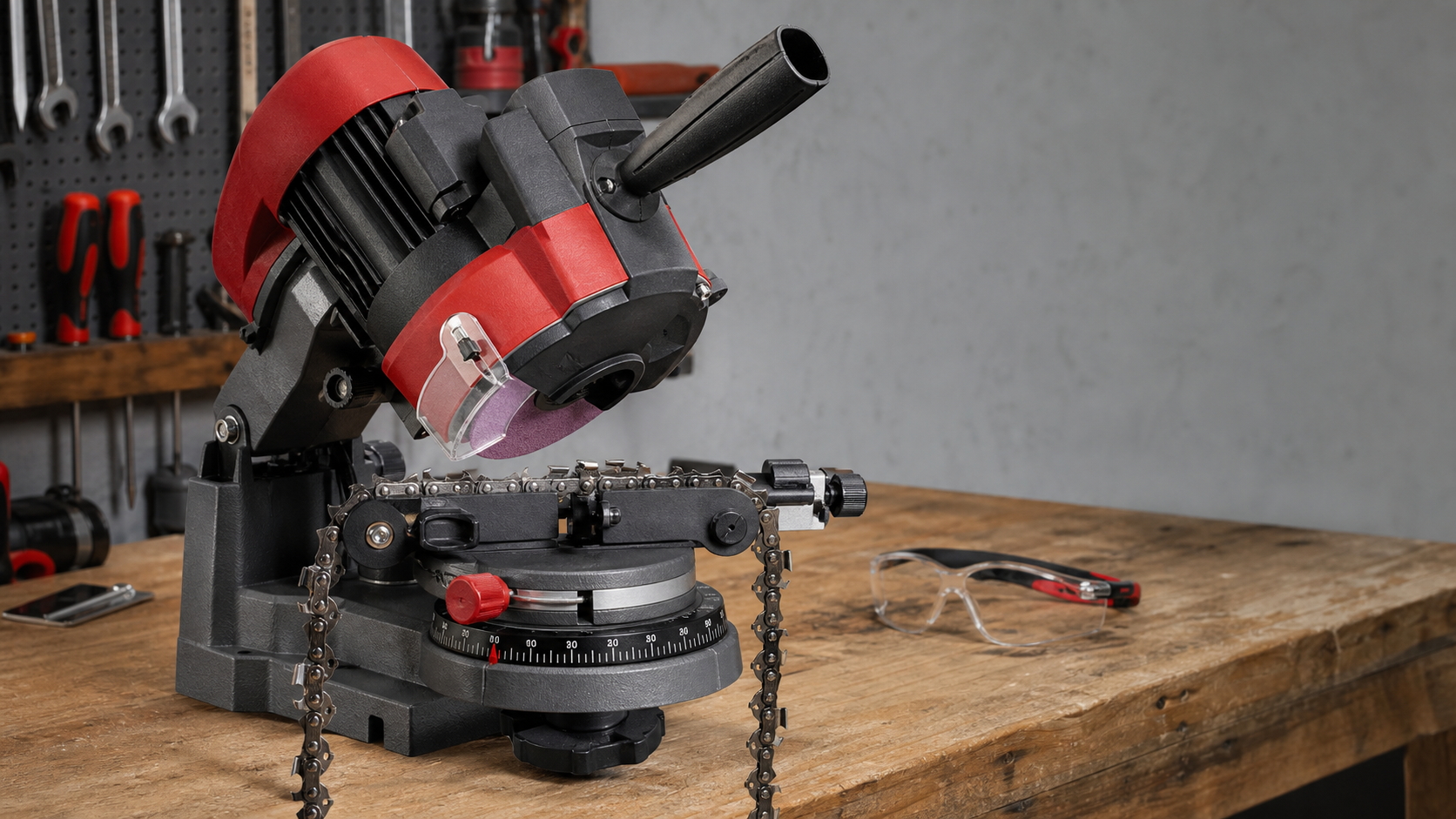
A bench mounted chainsaw sharpener is only accurate after the bench, clamp, chain stop, angle reference, and grinding contact are all working together. If the tool rocks, the chain sits crooked, or the first cutter is rushed, the whole chain can come off uneven even though the sharpener looks powerful enough. This guide is for homeowners, firewood cutters, and small workshops setting up an electric chainsaw chain sharpener. The goal is not to grind fast. The goal is to make the first cutter correct, then repeat that setup across the chain.

Read More arrow_forward
How to Choose a Chainsaw Sharpener for Cleaner, Faster Cuts

How to Choose a Chainsaw Sharpener for Cleaner, Faster Cuts

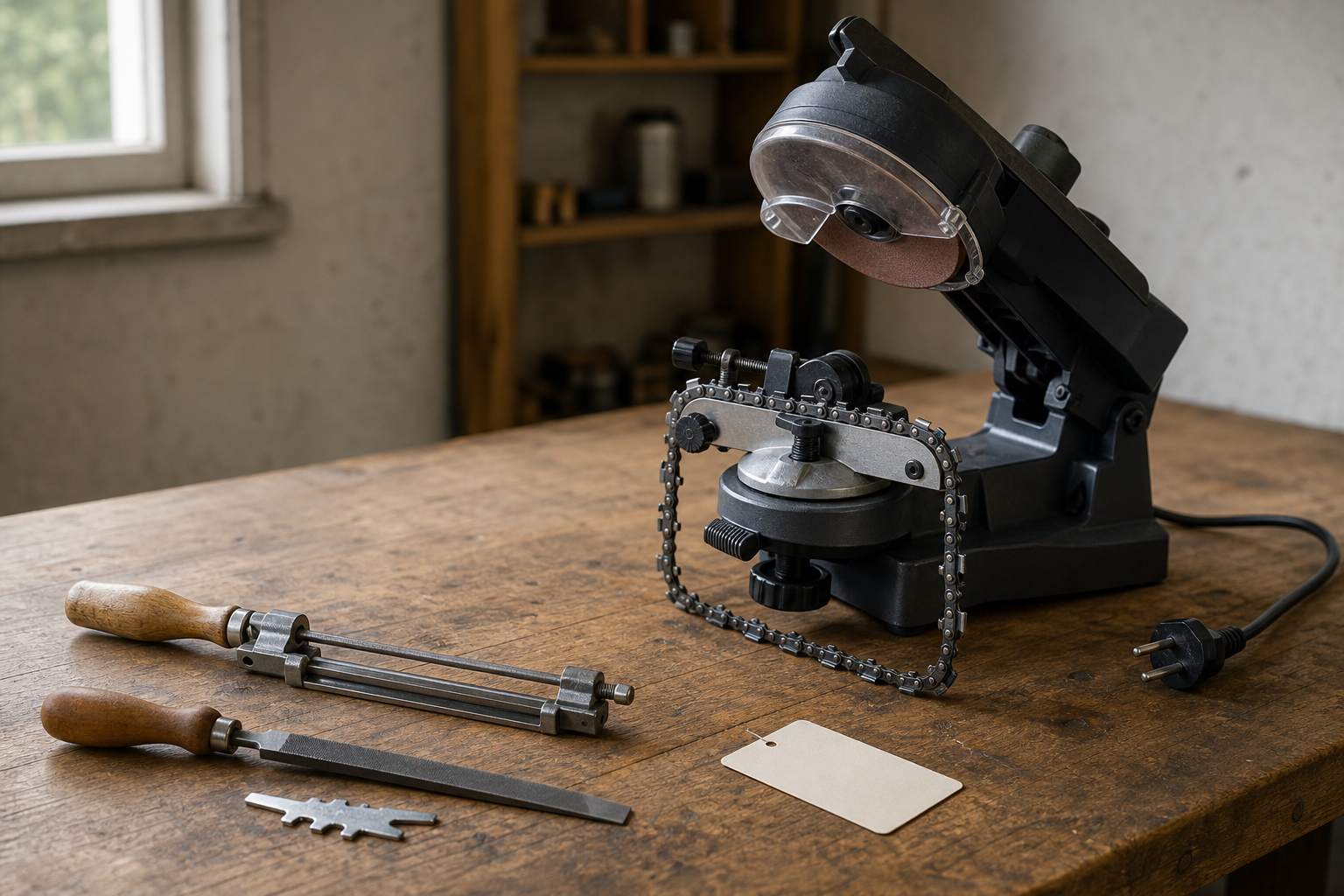
A sharp chain is not a nice-to-have. It is the difference between a saw that pulls itself through wood and one that burns fuel, makes dust, wanders in the cut, and wears out the bar. This guide is for homeowners, firewood cutters, landowners, and light professional users who want to choose a chainsaw sharpener without guessing. The right sharpener depends on how many chains you maintain, how consistent you need each cutter to be, where you sharpen, and how comfortable you are with hand filing. A good choice saves time, protects the chain, and makes every cut feel more controlled.

Read More arrow_forward
Chainsaw Kickback Safety Tips for Beginners

Chainsaw Kickback Safety Tips for Beginners

Chainsaws are powerful tools that can make yard work and timber management much easier, but they come with inherent risks, especially for new users. One of the most dangerous risks associated with chainsaw use is kickback—a sudden, uncontrolled backward motion of the saw when the tip of the bar (the bar nose) strikes an object or the wood being cut. This guide offers essential safety tips tailored for beginners, focusing on practical habits and maintenance to manage the risk of kickback effectively.

Read More arrow_forward
Chainsaw Chain Angle Guide: What to Check Before Filing

Chainsaw Chain Angle Guide: What to Check Before Filing

If you’re a chainsaw user who’s confused by the intricacies of chain angles, depth gauges, and the markings on the chain itself, you’re not alone. This guide is tailored for both novice and experienced users who want to understand how to properly set up and maintain their chainsaw chain angles for optimal performance. By getting the angles and gauges right, you can ensure sharper cuts, greater efficiency, and reduced wear on your tools.

Read More arrow_forward
Chainsaw Chain Tension Guide for Safer Cutting

Chainsaw Chain Tension Guide for Safer Cutting

Welcome to our Chainsaw Chain Tension Guide! This guide is specifically tailored for beginners in chainsaw operation who want to learn how to recognize loose or overtightened chains and safely adjust tension. Proper chain tension is vital for effective cutting and overall chainsaw performance, ensuring both safety and efficiency. Pre-Cutting Checks for Chain Tension Before you begin cutting, conducting a thorough inspection of your chainsaw’s chain tension is crucial. Follow these steps to ensure you’re set for safe operation:

Read More arrow_forward
Chainsaw Bar Oil Troubleshooting: Why the Chain Runs Dry

Chainsaw Bar Oil Troubleshooting: Why the Chain Runs Dry

If you’re a chainsaw user experiencing smoke, dry chains, or rapid bar wear, this guide is tailored for you. It addresses the common issue of inadequate chain lubrication and provides actionable steps to diagnose and remedy the problem before significant damage occurs. By the end, you’ll be equipped to ensure your chainsaw operates smoothly and efficiently. Symptoms of Insufficient Chain Lubrication When your chainsaw struggles to maintain proper lubrication, several symptoms may arise. Here are the telltale signs that indicate you might have a chainsaw bar oil issue:

Read More arrow_forward
Chainsaw Depth Gauge Guide: What Rakers Do

Chainsaw Depth Gauge Guide: What Rakers Do

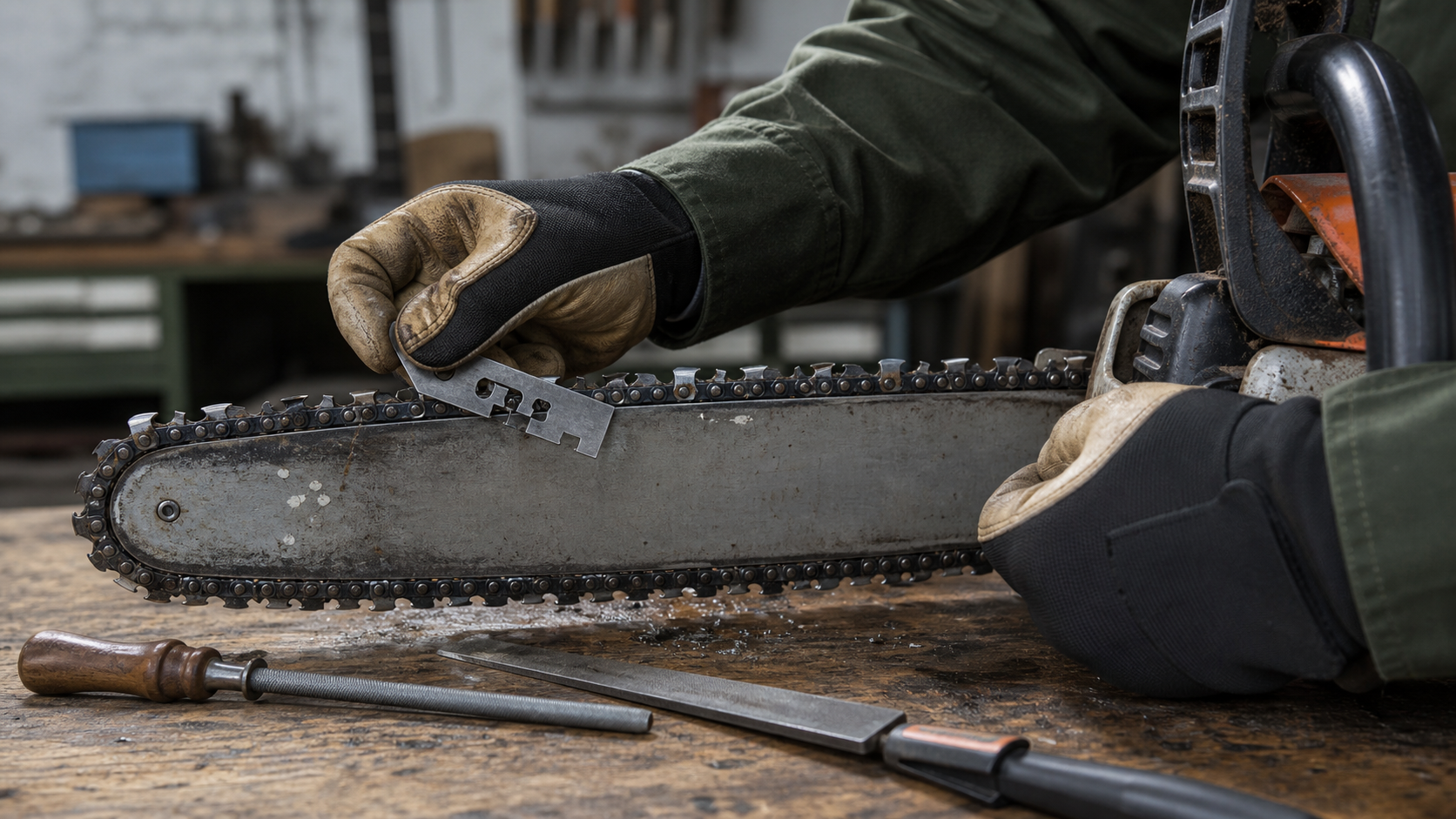
This guide is for chainsaw users who regularly sharpen their cutters but might overlook the importance of depth gauges, also known as rakers. Understanding how these components affect your chainsaw’s performance can improve your cutting efficiency and safety. We’ll explore what depth gauges do, why their settings are crucial, how to check them, signs of improper setup, and how to adjust them cautiously. What Are Depth Gauges and Why They Matter Depth gauges, or rakers, are the small, tooth-like protrusions located in front of each cutting tooth on a chainsaw chain. They control the depth at which each cutter bites into the wood during operation. By regulating this bite, depth gauges significantly impact the overall cutting efficiency.

Read More arrow_forward
home Home shopping_cart Shop menu_book Guides person Account