menu
KONKELL CHAINSAW SHARPENER
Category Archive

Chainsaw Sharpener

Electric Chainsaw Sharpener vs File: Choose by Workload and Damage

Electric Chainsaw Sharpener vs File: Choose by Workload and Damage

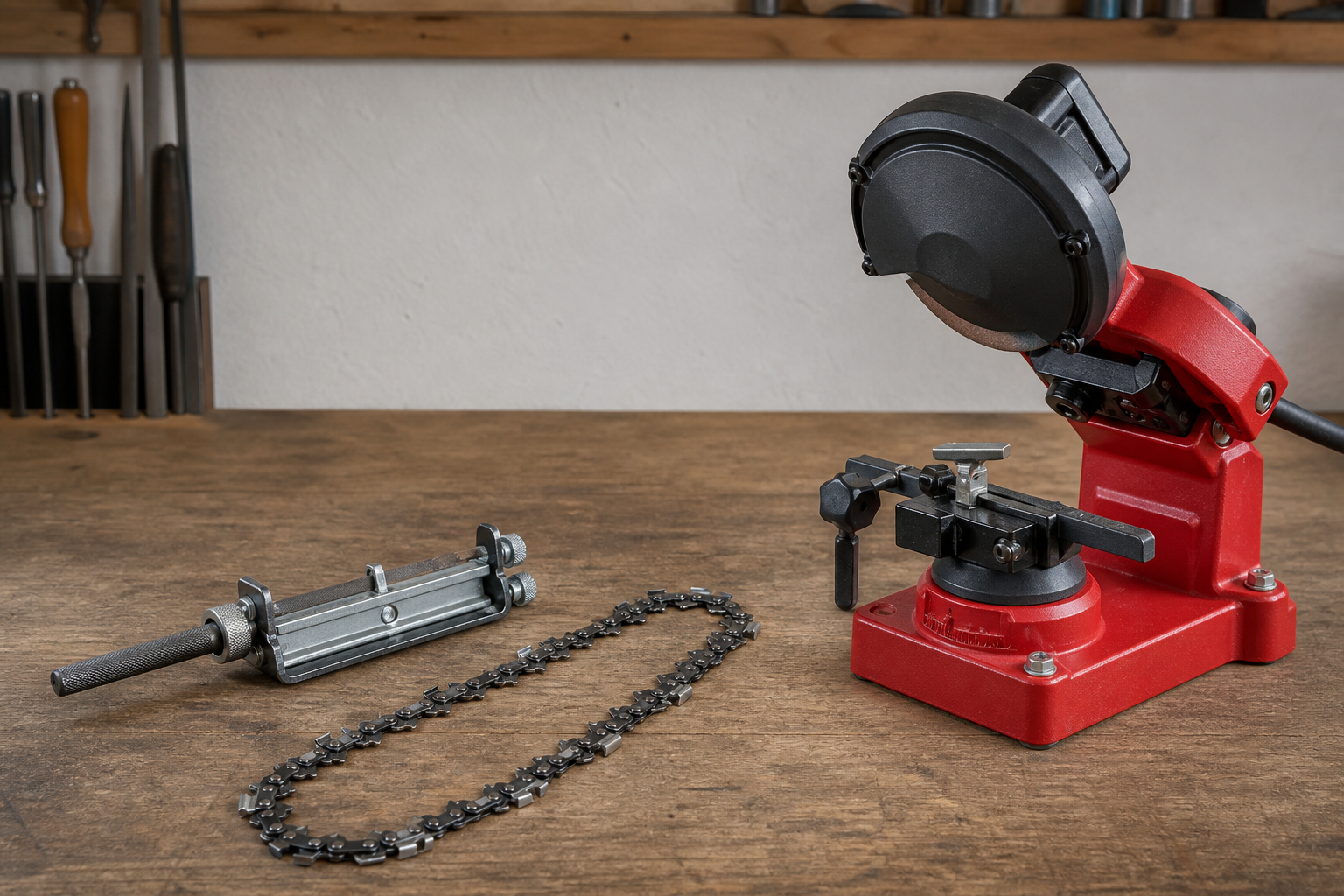
Choose a hand file for portable touch-ups and a bench electric sharpener when several removable chains or uneven cutters justify a fixed, repeatable setup. Neither method identifies the chain, chooses its specification, checks depth gauges, or decides whether a damaged chain should be replaced for you. Start with the jobs you actually have Don’t compare motor power with the price of one file. Write down the next three likely sharpening jobs: where they will happen, how many chains will be waiting, and whether the cutters need a light edge touch-up or correction after contact with soil or another abrasive material.

Read More arrow_forward
Chainsaw Sharpener for Beginners: Choose a Setup You Can Repeat

Chainsaw Sharpener for Beginners: Choose a Setup You Can Repeat

The best chainsaw sharpener for a beginner is a chain-matched guided file for occasional touch-ups, or a bench grinder when several removable chains need the same repeatable fixture. Choose only after identifying the chain and deciding whether the real job is portable maintenance, routine bench work, or recovery from uneven damage. Motor power and accessory count cannot answer that question. The useful beginner choice is the tool whose file or wheel, holding method, and instructions all match the chain—and whose first-cutter result can be inspected before the setup is repeated.

Read More arrow_forward
Chainsaw Sharpener Burns Cutters: Stop Blue Teeth Before They Fail

Chainsaw Sharpener Burns Cutters: Stop Blue Teeth Before They Fail

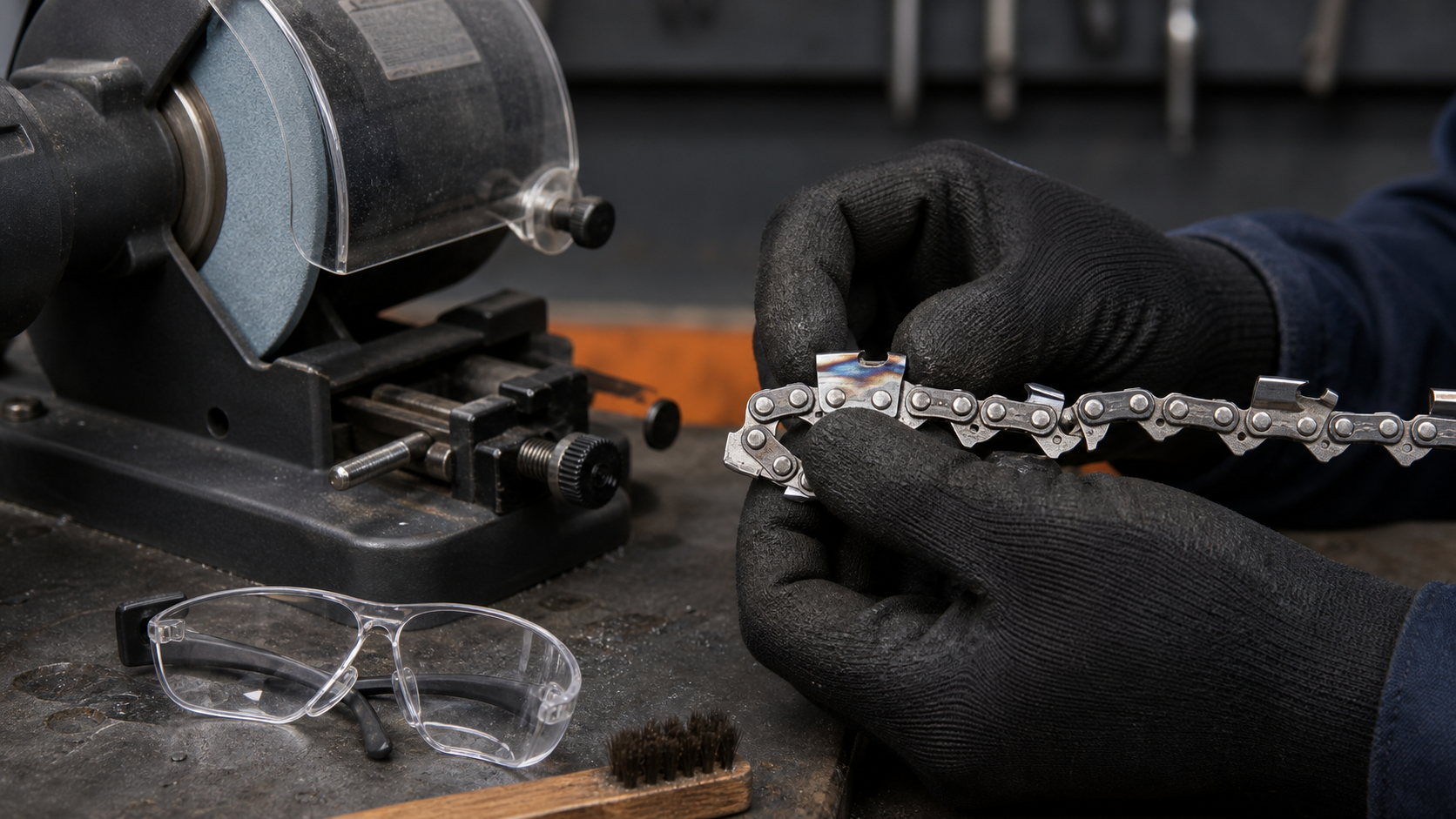
A chainsaw sharpener burns cutters when the grinding wheel puts heat into the cutting edge faster than the metal can shed it. A faint straw, brown, blue, or purple band after grinding is a warning to stop. Long wheel contact, heavy pressure, a glazed wheel, or an incorrect setup can all create that heat. Do not keep grinding the rest of the loop and hope the color will disappear. Mark the affected cutter, switch off the machine, and inspect the chain and grinder. The safest correction starts with finding the cause, not taking another deep pass.

Read More arrow_forward
When to Replace a Chainsaw Sharpener Grinding Wheel

When to Replace a Chainsaw Sharpener Grinding Wheel

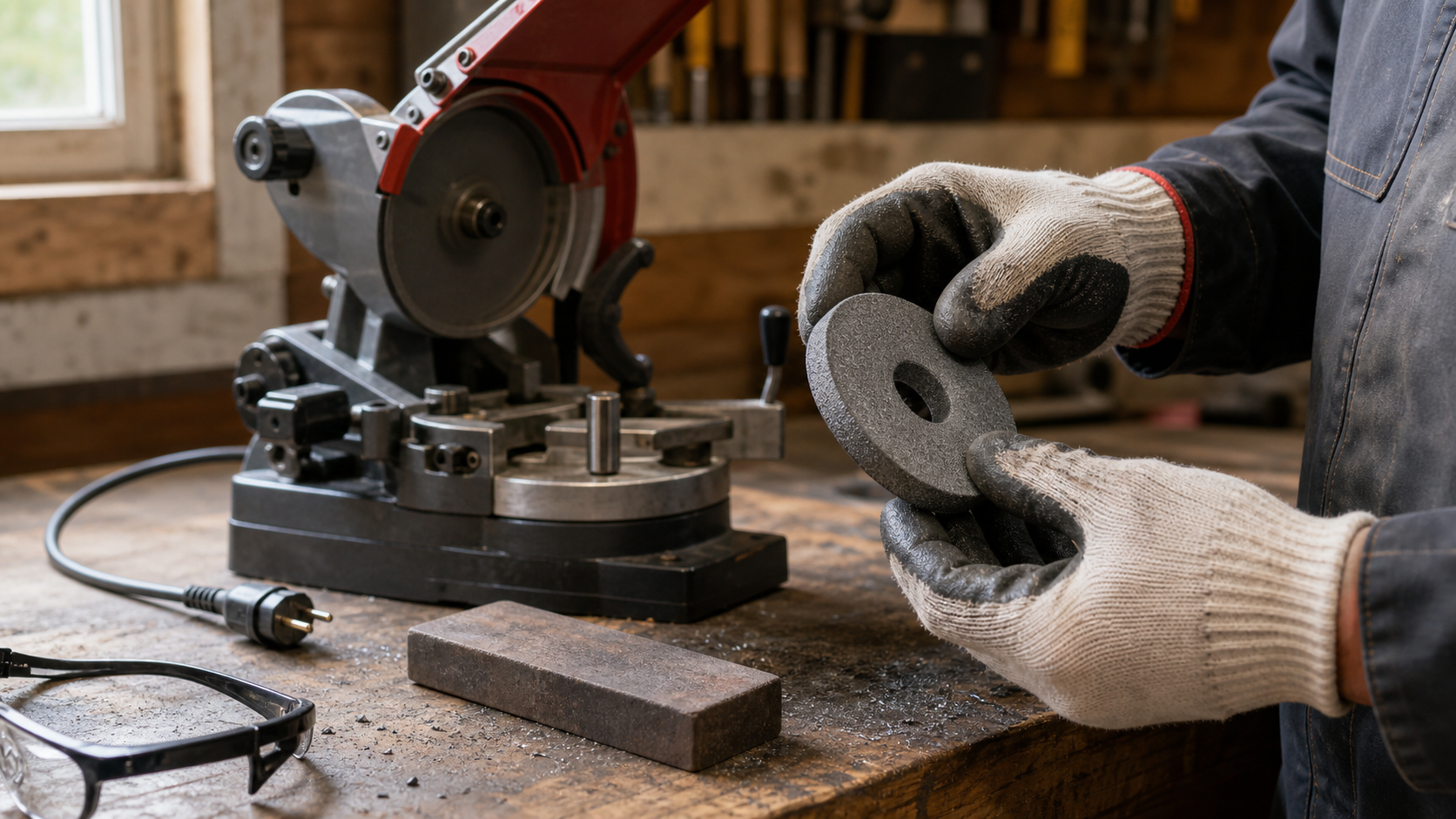
A chainsaw sharpener grinding wheel should be replaced when it is cracked, chipped, wobbling, vibrating abnormally, or too worn to hold the profile required by the grinder manual. A wheel that is merely loaded with metal or slightly out of shape may only need dressing. The distinction matters: dressing exposes fresh abrasive and restores the working edge, but it cannot repair structural damage or recover material that is already gone.

Read More arrow_forward
Bench Mounted Chainsaw Sharpener Setup: A Practical First-Chain Checklist

Bench Mounted Chainsaw Sharpener Setup: A Practical First-Chain Checklist

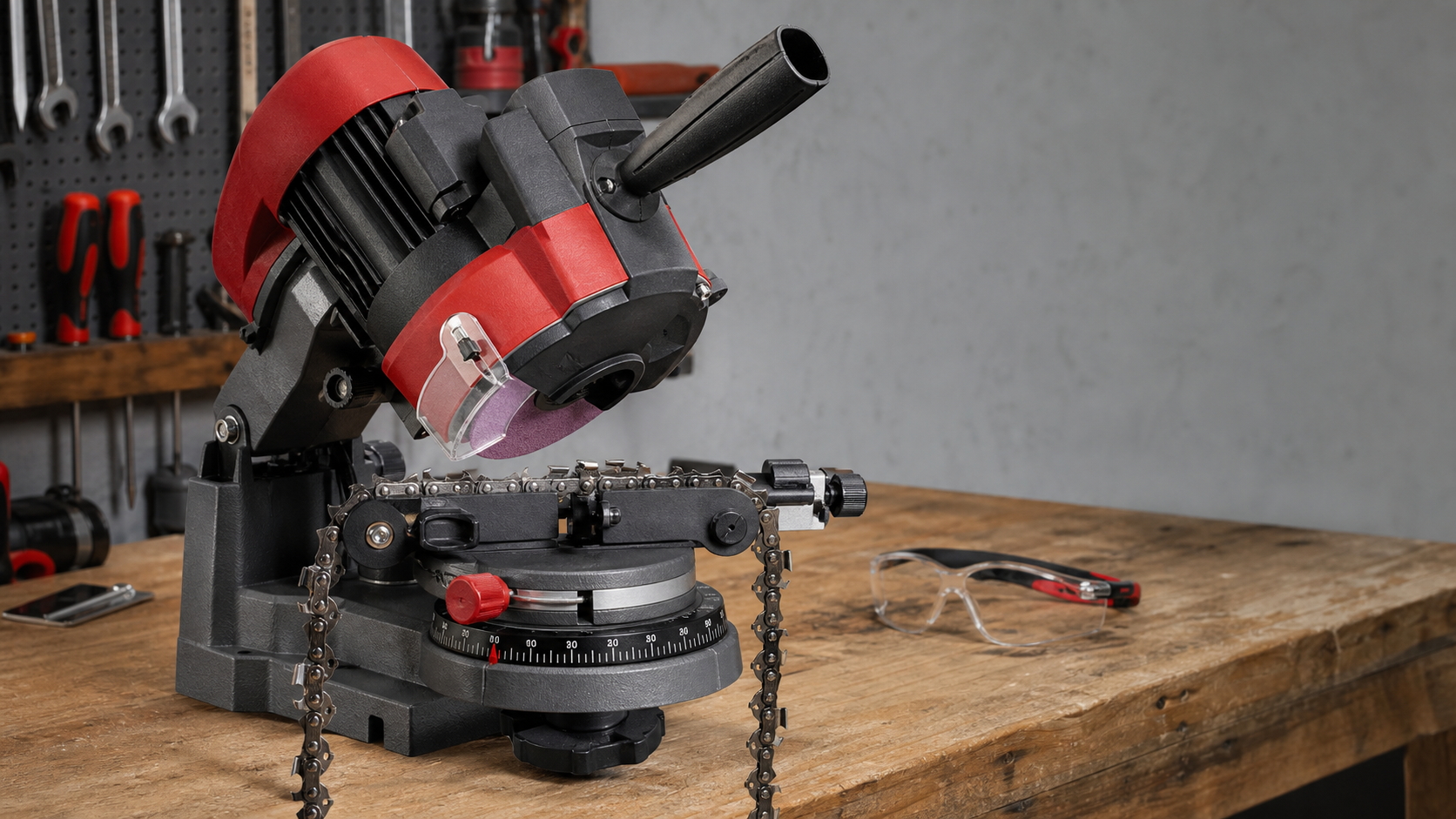
A bench mounted chainsaw sharpener is only accurate after the bench, clamp, chain stop, angle reference, and grinding contact are all working together. If the tool rocks, the chain sits crooked, or the first cutter is rushed, the whole chain can come off uneven even though the sharpener looks powerful enough. This guide is for homeowners, firewood cutters, and small workshops setting up an electric chainsaw chain sharpener. The goal is not to grind fast. The goal is to make the first cutter correct, then repeat that setup across the chain.

Read More arrow_forward
home Home shopping_cart Shop menu_book Guides construction Tools person Account