menu
KONKELL CHAINSAW SHARPENER
Category Archive

Chainsaw Safety

Broken Chainsaw Chain Catcher? What to Check

Broken Chainsaw Chain Catcher? What to Check

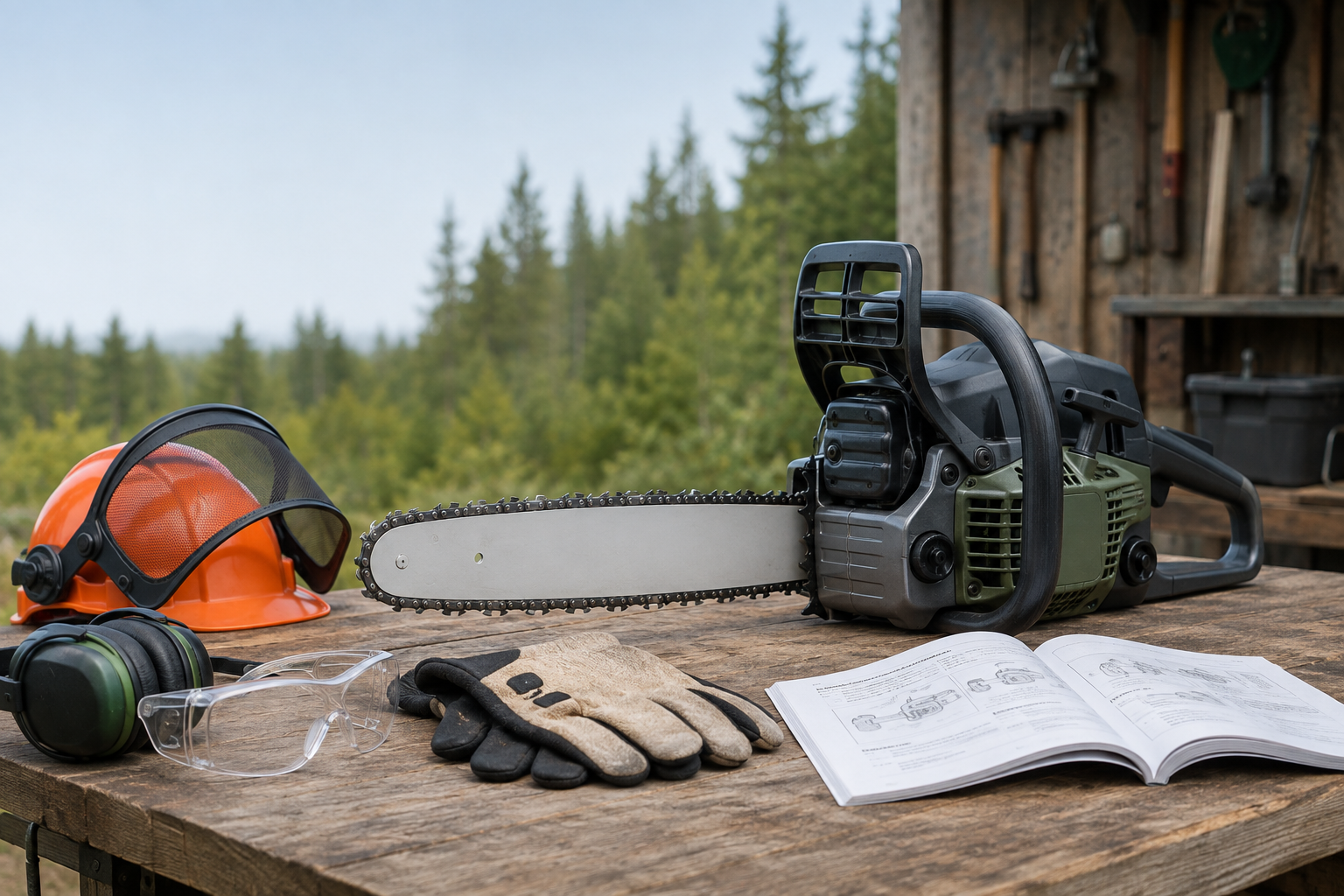
If your chainsaw’s chain catcher is bent, cracked, loose or missing, keep the saw out of service until the correct repair is complete. If the chain came off the bar, check the catcher, its mounting area and the cutting attachment under your model’s instructions before refitting the chain or restarting the saw. Find the catcher in your model’s diagram Switch the saw off and isolate its power as the manual directs. Let it cool and wear protective gloves if you need to handle the stationary chain. The catcher sits near the cutting attachment and helps limit the travel of a thrown or broken chain. Look for the part named chain catcher in the operator’s manual or official parts diagram. For example, the Husqvarna 225i manual labels it in the pre-use figure and gives a separate figure for checking its attachment.
Read More arrow_forward
Chainsaw Stop Switch Not Working? Take It Out of Service

Chainsaw Stop Switch Not Working? Take It Out of Service

If a petrol chainsaw keeps running after you use its designated stop control as the exact manual directs, take it out of service. Do not try to prove that it will stop next time, and do not borrow a shutdown or repair method from a different saw. That is a control-safety fault, not a sharpening, chain-brake, fuel, or throttle-tuning problem. A stopped chain is not the same result as a stopped engine, and a familiar-looking control is not proof that two models share a safe procedure.

Read More arrow_forward
Chainsaw Anti-Vibration Mounts: Inspect Before Cutting

Chainsaw Anti-Vibration Mounts: Inspect Before Cutting

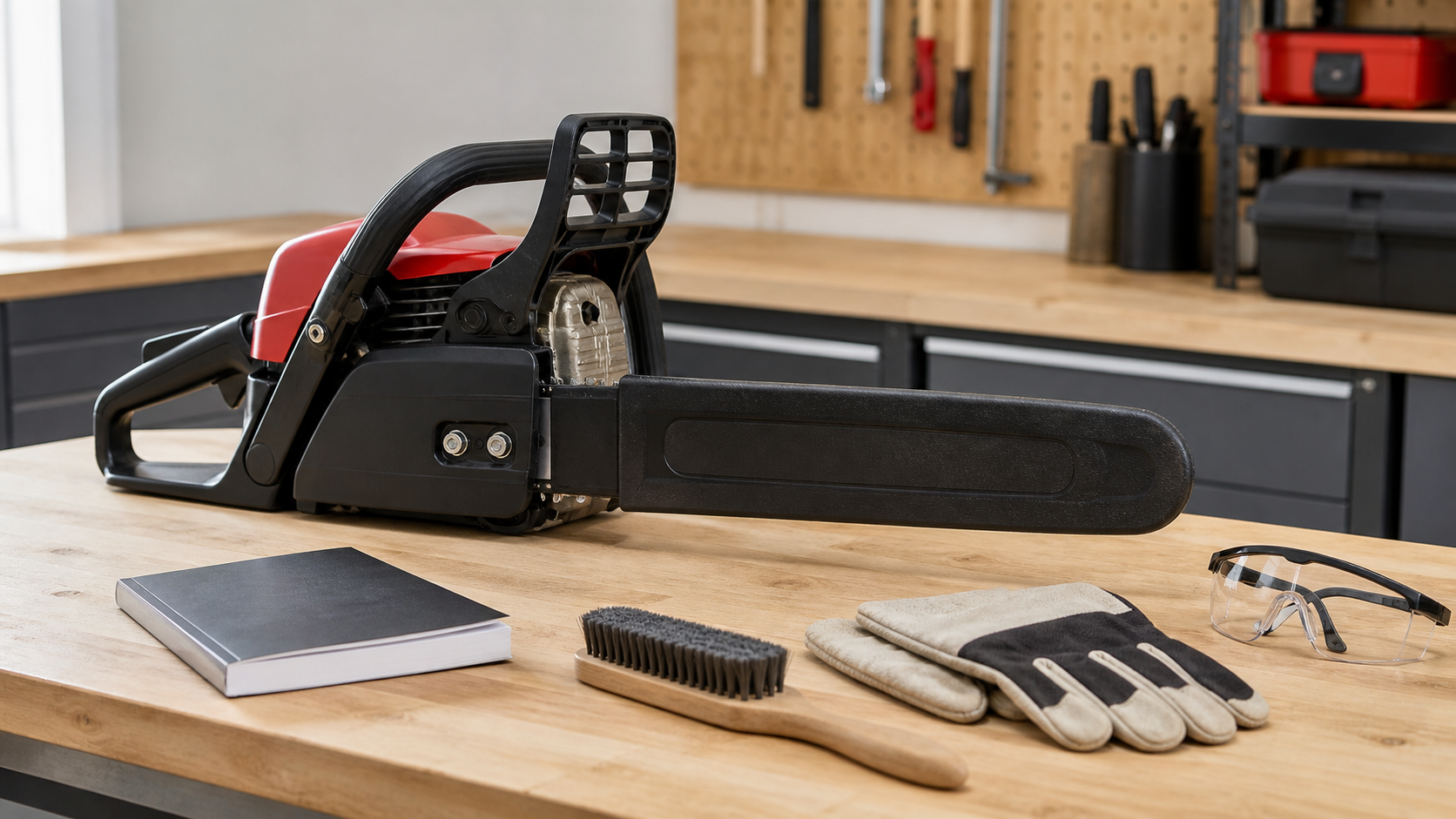
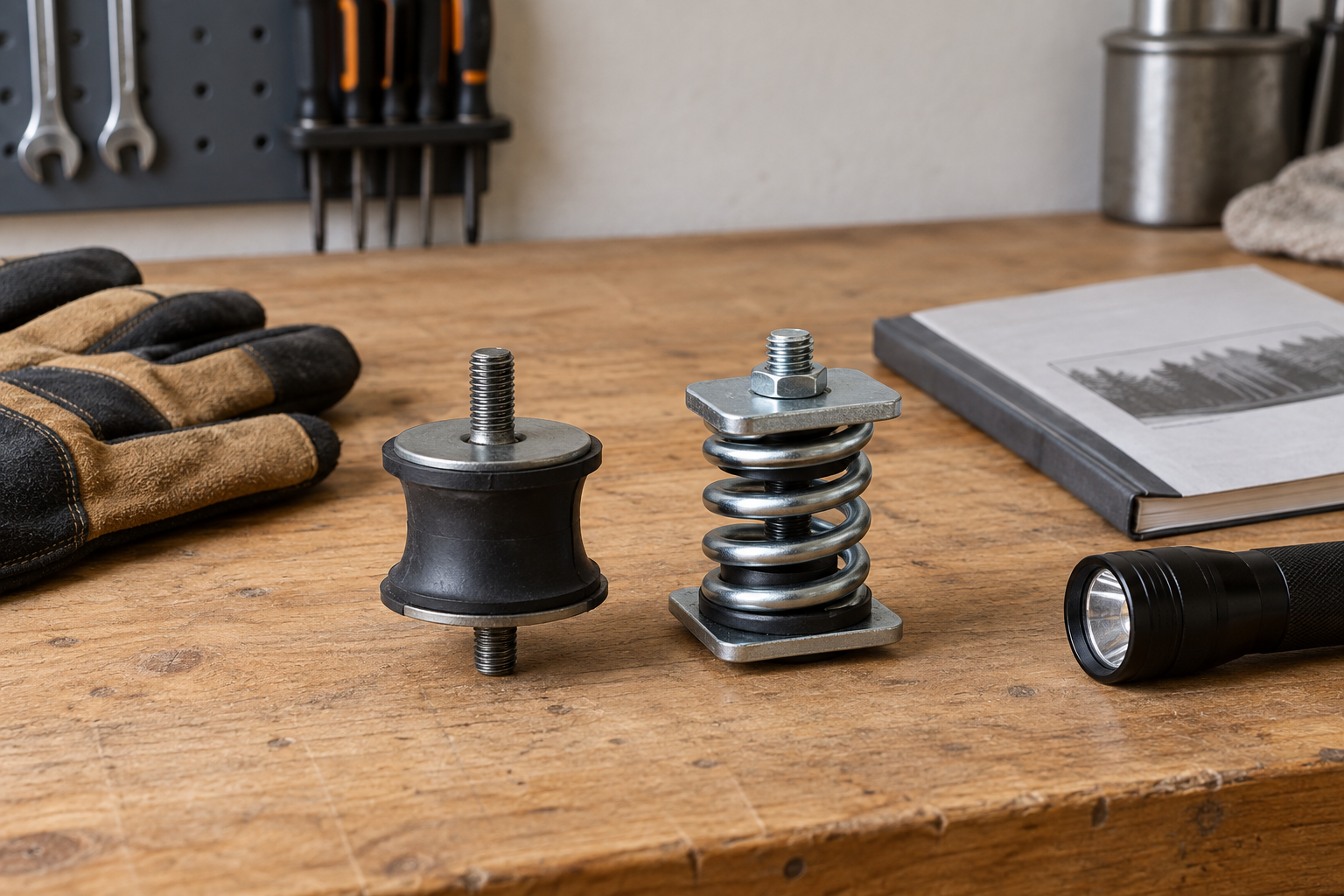
Inspect chainsaw anti-vibration mounts with the saw switched off and unable to start. If a damping unit is cracked, deformed, detached, missing, or not securely connected between the handle and engine unit, keep the saw out of service and use the exact model manual or a qualified service provider. This is a visible condition-and-attachment check, not a running vibration test or a generic replacement procedure. Mount designs, locations, fasteners, and owner-service limits vary between saws.

Read More arrow_forward
Chainsaw Throttle Trigger Stuck? Take It Out of Service

Chainsaw Throttle Trigger Stuck? Take It Out of Service

If a chainsaw throttle trigger is stiff, stays depressed, or will not return to idle, do not use the saw. With the engine off and the chain brake engaged, use the exact operator manual to distinguish its normal starting-control sequence from a throttle lockout or trigger that has failed its control check. This is a safety-control decision, not a generic handle, linkage, carburetor, or spring repair guide. The trigger arrangement and permitted access differ by saw; a similar-looking rear handle is not enough to identify a repair.

Read More arrow_forward
Chainsaw Kickback Safety Tips for Beginners

Chainsaw Kickback Safety Tips for Beginners

To reduce chainsaw kickback risk, keep the upper part of the guide-bar nose away from wood and hidden obstacles, plan how the cut could close, and keep both hands and your body positioned to control an unexpected reaction. Stop before cutting if you cannot see the bar nose, predict how the wood will move, confirm the saw’s safety features and cutting attachment, or maintain firm footing.

Read More arrow_forward
How to Test a Chainsaw Chain Brake Safely

How to Test a Chainsaw Chain Brake Safely

To test a chainsaw chain brake, first inspect the cooled, disabled saw, then perform only the stationary and functional checks specified in the operator manual for that exact model. Do not cut with the saw if the brake will not engage or release as documented, the hand guard or brake parts are damaged, its action has changed, or the chain fails to stop during the manufacturer’s prescribed check.

Read More arrow_forward
Chainsaw PPE for Firewood Cutting: Pre-Start Check

Chainsaw PPE for Firewood Cutting: Pre-Start Check

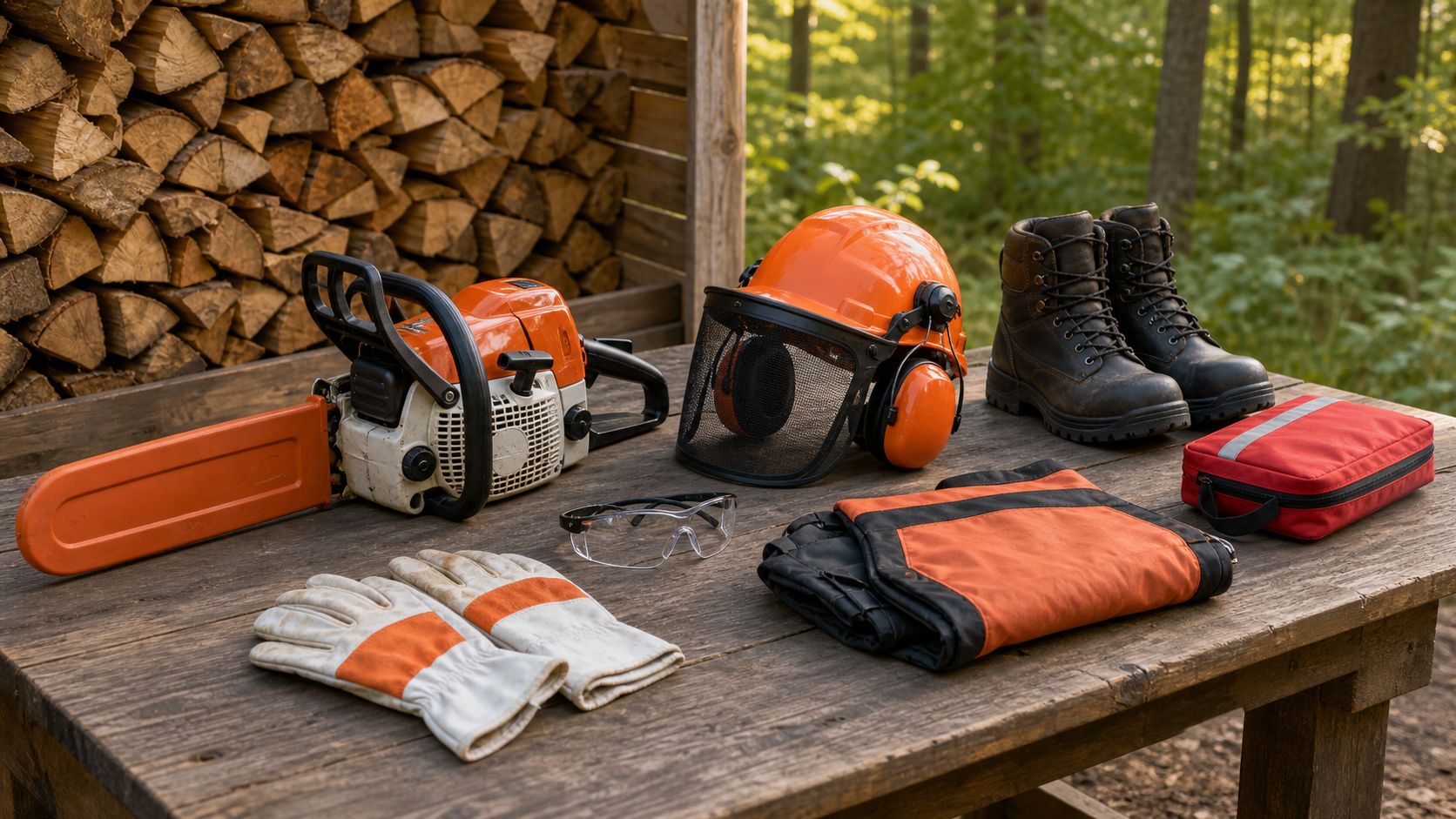
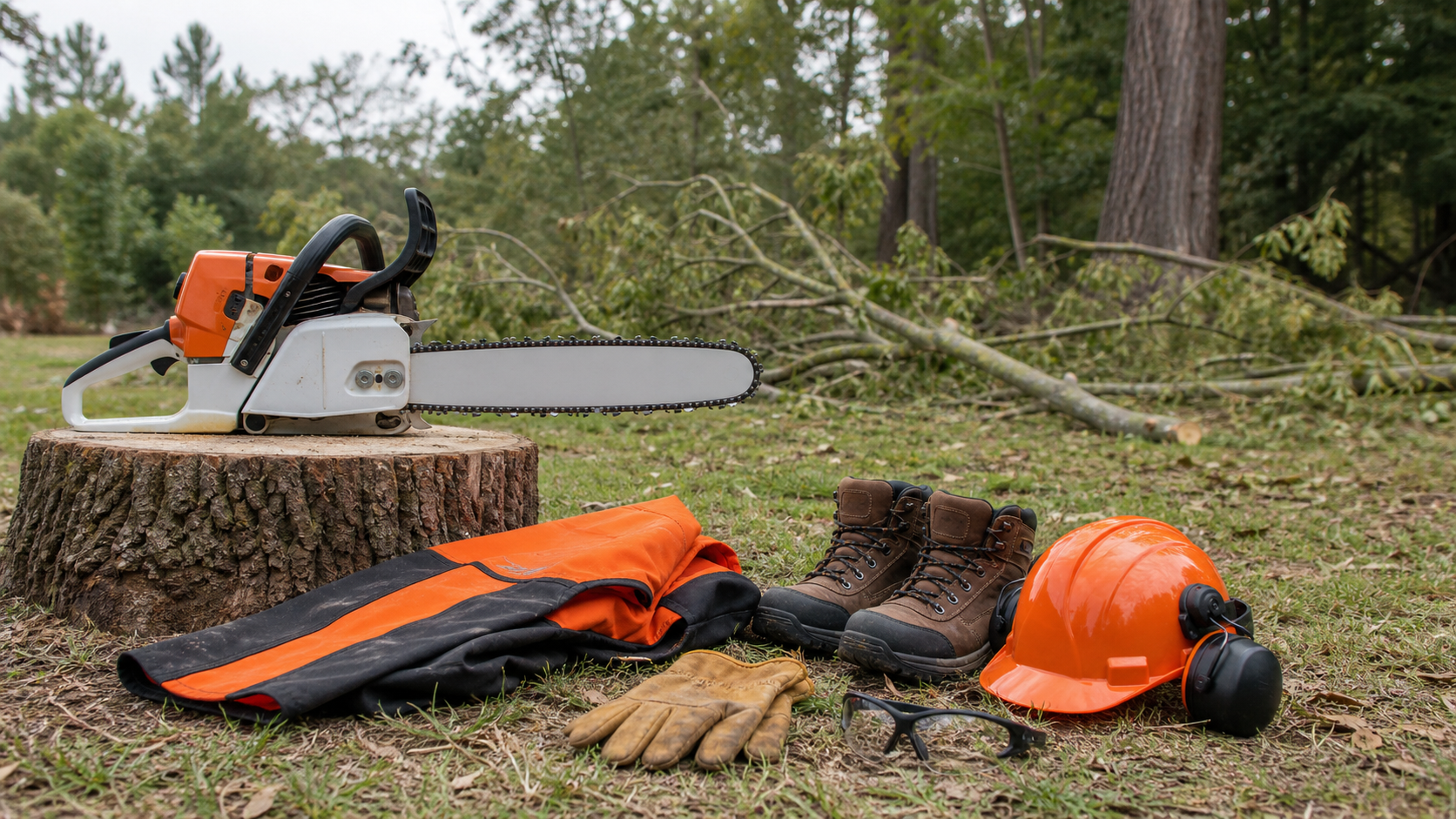
For ground-level firewood cutting, wear serviceable head, eye or face, hearing, hand, leg, and foot protection required by the saw manual, the job, and local rules before starting. Then check the wood, work area, and saw: PPE can reduce the severity of an injury, but it cannot make overhead, tensioned, unstable, or utility-involved wood acceptable to cut.

Read More arrow_forward
Chainsaw Storm Cleanup Safety: Decide What Not to Cut

Chainsaw Storm Cleanup Safety: Decide What Not to Cut

Safe chainsaw storm cleanup starts by deciding what not to cut. Leave anything near a utility line, overhead, standing or leaning, tangled, under visible tension, or attached to an unstable root plate for the utility or a qualified tree professional; an experienced homeowner’s possible work area is limited to stable, separated debris on the ground. Storm damage is not ordinary firewood. Limbs can be bent under other limbs, broken tops may remain overhead, logs can roll when support is removed, and an uprooted tree can shift toward its old position. A sharp chain and a familiar saw do not remove those hazards.

Read More arrow_forward
home Home shopping_cart Shop menu_book Guides construction Tools person Account