menu
KONKELL CHAINSAW SHARPENER
Category Archive

Chainsaw Maintenance

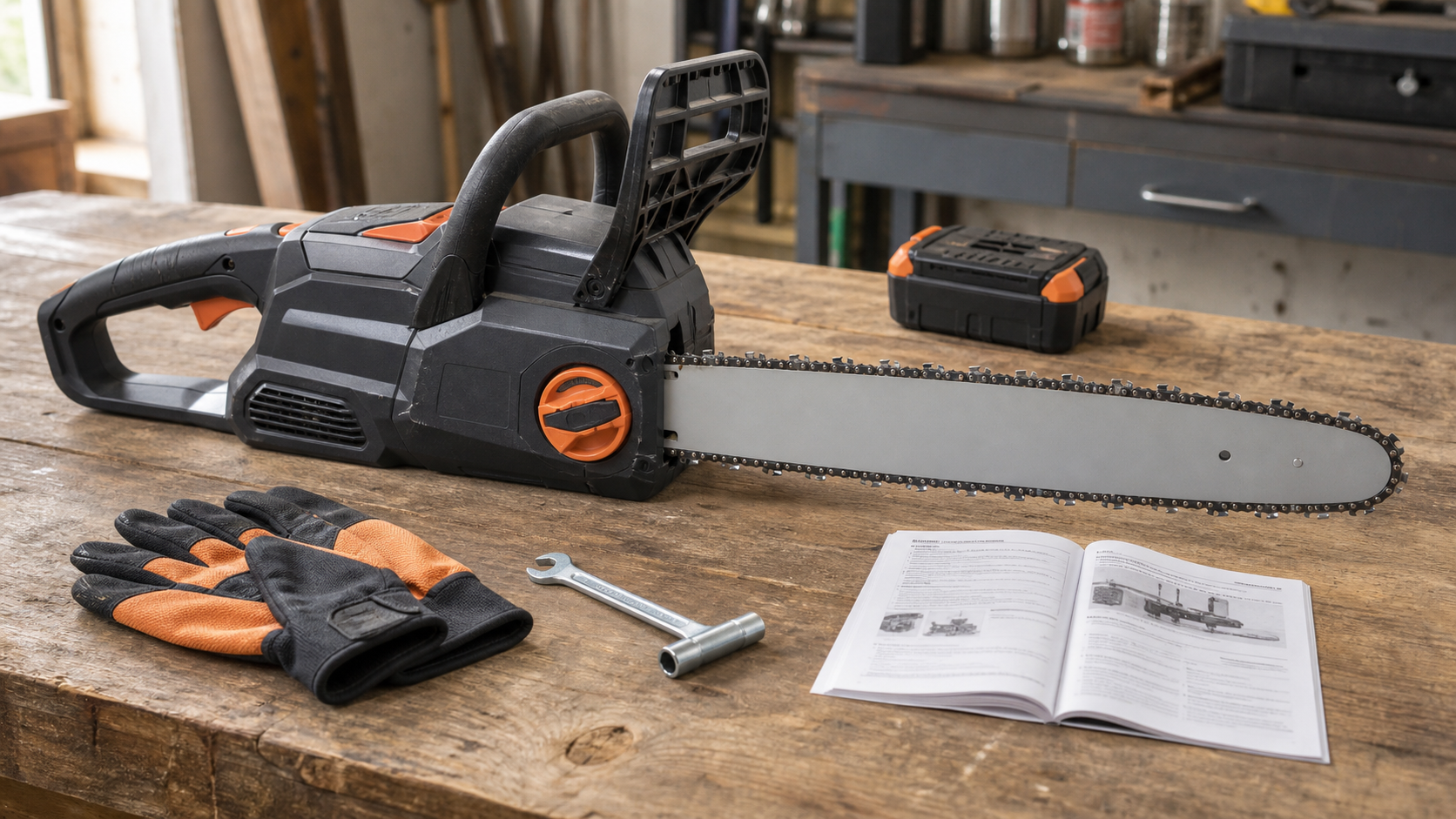
When to Replace a Chainsaw Chain: Inspect Before Sharpening

When to Replace a Chainsaw Chain: Inspect Before Sharpening

Replace a chainsaw chain when it has a crack, a broken or bent cutter or drive link, missing parts, or wear beyond the chain maker’s service marks. If the loop is intact and the cutters remain serviceable, sharpen it once with the correct equipment, then judge the result before buying a replacement.

Read More arrow_forward
When to Replace a Chainsaw Guide Bar: Inspect Before You Buy

When to Replace a Chainsaw Guide Bar: Inspect Before You Buy

Replace a chainsaw guide bar when it is bent, cracked, badly heat-damaged, unable to support the chain squarely, or worn beyond the limits in the bar or saw manual. Clean it before judging it: packed residue, a blocked oil hole, or a removable burr can resemble terminal wear without making the bar scrap. Start with four outcomes, not one symptom A crooked cut, hot bar, unstable chain, or recurring derailment can point toward bar trouble, but none identifies the bar by itself. Cutter geometry, chain tension, lubrication, component mismatch, mounting, and sprocket wear can create similar evidence.

Read More arrow_forward
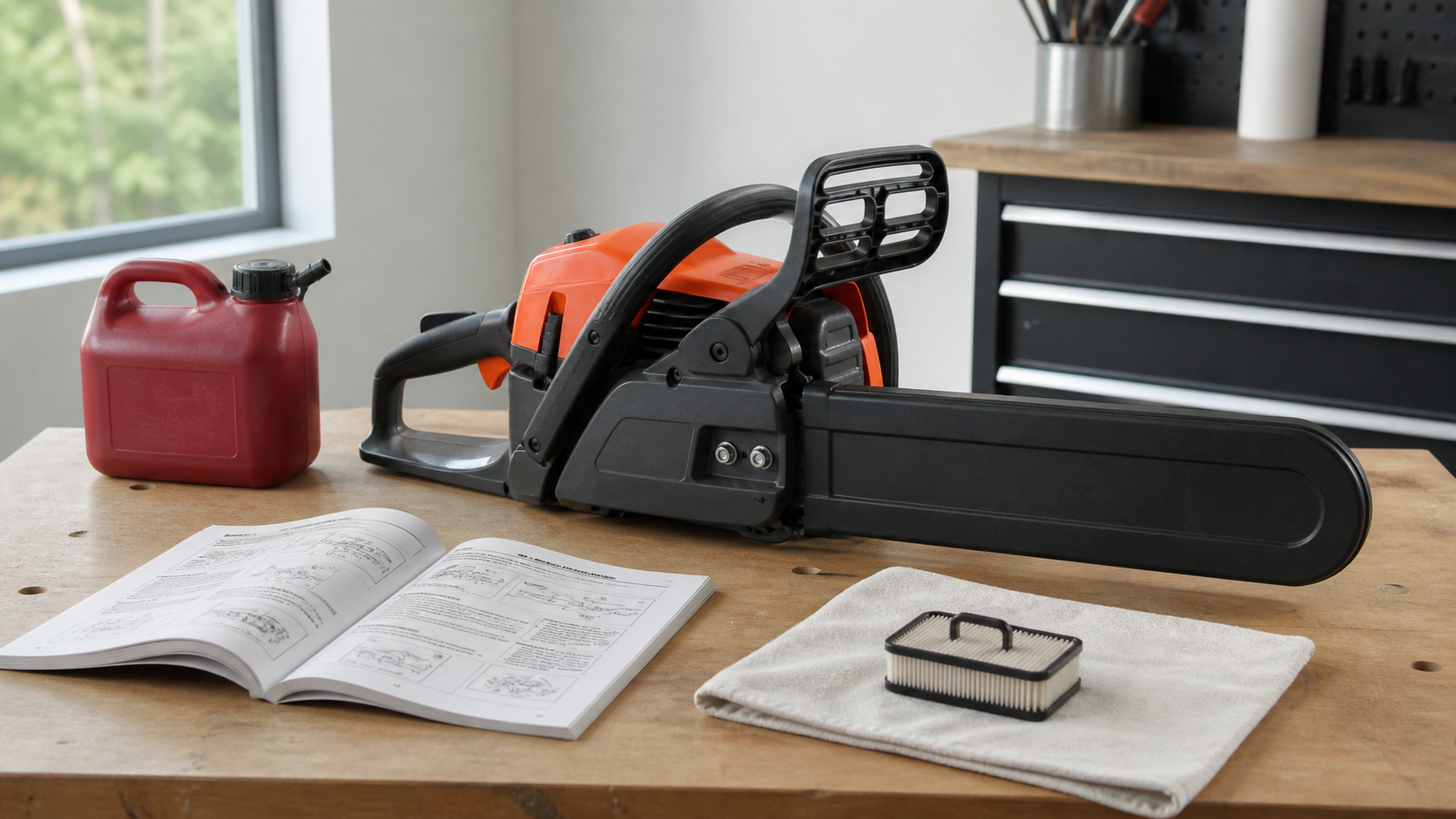
How to Store a Chainsaw: Gas and Battery Checklist

How to Store a Chainsaw: Gas and Battery Checklist

To store a chainsaw for more than a short break, disable its power source, clean and inspect the cutting attachment, protect bare metal, and keep the saw dry, secured, and covered by a scabbard. Gas and battery saws then split into different storage paths, so use the owner’s manual for the fuel, oil, battery charge, and temperature instructions for your exact model.

Read More arrow_forward
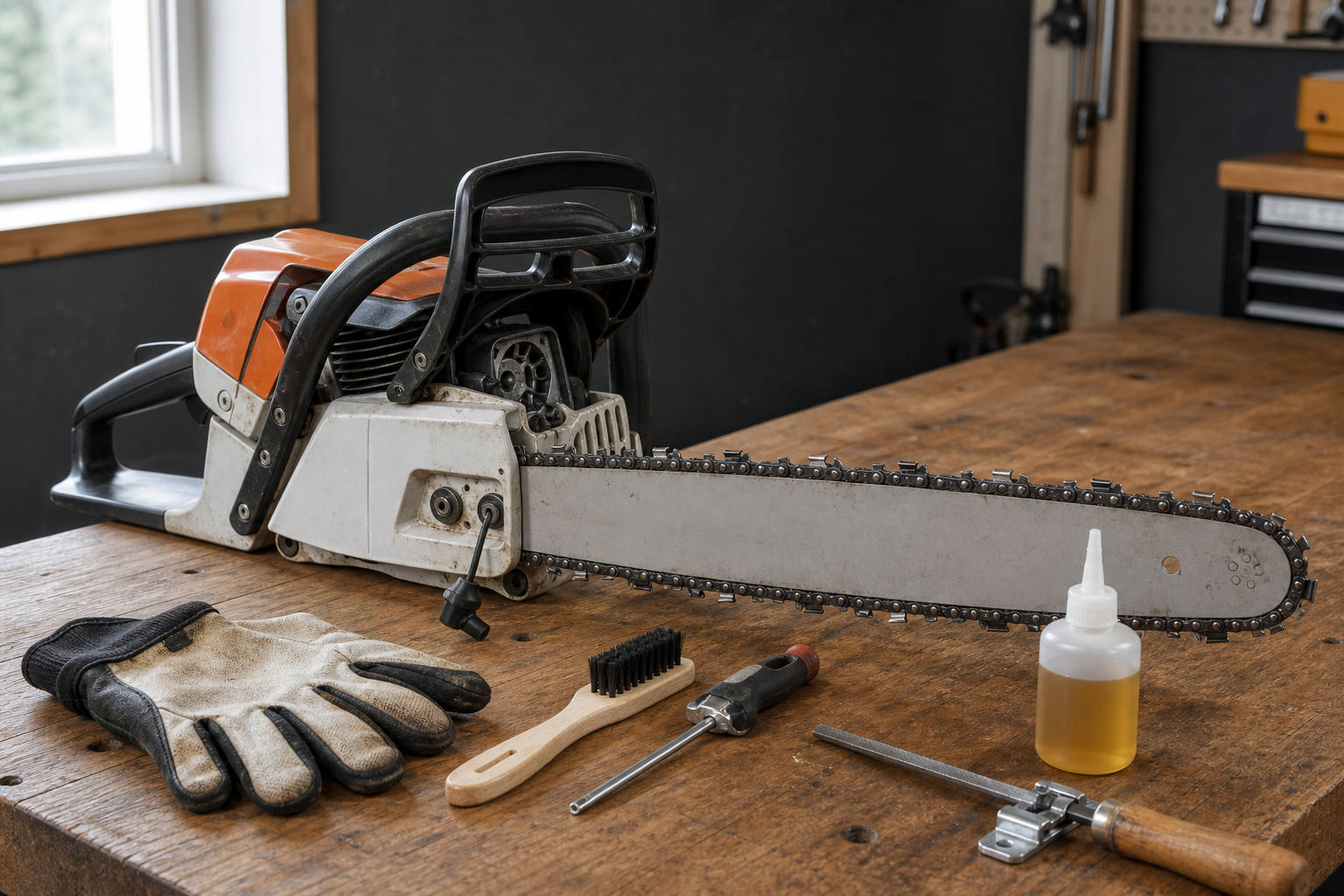
How to Sharpen a Chainsaw Chain by Hand Without Guessing

How to Sharpen a Chainsaw Chain by Hand Without Guessing

To sharpen a chainsaw chain by hand, identify the exact chain, use the round file and guide specified for it, secure the stopped saw, and sharpen a marked reference cutter before matching the others. Check the depth gauges with the matching gauge after the cutters; do not lower them by eye or use a universal angle for every chain.

Read More arrow_forward
Chainsaw Cutters Different Lengths? How to Correct the Chain

Chainsaw Cutters Different Lengths? How to Correct the Chain

Chainsaw cutters of different lengths need inspection before you file the whole loop shorter. A slight random variation is not the same fault as every left-hand cutter being shorter than every right-hand cutter, and one rocked tooth should not dictate an aggressive correction unless the rest of the chain still has enough service life. The practical goal is a loop with sharp, reasonably consistent cutters and depth gauges checked against the corrected cutter geometry. This bench method helps you decide what to match, what to leave alone, and when the chain is no longer worth reworking.

Read More arrow_forward
Chainsaw Still Dull After Sharpening? Diagnose the Chain Before Filing Again

Chainsaw Still Dull After Sharpening? Diagnose the Chain Before Filing Again

A chainsaw that is still dull after sharpening usually has a cutting edge that was not fully restored, depth gauges that no longer match the shortened cutters, or inconsistent cutter geometry around the loop. Do not start another full sharpening pass until you know which fault you are correcting. This guide is for homeowners, firewood cutters, and workshop users who have just filed or ground a chain but still need to push the saw through clean wood. Put the saw aside, clean the chain enough to see bare metal, and work through the checks in order.

Read More arrow_forward
How Often Should You Sharpen a Chainsaw Chain?

How Often Should You Sharpen a Chainsaw Chain?

Sharpen a chainsaw chain when its cutting behavior changes—not after an arbitrary number of cuts, fuel tanks, or hours. A chain that produces coarse chips, feeds into sound wood without being forced, and tracks straight may not need filing. Stop and inspect it when the chips turn dusty, feed pressure rises, the cut slows, or the saw starts pulling or vibrating differently.

Read More arrow_forward
Chainsaw Making Sawdust After Sharpening: What to Check First

Chainsaw Making Sawdust After Sharpening: What to Check First

A chainsaw that makes fine dust after sharpening is usually not taking a clean bite, even if the cutter tips feel sharp to your finger. A good chain should pull itself into the wood and throw recognizable chips. Powdery dust means something in the cutter edge, depth gauge, bar setup, or cutting conditions is holding the chain back. This guide is for homeowners, firewood cutters, and small-shop users who sharpen their own chains and need a practical bench check before removing more metal.

Read More arrow_forward
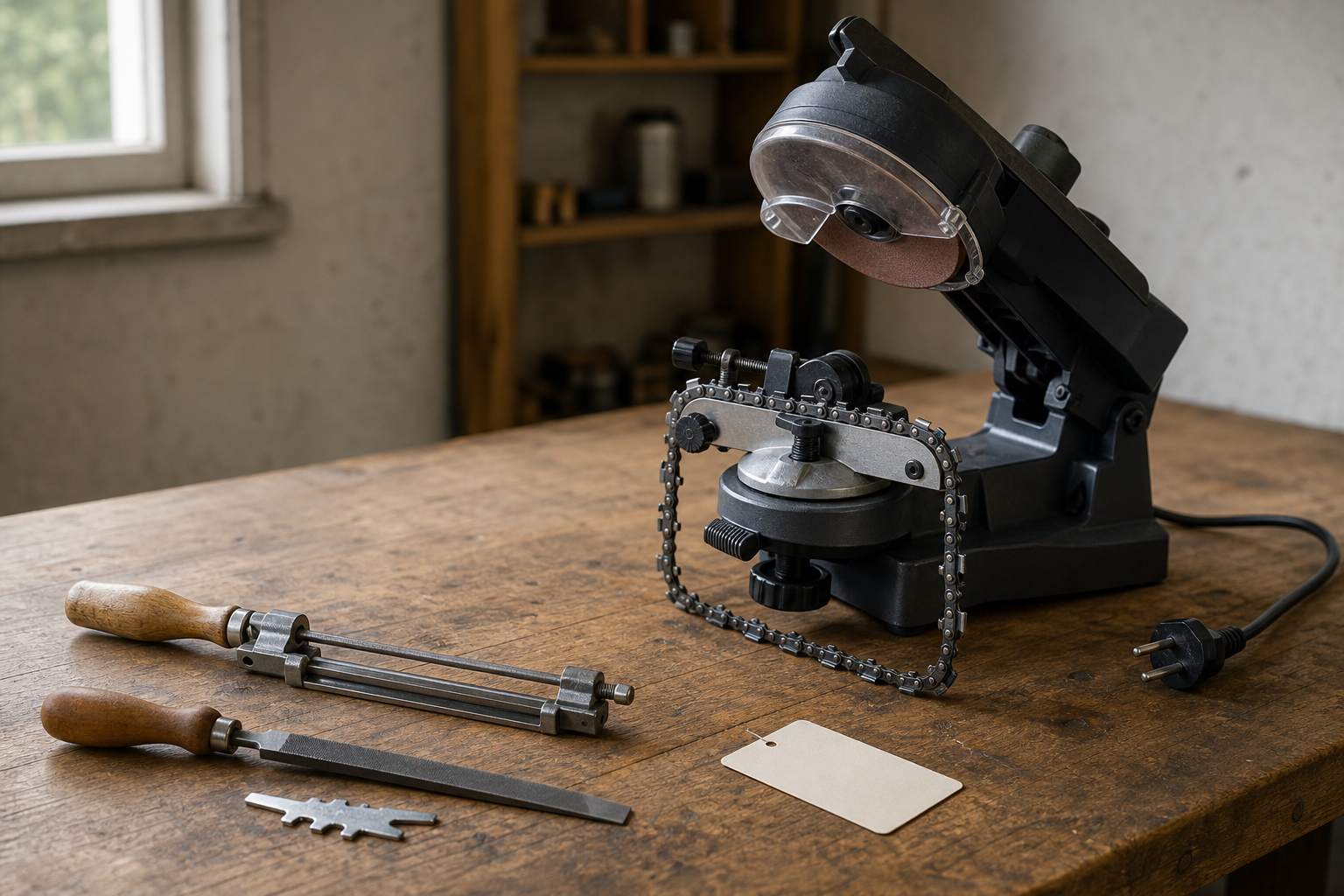
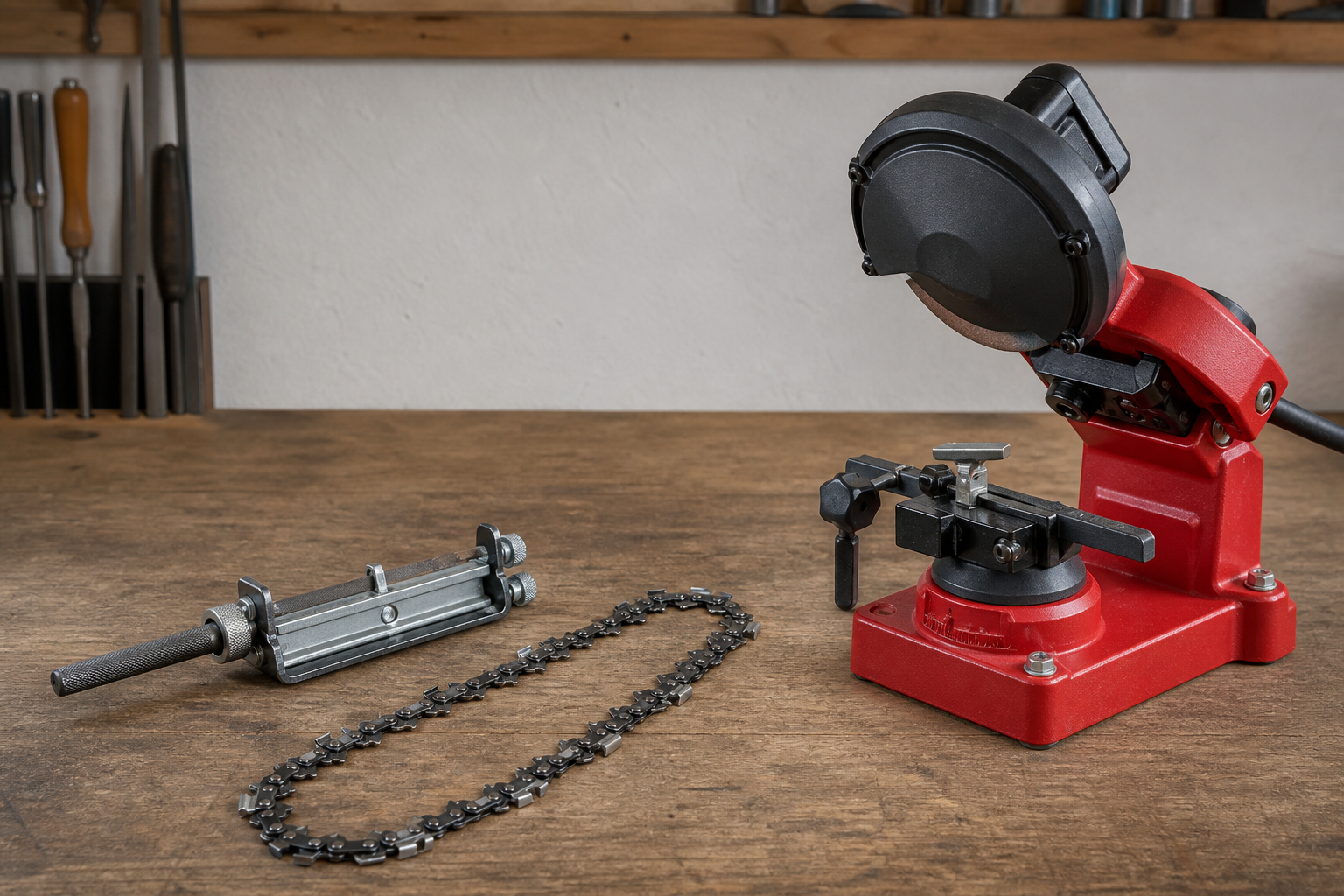
How to Choose a Chainsaw Sharpener for Cleaner, Faster Cuts

How to Choose a Chainsaw Sharpener for Cleaner, Faster Cuts

A sharp chain is not a nice-to-have. It is the difference between a saw that pulls itself through wood and one that burns fuel, makes dust, wanders in the cut, and wears out the bar. This guide is for homeowners, firewood cutters, landowners, and light professional users who want to choose a chainsaw sharpener without guessing. The right sharpener depends on how many chains you maintain, how consistent you need each cutter to be, where you sharpen, and how comfortable you are with hand filing. A good choice saves time, protects the chain, and makes every cut feel more controlled.

Read More arrow_forward
Chainsaw Kickback Safety Tips for Beginners

Chainsaw Kickback Safety Tips for Beginners

Chainsaws are powerful tools that can make yard work and timber management much easier, but they come with inherent risks, especially for new users. One of the most dangerous risks associated with chainsaw use is kickback—a sudden, uncontrolled backward motion of the saw when the tip of the bar (the bar nose) strikes an object or the wood being cut. This guide offers essential safety tips tailored for beginners, focusing on practical habits and maintenance to manage the risk of kickback effectively.

Read More arrow_forward
Chainsaw Chain Angle Guide: What to Check Before Filing

Chainsaw Chain Angle Guide: What to Check Before Filing

If you’re a chainsaw user who’s confused by the intricacies of chain angles, depth gauges, and the markings on the chain itself, you’re not alone. This guide is tailored for both novice and experienced users who want to understand how to properly set up and maintain their chainsaw chain angles for optimal performance. By getting the angles and gauges right, you can ensure sharper cuts, greater efficiency, and reduced wear on your tools.

Read More arrow_forward
Chainsaw Chain Tension Guide for Safer Cutting

Chainsaw Chain Tension Guide for Safer Cutting

Welcome to our Chainsaw Chain Tension Guide! This guide is specifically tailored for beginners in chainsaw operation who want to learn how to recognize loose or overtightened chains and safely adjust tension. Proper chain tension is vital for effective cutting and overall chainsaw performance, ensuring both safety and efficiency. Pre-Cutting Checks for Chain Tension Before you begin cutting, conducting a thorough inspection of your chainsaw’s chain tension is crucial. Follow these steps to ensure you’re set for safe operation:

Read More arrow_forward
home Home shopping_cart Shop menu_book Guides person Account