menu
KONKELL CHAINSAW SHARPENER
Category Archive

Posts

Chainsaw Depth Gauge Symptoms: Too High, Too Low, or Not the Cause?

Chainsaw Depth Gauge Symptoms: Too High, Too Low, or Not the Cause?

Depth gauges that sit too high can limit how much wood the cutters take; gauges filed too low can make the chain grab, chatter, and cut too aggressively. Those symptoms are clues, not proof—inspect the stopped chain with the correct manufacturer-specified gauge before removing any more metal. Read the cut, then verify the chain A depth gauge is the raised part immediately ahead of each cutter. Its height relative to that cutter controls the bite. Because sharpening shortens the cutter, the relationship changes even when the depth gauge itself has not been touched.

Read More arrow_forward
Chainsaw Storm Cleanup Safety: Decide What Not to Cut

Chainsaw Storm Cleanup Safety: Decide What Not to Cut

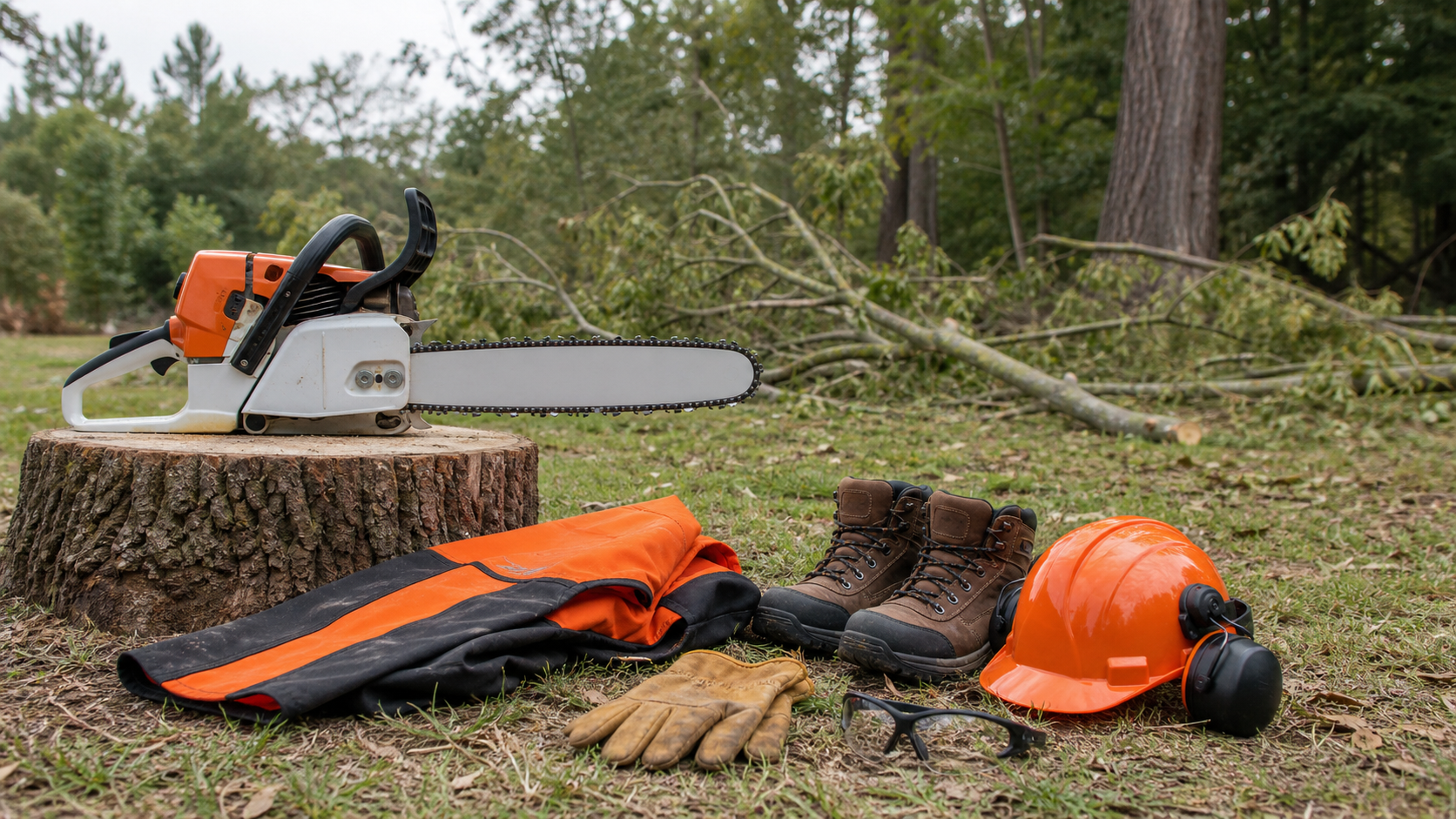
Safe chainsaw storm cleanup starts by deciding what not to cut. Leave anything near a utility line, overhead, standing or leaning, tangled, under visible tension, or attached to an unstable root plate for the utility or a qualified tree professional; an experienced homeowner’s possible work area is limited to stable, separated debris on the ground. Storm damage is not ordinary firewood. Limbs can be bent under other limbs, broken tops may remain overhead, logs can roll when support is removed, and an uprooted tree can shift toward its old position. A sharp chain and a familiar saw do not remove those hazards.

Read More arrow_forward
Why Is My Chainsaw Cutting Crooked? Isolate the Chain or Bar

Why Is My Chainsaw Cutting Crooked? Isolate the Chain or Bar

A chainsaw usually cuts crooked because the left- and right-facing cutters are not removing wood evenly, or because the guide bar no longer supports the chain squarely. Stop forcing the cut: inspect the chain first, then use a known-good chain to separate a sharpening fault from bar wear. Read the curve before changing anything Make one observation in sound, clean wood only if the saw is otherwise safe to operate. Let the chain feed without twisting the rear handle or leaning on the bar. If the kerf begins straight and then curves, or the saw consistently steers to one side, stop and note the direction—but do not use that direction alone to decide which cutters to file.

Read More arrow_forward
Chainsaw Sharpener for Beginners: Choose a Setup You Can Repeat

Chainsaw Sharpener for Beginners: Choose a Setup You Can Repeat

The best chainsaw sharpener for a beginner is a chain-matched guided file for occasional touch-ups, or a bench grinder when several removable chains need the same repeatable fixture. Choose only after identifying the chain and deciding whether the real job is portable maintenance, routine bench work, or recovery from uneven damage. Motor power and accessory count cannot answer that question. The useful beginner choice is the tool whose file or wheel, holding method, and instructions all match the chain—and whose first-cutter result can be inspected before the setup is repeated.

Read More arrow_forward
How to Sharpen a Chainsaw Chain by Hand Without Guessing

How to Sharpen a Chainsaw Chain by Hand Without Guessing

To sharpen a chainsaw chain by hand, identify the exact chain, use the round file and guide specified for it, secure the stopped saw, and sharpen a marked reference cutter before matching the others. Check the depth gauges with the matching gauge after the cutters; do not lower them by eye or use a universal angle for every chain.

Read More arrow_forward
How to Sharpen a Chainsaw in the Field: Touch Up or Swap the Chain?

How to Sharpen a Chainsaw in the Field: Touch Up or Swap the Chain?

To sharpen a chainsaw in the field, stop and cool the saw, secure the guide bar so both hands are free, and use the file and guide specified for the exact chain. Treat field filing as a light edge touch-up; swap the chain or stop work when you find cracks, damaged links, uncertain chain identity, or cutters that need major correction.

Read More arrow_forward
Chainsaw File Size Guide: Match the Chain, Not Just the Pitch

Chainsaw File Size Guide: Match the Chain, Not Just the Pitch

The correct chainsaw file size is the diameter specified for your exact chain model, not a size guessed from bar length or pitch alone. Find the chain code on the cutter or drive link, the package, or the saw manual; then confirm it in that chain maker’s current filing chart before touching the cutter. Use this identification order A pitch label narrows the search, but it may not finish it. STIHL, for example, specifies different files for standard 3/8-inch chain and 3/8-inch PICCO chain. Husqvarna’s current chart likewise separates mini chain families from full-size chains.

Read More arrow_forward
Chainsaw Cutters Different Lengths? How to Correct the Chain

Chainsaw Cutters Different Lengths? How to Correct the Chain

Chainsaw cutters of different lengths need inspection before you file the whole loop shorter. A slight random variation is not the same fault as every left-hand cutter being shorter than every right-hand cutter, and one rocked tooth should not dictate an aggressive correction unless the rest of the chain still has enough service life. The practical goal is a loop with sharp, reasonably consistent cutters and depth gauges checked against the corrected cutter geometry. This bench method helps you decide what to match, what to leave alone, and when the chain is no longer worth reworking.

Read More arrow_forward
Chainsaw Still Dull After Sharpening? Diagnose the Chain Before Filing Again

Chainsaw Still Dull After Sharpening? Diagnose the Chain Before Filing Again

A chainsaw that is still dull after sharpening usually has a cutting edge that was not fully restored, depth gauges that no longer match the shortened cutters, or inconsistent cutter geometry around the loop. Do not start another full sharpening pass until you know which fault you are correcting. This guide is for homeowners, firewood cutters, and workshop users who have just filed or ground a chain but still need to push the saw through clean wood. Put the saw aside, clean the chain enough to see bare metal, and work through the checks in order.

Read More arrow_forward
Chainsaw Chain Chatters After Sharpening: What to Check

Chainsaw Chain Chatters After Sharpening: What to Check

A chainsaw chain that chatters after sharpening is usually taking an uneven or overly aggressive bite. Stop cutting and inspect the chain before trying to force it through another log. The common causes are depth gauges filed too low, hooked cutter profiles, inconsistent cutter lengths, incorrect tension, or a worn guide bar that no longer supports the chain squarely. Do not diagnose the problem while the chain is moving. Shut the saw down, let it cool, isolate its starting system as directed in the manual, and wear gloves while handling the chain. A short workshop inspection can separate a sharpening error from a bar, sprocket, or chain-condition problem.

Read More arrow_forward
How Often Should You Sharpen a Chainsaw Chain?

How Often Should You Sharpen a Chainsaw Chain?

Sharpen a chainsaw chain when its cutting behavior changes—not after an arbitrary number of cuts, fuel tanks, or hours. A chain that produces coarse chips, feeds into sound wood without being forced, and tracks straight may not need filing. Stop and inspect it when the chips turn dusty, feed pressure rises, the cut slows, or the saw starts pulling or vibrating differently.

Read More arrow_forward
Chainsaw Sharpener Burns Cutters: Stop Blue Teeth Before They Fail

Chainsaw Sharpener Burns Cutters: Stop Blue Teeth Before They Fail

A chainsaw sharpener burns cutters when the grinding wheel puts heat into the cutting edge faster than the metal can shed it. A faint straw, brown, blue, or purple band after grinding is a warning to stop. Long wheel contact, heavy pressure, a glazed wheel, or an incorrect setup can all create that heat. Do not keep grinding the rest of the loop and hope the color will disappear. Mark the affected cutter, switch off the machine, and inspect the chain and grinder. The safest correction starts with finding the cause, not taking another deep pass.

Read More arrow_forward
home Home shopping_cart Shop menu_book Guides construction Tools person Account