How to Clean a Chainsaw Air Filter Without Guessing
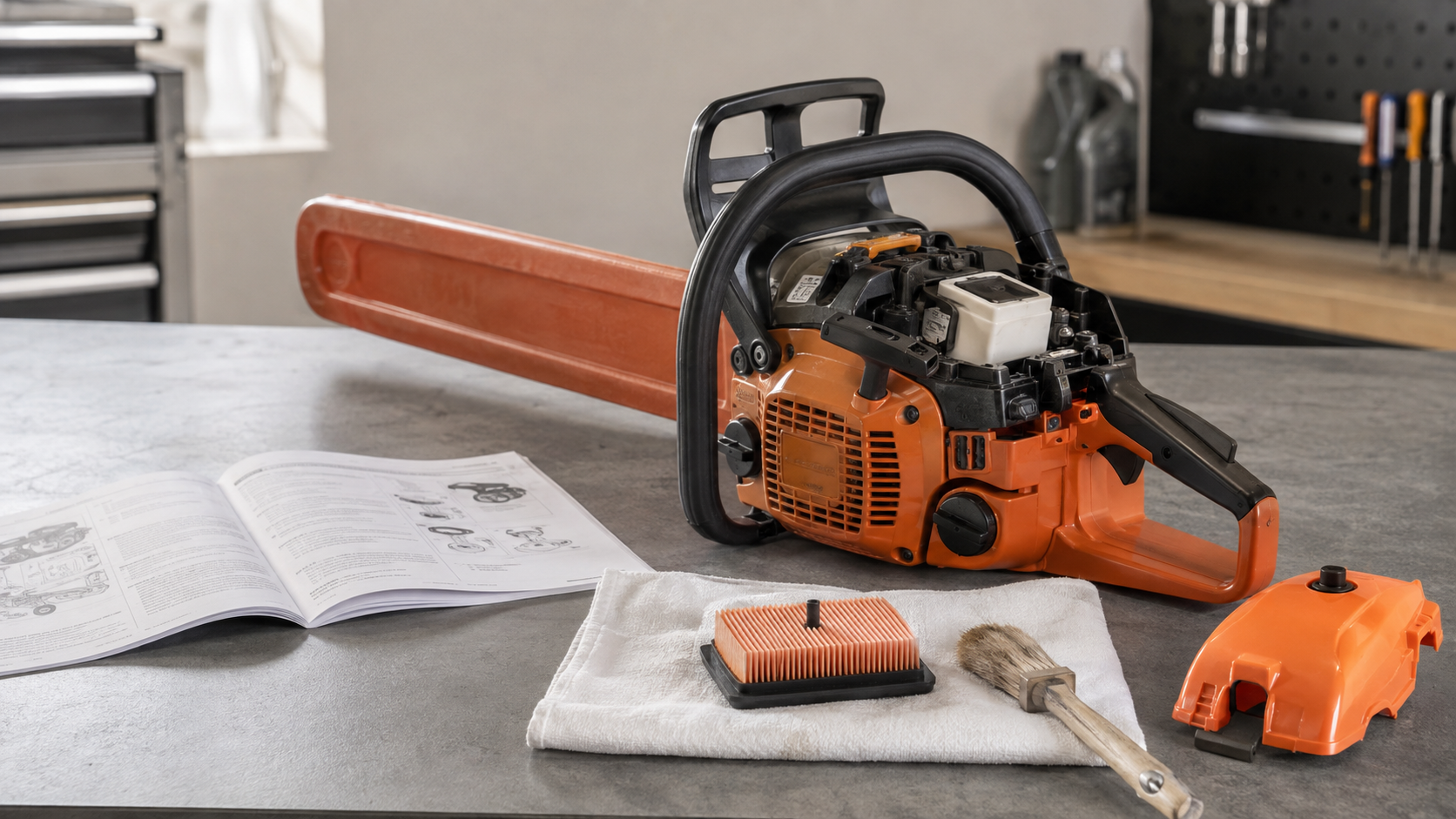
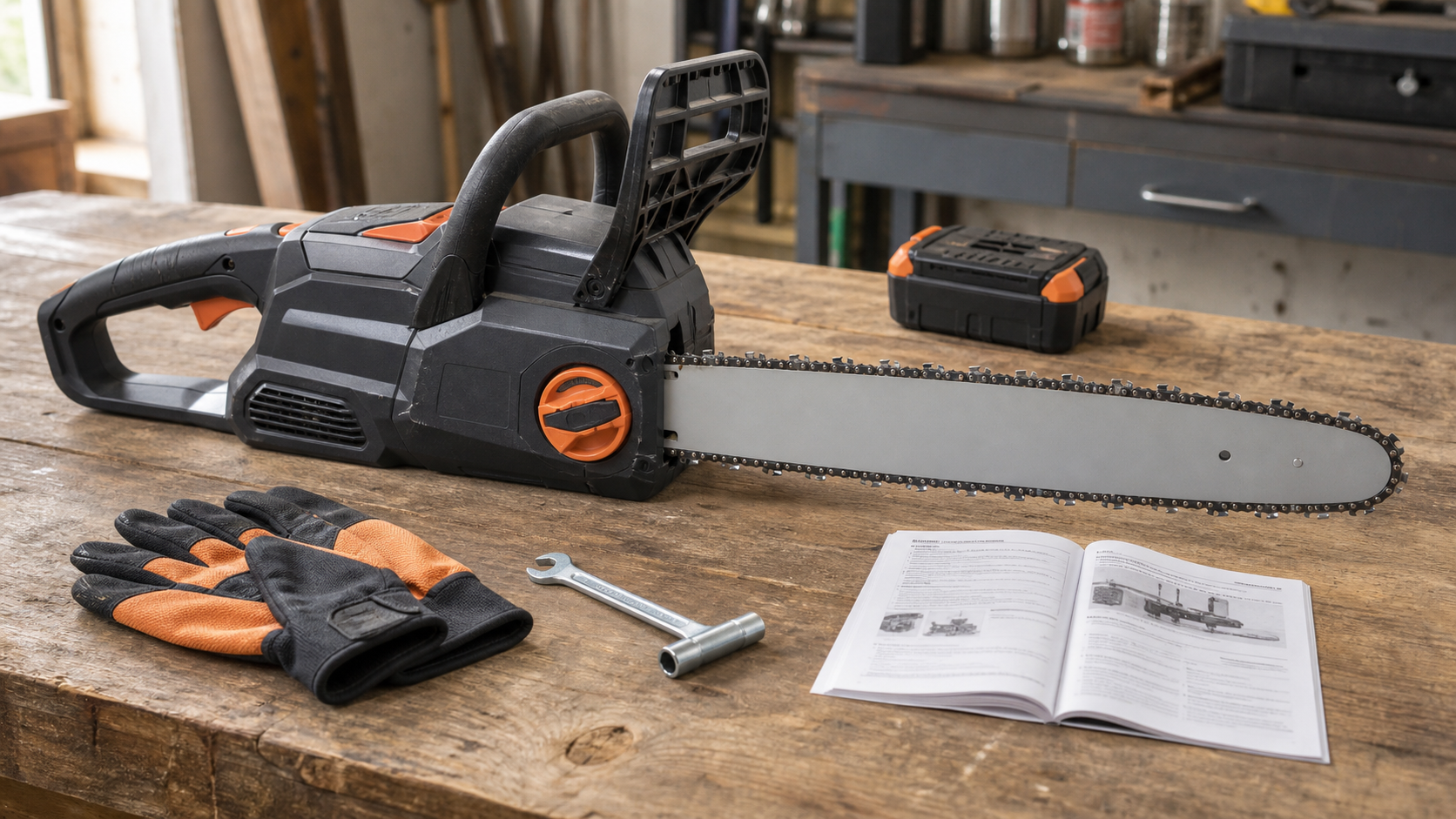
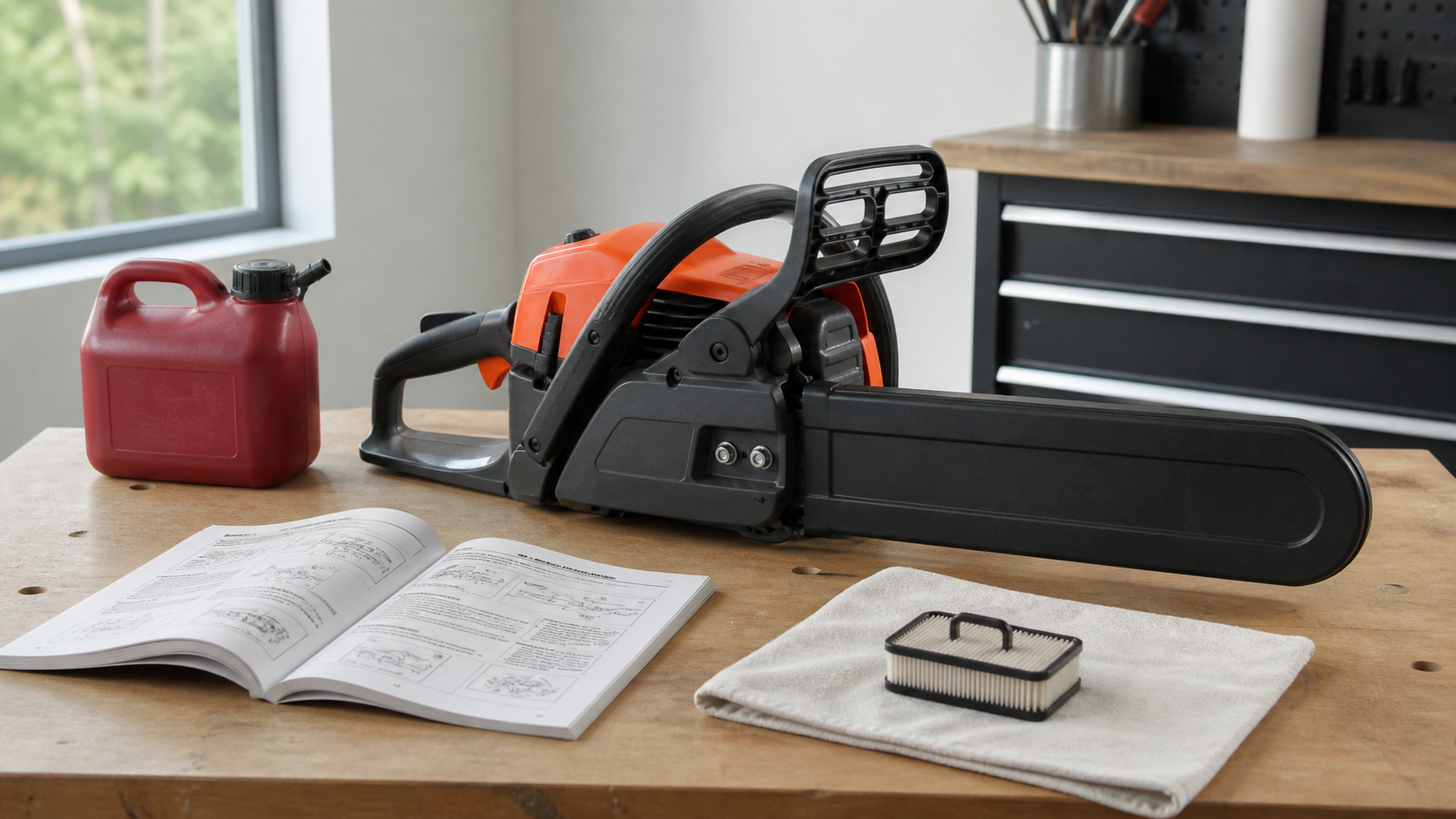
To clean a chainsaw air filter, stop and cool the saw, clean loose debris from the closed cover, then remove and service the filter only by the method in that model’s manual. Replace the filter instead if its media or sealing edge is damaged, its type is uncertain, or the approved cleaning method does not clear it.
Read More arrow_forward
Chainsaw Bar Not Getting Oil? Trace the Oil Path
If your chainsaw bar and chain are not getting oil, stop cutting and do not keep running the chain to test it. Confirm the symptom only with the oil-output check in the exact operator manual, then trace the oil path from the reservoir to the bar before assuming the pump has failed.
A dry-looking outer chain is not a complete diagnosis because much of the lubricant travels inside the bar rails. Better evidence is a missing oil trace during the maker’s approved check, a reservoir level that does not fall during normal use, or heat and wear appearing while the oil path remains dry.
Read More arrow_forward
Chainsaw Chain Won't Move? Diagnose It Powered Down
If the chainsaw motor runs but the chain won’t move, stop applying throttle and switch the saw off. After disabling its power source exactly as the operator manual directs, use the chain’s hand-movement result to separate a brake, tension, installation, or debris problem from a clutch or drive fault that needs service.
This article is for a motor that runs while the chain remains stationary. If the motor will not start, cannot accelerate, or dies when you press the throttle, that is a different diagnostic job. Do not keep revving against a chain that is locked: the useful evidence comes from a cooled, disabled saw.
Read More arrow_forward
Chainsaw Sharpener Maintenance: Diagnose Drift Before Grinding Again
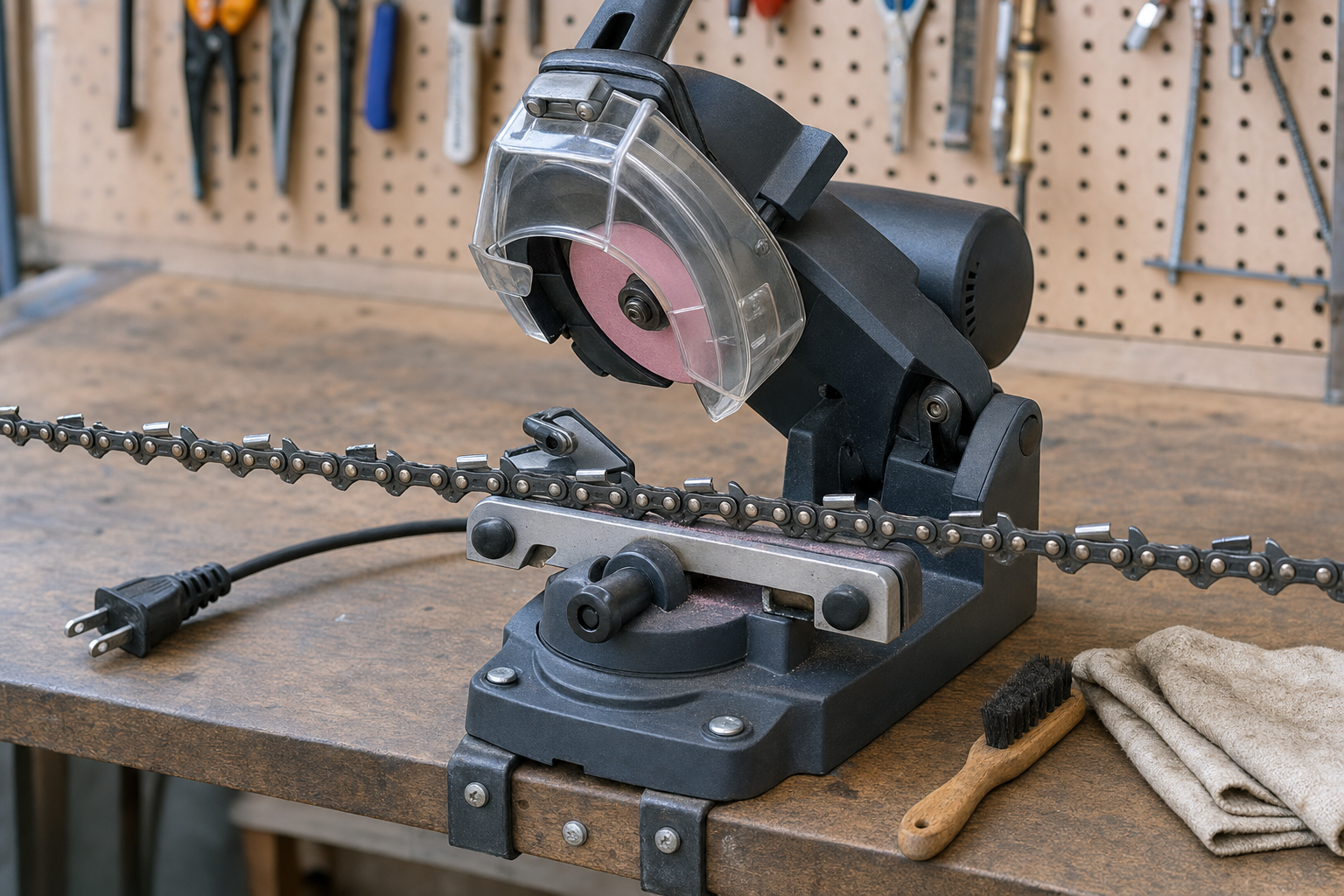
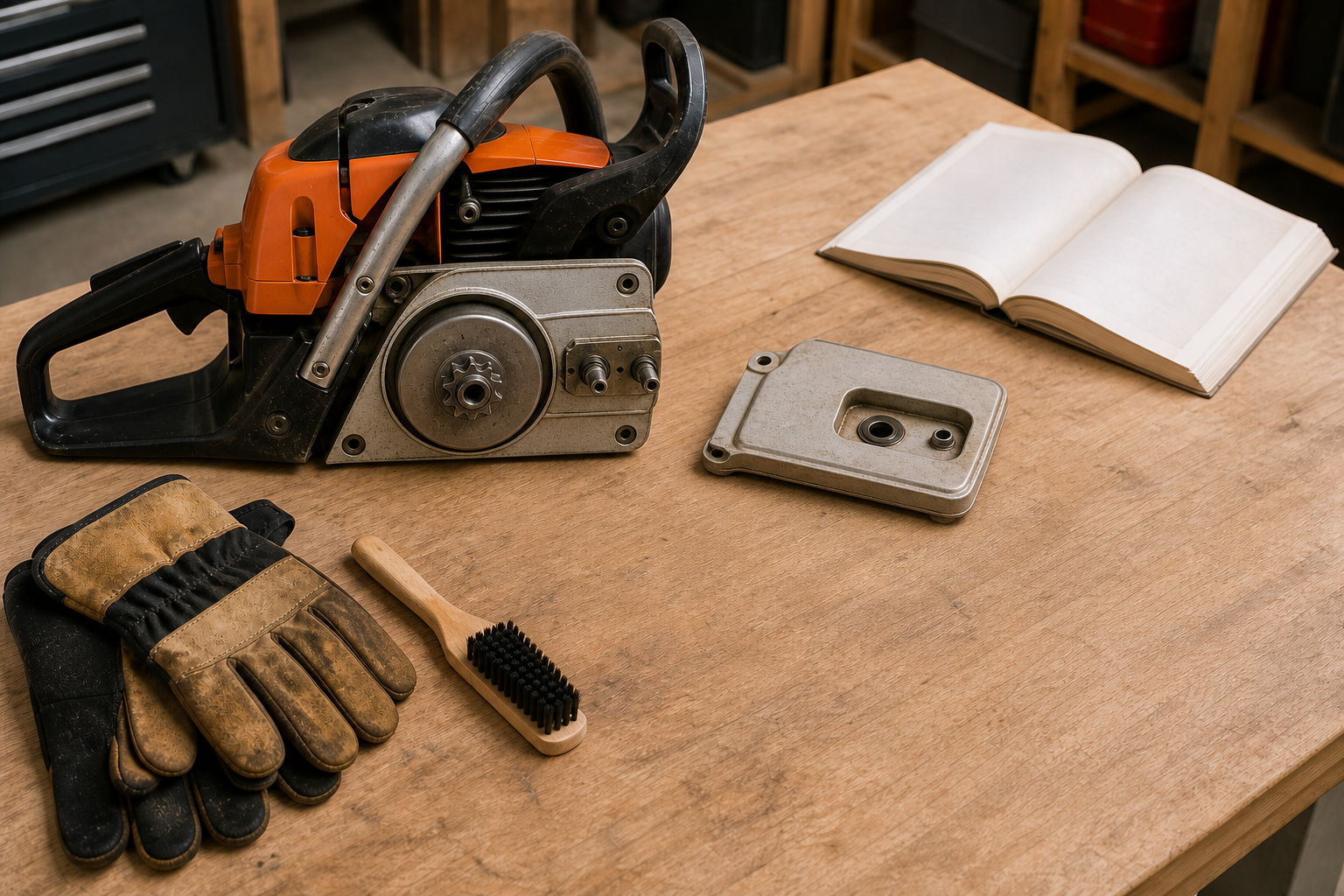
Chainsaw sharpener maintenance starts with cleaning and inspecting the parts that locate the chain: the vise rails, cutter stop, angle plate, depth stop, pivots, and grinding wheel. If the machine has begun producing uneven cutters, heat marks, or changing contact points, disconnect it and find the source of the drift before grinding another full loop.
Read More arrow_forward
How Tight Should a Chainsaw Chain Be? Check 3 Signs
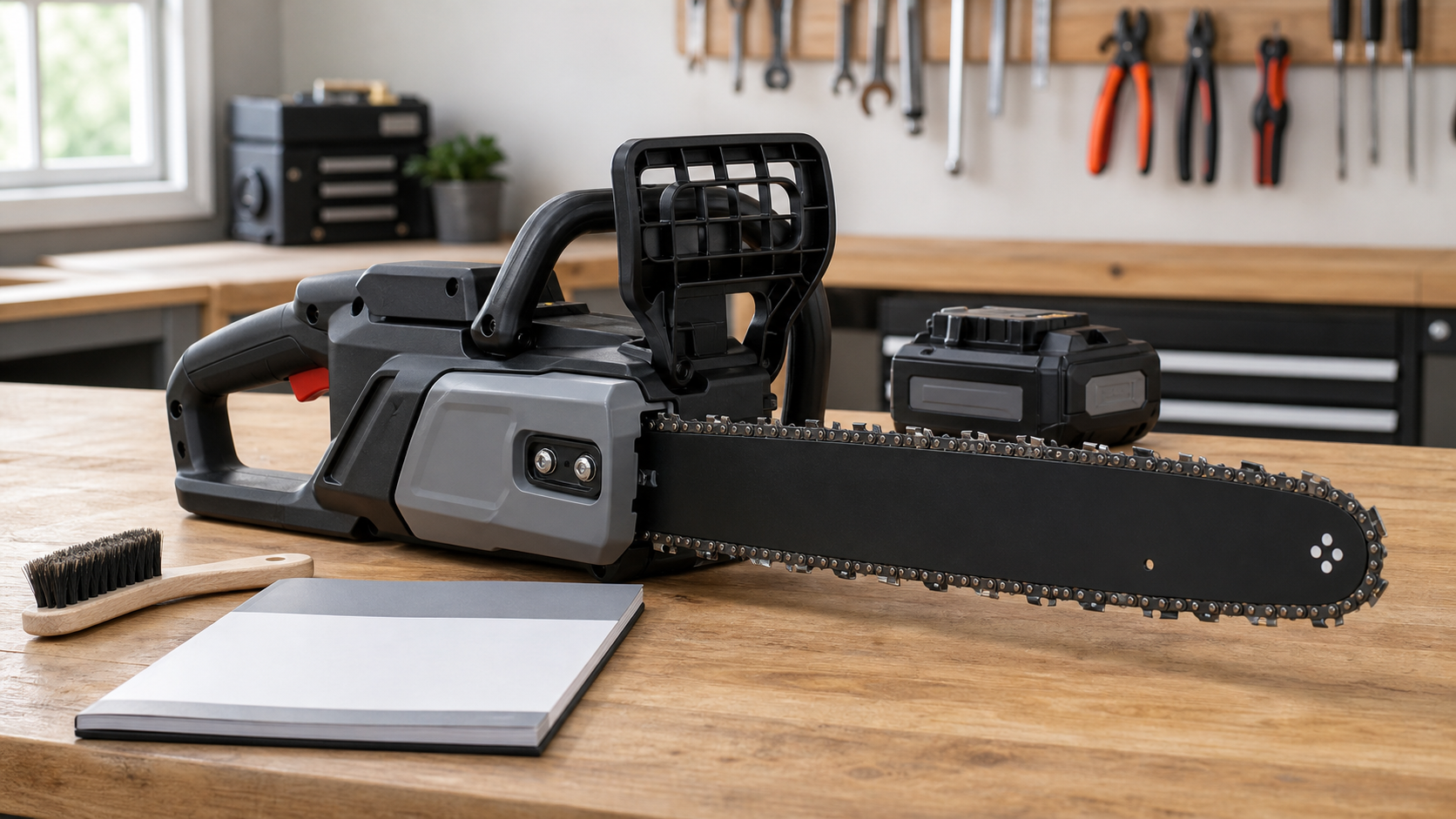
A cold chainsaw chain should sit against the underside of the guide bar without visible sag, move smoothly around the bar when the saw is disabled and the brake is released, and return to the groove after a gentle lift. Those are general checks—not a universal measurement—so use the tensioning sequence and acceptance limits in the manual for your exact saw and cutting attachment.
Read More arrow_forward
Chainsaw Sprocket Wear: Inspect Before Replacing
Chainsaw sprocket wear is a replacement concern when the cleaned drive surface has excessive grooves, damaged or distorted teeth, or wear beyond the limit in the saw manual. Inspect the chain’s drive links and the rest of the cutting attachment at the same time, because recurring slack or rough travel does not identify the sprocket by itself.
Read More arrow_forward
Chainsaw Starts Then Dies? Record the Pattern Before Repair
A petrol chainsaw that starts then dies usually needs its fuel, starting procedure, air path, or fuel-delivery system checked—not another round of random carburetor adjustments. Stop repeated starts, use the exact operator manual, and record when the engine stops; that pattern tells you which owner-level check is worth making.
First, make the saw safe to inspect Let the engine cool. Engage the chain brake, switch the saw off, and work outdoors or in a well-ventilated place away from ignition sources. Fit the bar cover whenever you are not checking the cutting attachment.
Read More arrow_forward
Chainsaw Bar and Chain Maintenance: Clean, Inspect, Decide
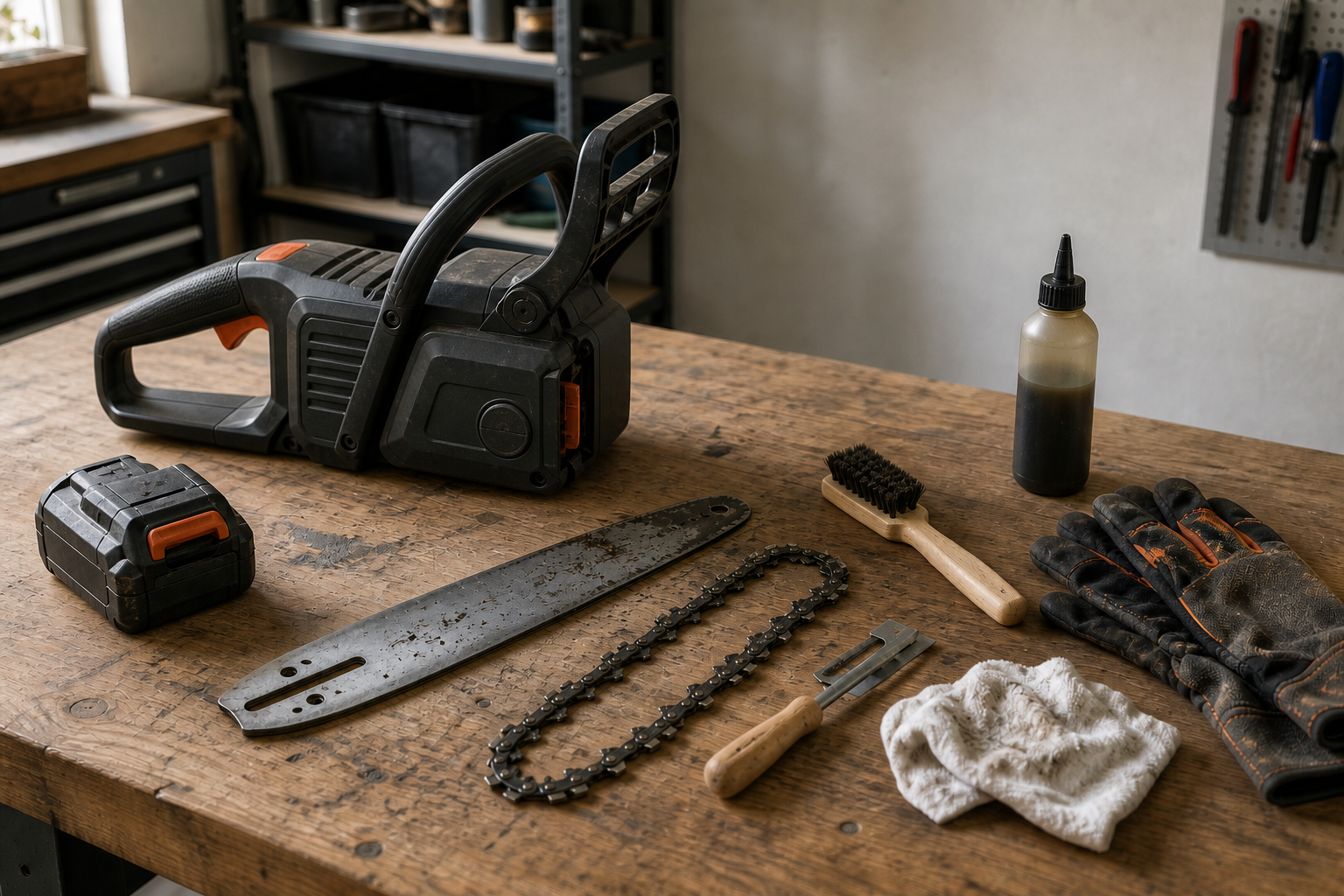
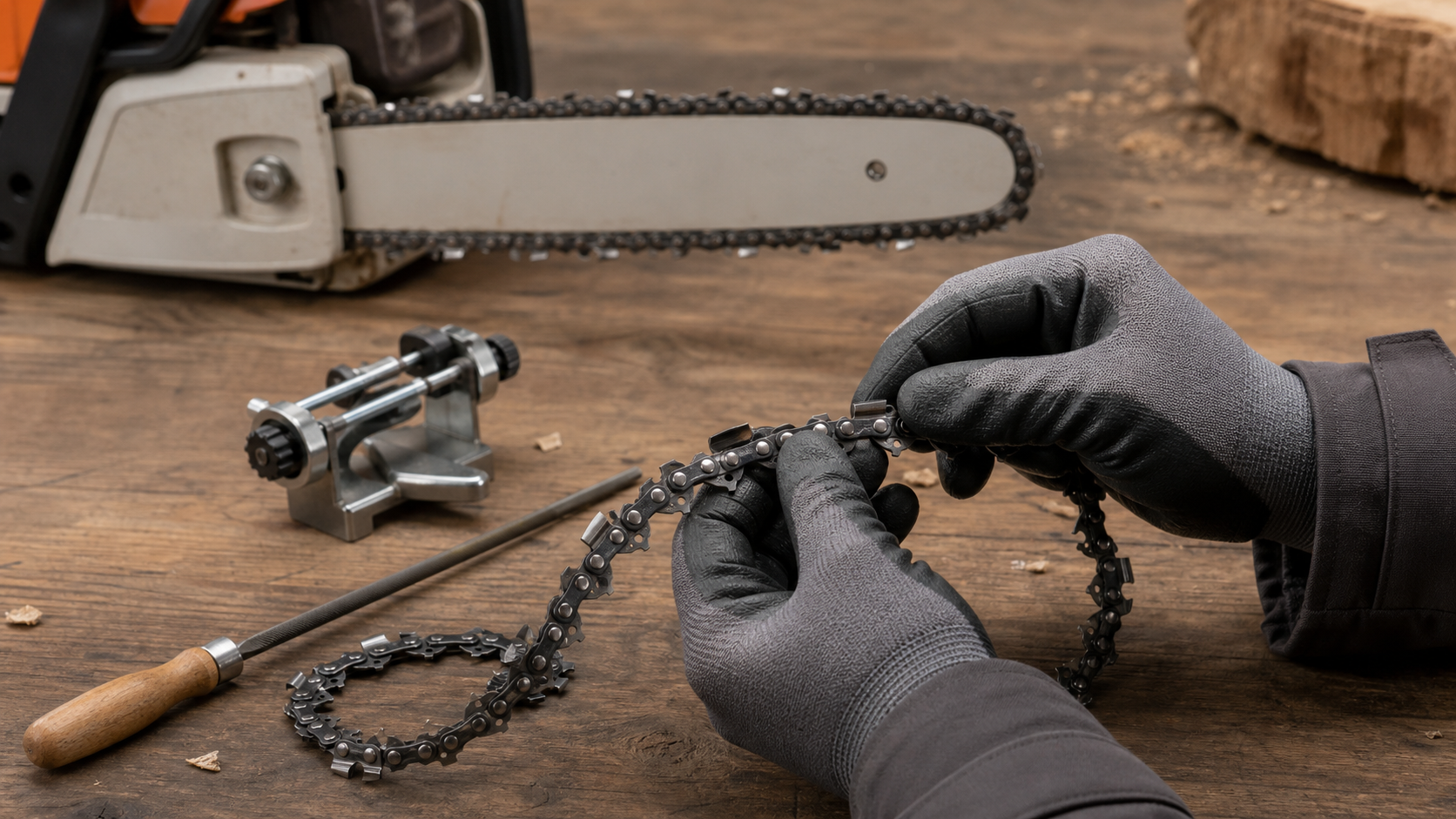
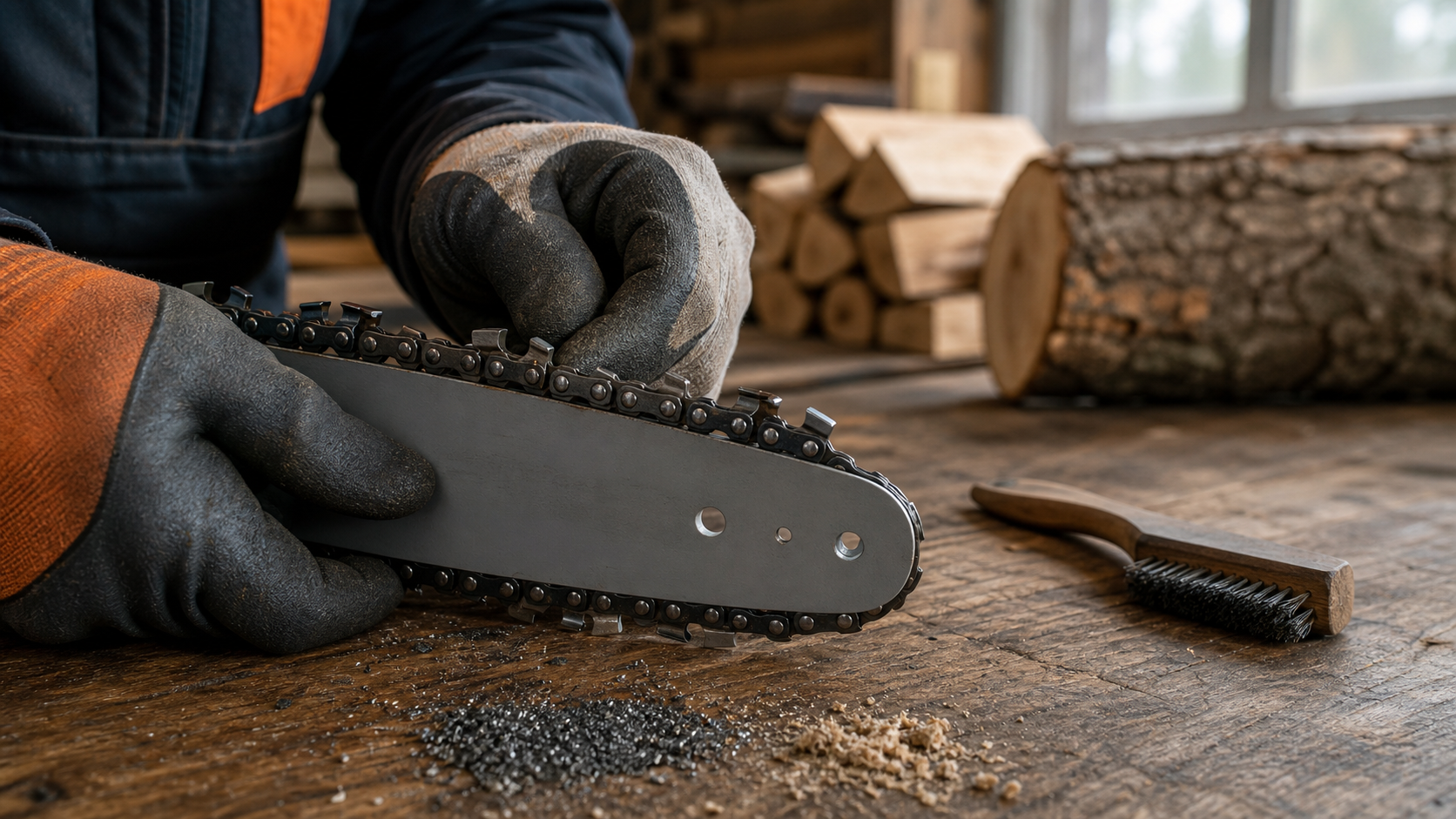
Chainsaw bar and chain maintenance starts by making the saw unable to start, removing the cutting attachment as its manual directs, and cleaning until the wear surfaces are visible. Then use what the clean parts show to choose one action: reassemble, correct lubrication or tension, sharpen a serviceable chain, replace a worn part, or arrange service.
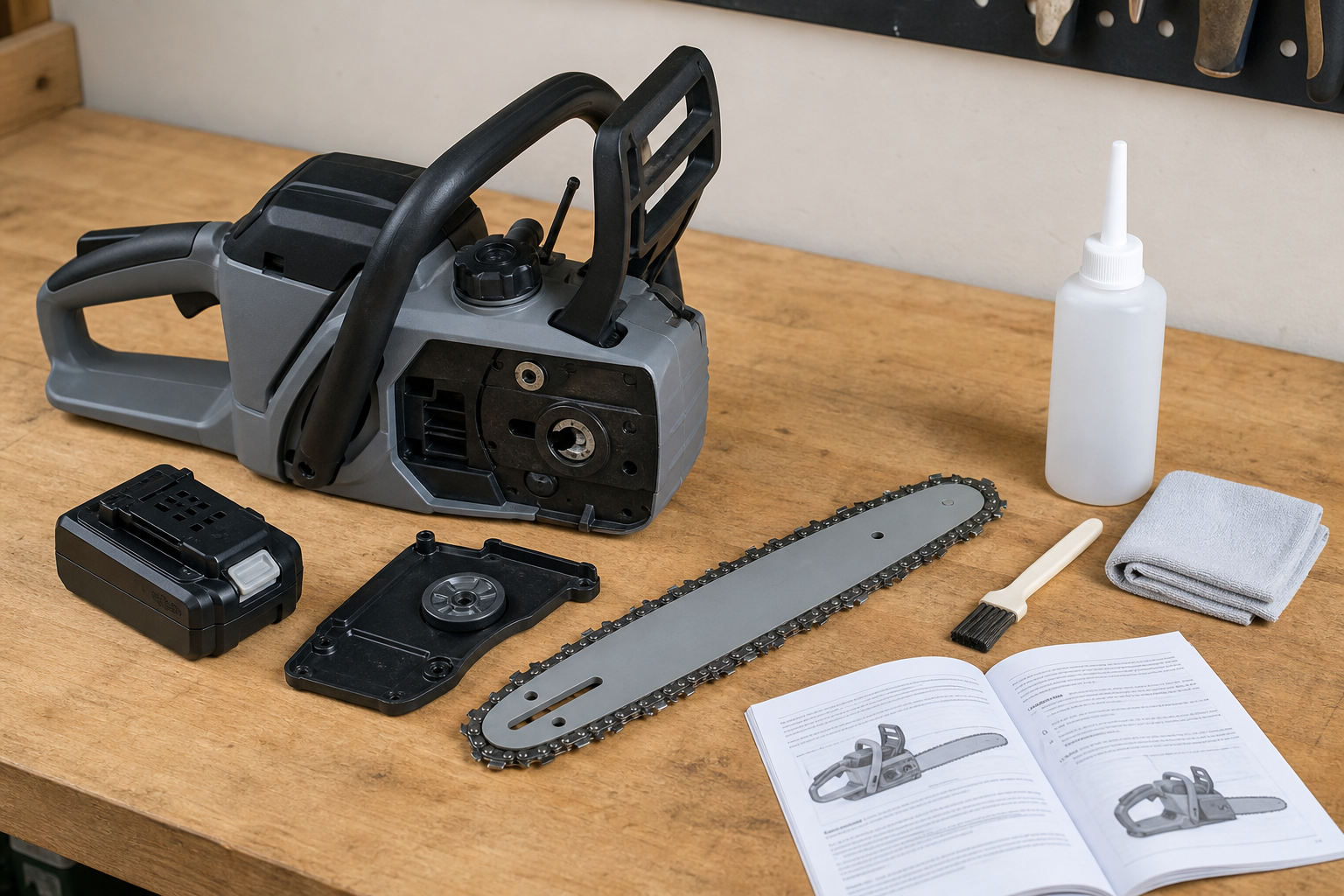
Start with an inspection, not a running test Let the saw cool. Follow its manual to prevent an accidental start: that usually means removing the battery, unplugging the cord, or using the gasoline model’s specified shutdown procedure. Engage the chain brake where the manual calls for it, wear gloves when handling the cutters, and remove the bar and chain only by the model-specific method.
Read More arrow_forward
How Often Should You Sharpen a Chainsaw Chain?
Sharpen a chainsaw chain when its cutting behavior changes—not after an arbitrary number of cuts, fuel tanks, or hours. A chain that produces coarse chips, feeds into sound wood without being forced, and tracks straight may not need filing. Stop and inspect it when the chips turn dusty, feed pressure rises, the cut slows, or the saw starts pulling or vibrating differently.
Read More arrow_forward
Why Does My Chainsaw Chain Dull So Quickly?
A chainsaw chain that dulls quickly is usually touching abrasive material, leaving the sharpener with a weak or incomplete edge, or running with poor lubrication or an incorrect setup. Do not sharpen it again until you identify which one. Repeatedly removing metal may hide the evidence and shorten a chain that was not the original problem.
Start with the last few cuts. Soil on the underside of a log, gritty bark, a stone, or hidden metal can round a fresh edge in seconds. If the cutting path was clean, move to the cutter shape, oil delivery, tension, guide bar, and the chain’s remaining condition.
Read More arrow_forward
When to Replace a Chainsaw Sharpener Grinding Wheel
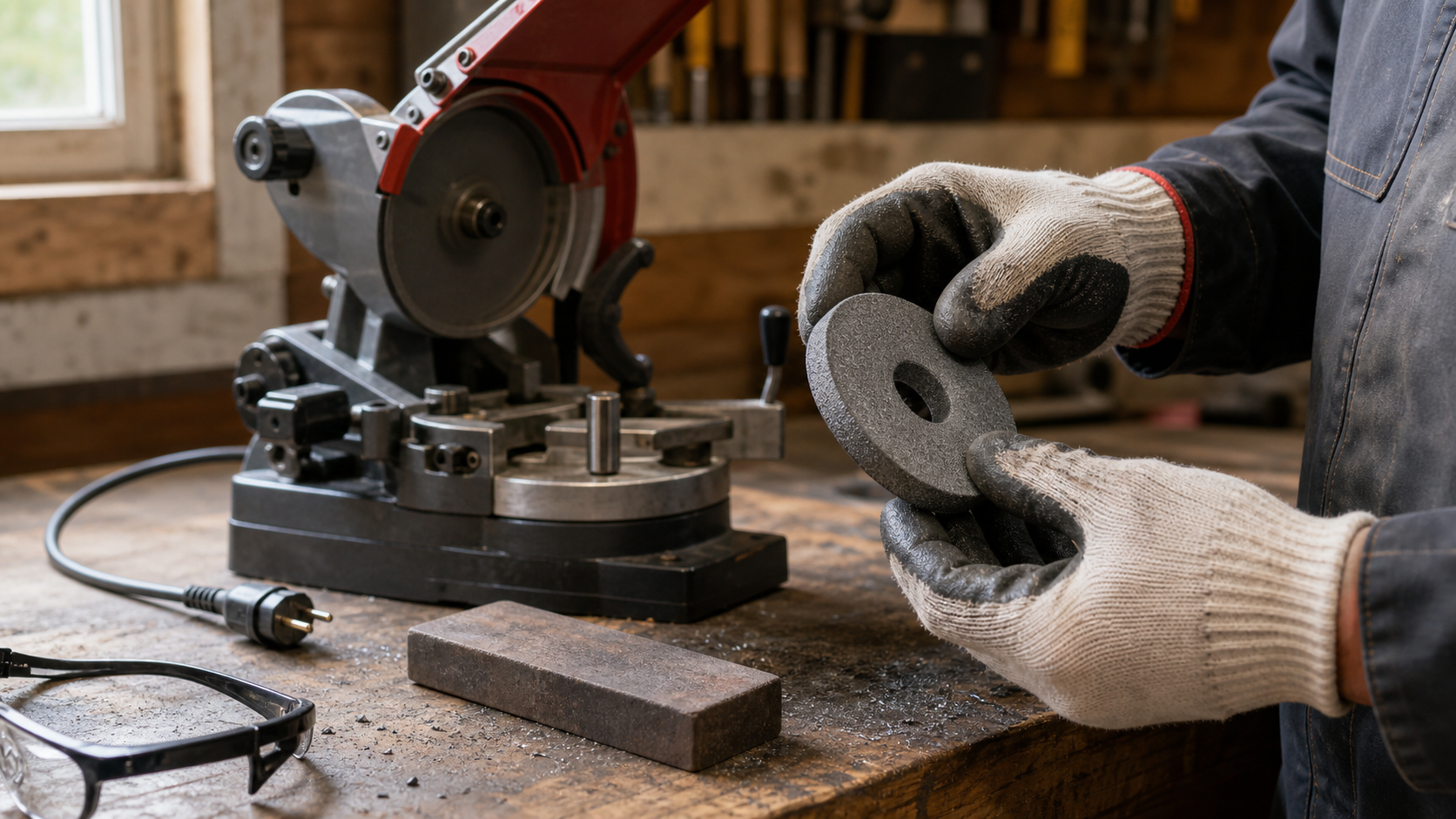
A chainsaw sharpener grinding wheel should be replaced when it is cracked, chipped, wobbling, vibrating abnormally, or too worn to hold the profile required by the grinder manual. A wheel that is merely loaded with metal or slightly out of shape may only need dressing. The distinction matters: dressing exposes fresh abrasive and restores the working edge, but it cannot repair structural damage or recover material that is already gone.