
How To Operate A Gasoline Powered Chainsaw Safely With Protective Gear and PPE | Husqvarna
Operating a gasoline-powered chainsaw can be a rewarding yet challenging task. The power and efficiency of these tools make them essential for tasks ranging from yard maintenance to full-blown logging operations. However, with great power comes great responsibility. Implementing safety measures is crucial to protect yourself and others while operating these machines. This guide breaks down how to operate a gasoline chainsaw safely, focusing on the importance of protective gear and personal protective equipment (PPE).
Understanding Protective Gear
Before you even start your chainsaw, ensuring you are appropriately dressed is vital. Protective gear can significantly reduce the risk of injury.
1. Chainsaw Helmet
A chainsaw helmet is a must-have when operating a chainsaw. It protects your head from falling debris while providing hearing protection and a face shield to guard against flying wood chips.
2. Eye Protection
Even with a helmet equipped with a face shield, wearing safety goggles or glasses is wise. This extra layer of protection is essential to keep debris out of your eyes at all times.
3. Gloves
Chainsaw gloves should be specially designed to resist cuts. Look for gloves made from materials that implement layers to prevent injury from accidental slips.
4. Protective Clothing
Choose chainsaw chaps or pants designed with additional padding to protect your legs. If you accidentally contact the chain, these materials can help prevent severe lacerations.
5. Steel-Toed Boots
Always wear steel-toed boots with slip-resistant soles. They will protect your feet if you accidentally drop the chainsaw while making cuts.
Steps to Safely Operate a Gasoline-Powered Chainsaw
Now that you’re equipped with the right gear, let’s walk through the steps for safely operating your chainsaw.
Step 1: Prepare the Chainsaw
- Before you start your chainsaw, read the manual to understand the specific features and safety information for the model you are using.
- Make sure the chainsaw is in proper working condition. Check the chain tension, oil levels, and ensure the bar and chain are adequately lubricated.
Step 2: Perform Safety Checks
Before heading into your work area, conduct a safety check:
- Make sure your work area is clear of obstacles and any bystanders are at a safe distance.
- Inspect your gear to ensure everything is on correctly and securely.
Step 3: Position Yourself Correctly
When starting your chainsaw, place it on a stable surface. Use your left hand to hold the front handle, and using your right foot, press the back handle down to stabilize the chainsaw. This position will help you maintain control.
Step 4: Start the Chainsaw
- Engage the chain brake before starting.
- Pull the starter rope with a sharp, controlled force. Ensure you keep a firm grip on the handles.
Step 5: Make Your Cuts
- Hold the saw firmly with both hands.
- Maintain control and balance as you make cuts, keeping your body at a safe distance from the chain.
- Use the recommended cutting techniques for both basic felling and limbing.
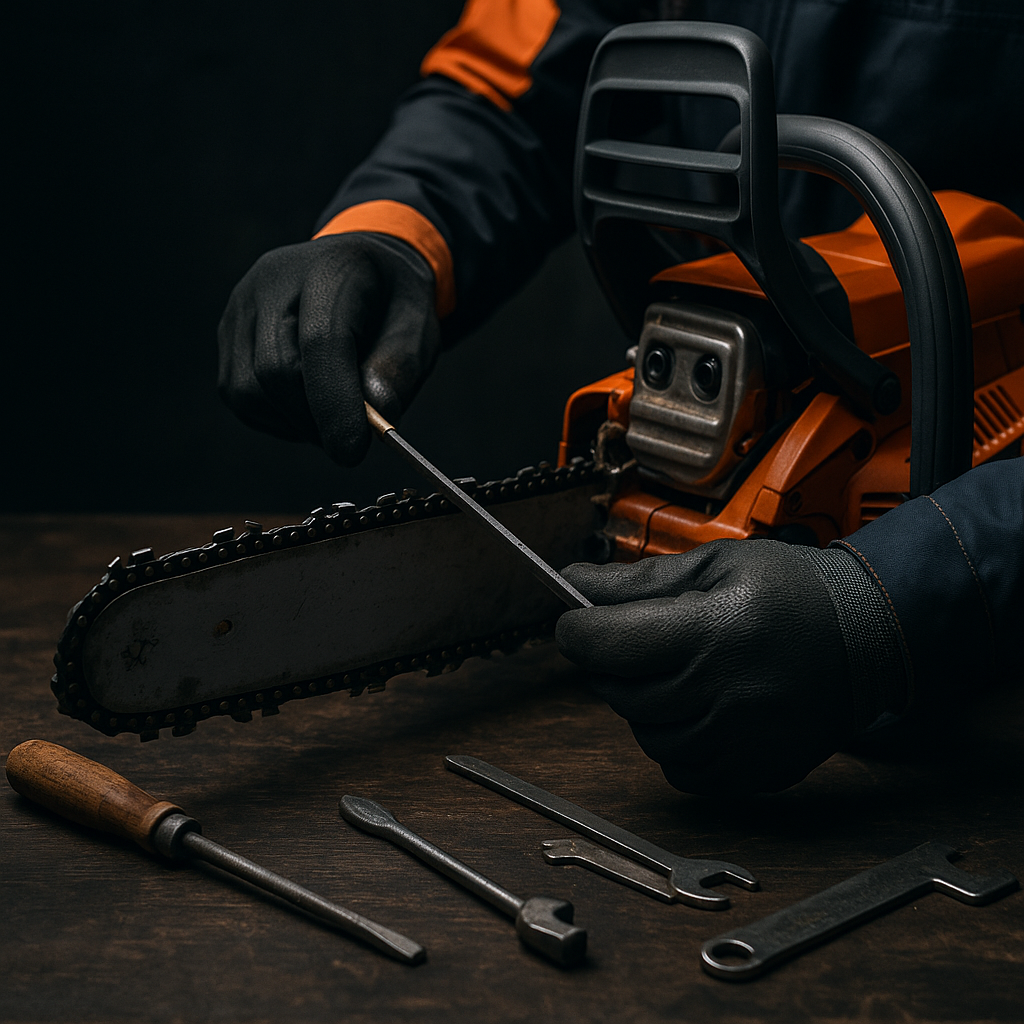
By the way, keeping your tools sharp is essential for peak performance. Check out the professional KonKell Chainsaw Sharpeners to save time and effort.
Step 6: Shut Down Safely
Once you’re finished with your work, turn off the chainsaw and engage the chain brake. Allow the saw to cool before storing it in a safe location.
Conclusion
Operating a gasoline-powered chainsaw can be daunting, but with the proper training, gear, and mindset, it becomes a safe and effective task. Always prioritize safety, remember to wear your PPE, and maintain your tools for optimal performance. Equip yourself with the right knowledge and gear from trusted brands like Husqvarna, and you’ll be ready to take on any woodworking challenge that comes your way!
EQUIP YOURSELF FOR THE JOB
Don't let dull tools slow down your workflow. Experience the precision of KonKell chainsaw sharpeners.
View Sharpening Kits construction