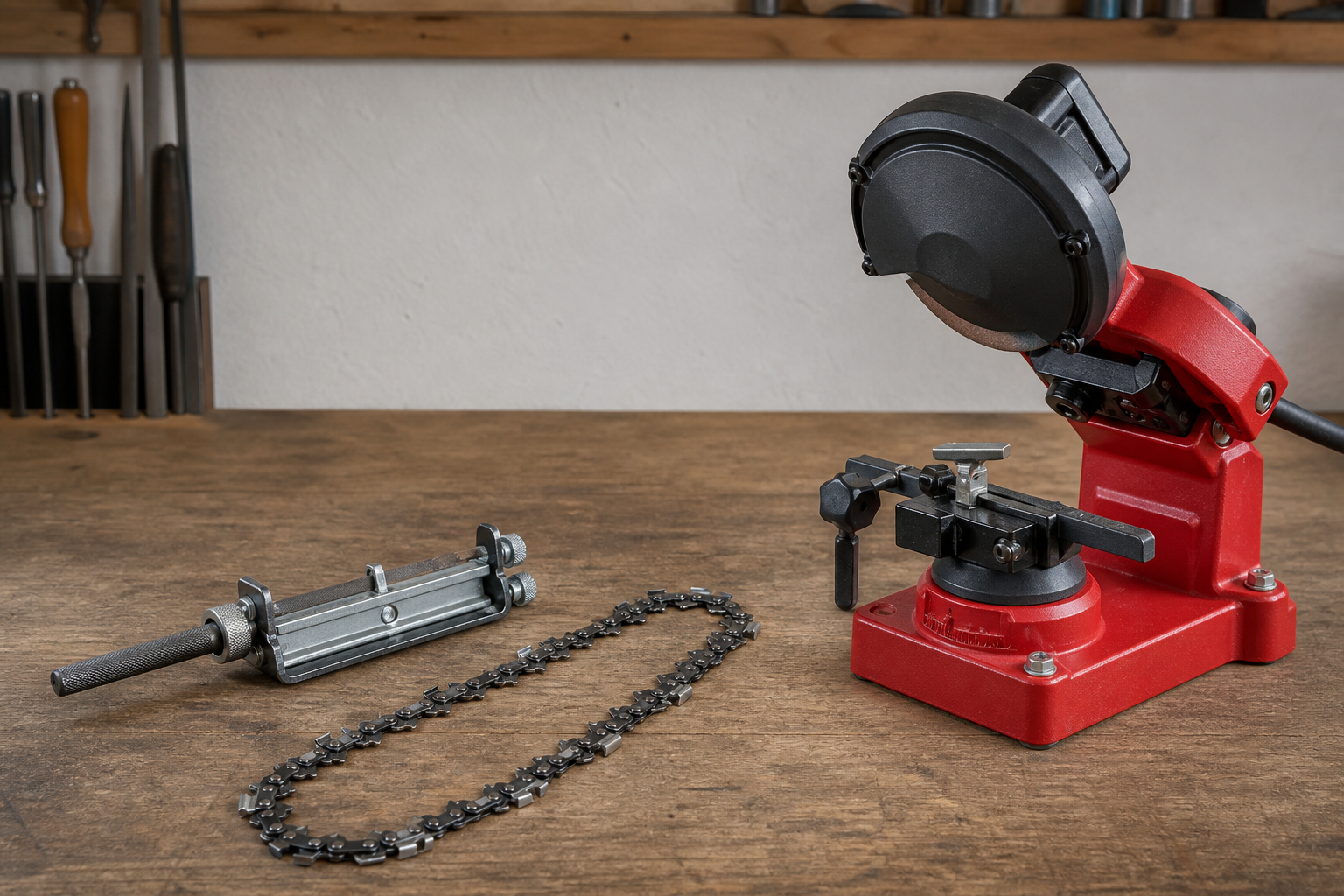
Choose a chainsaw sharpener by matching it to your exact chain first, then to where and how often you sharpen. A guided file suits occasional touch-ups; a mounted electric grinder earns its bench space when you maintain several removable chains or need a repeatable setup after heavier damage.
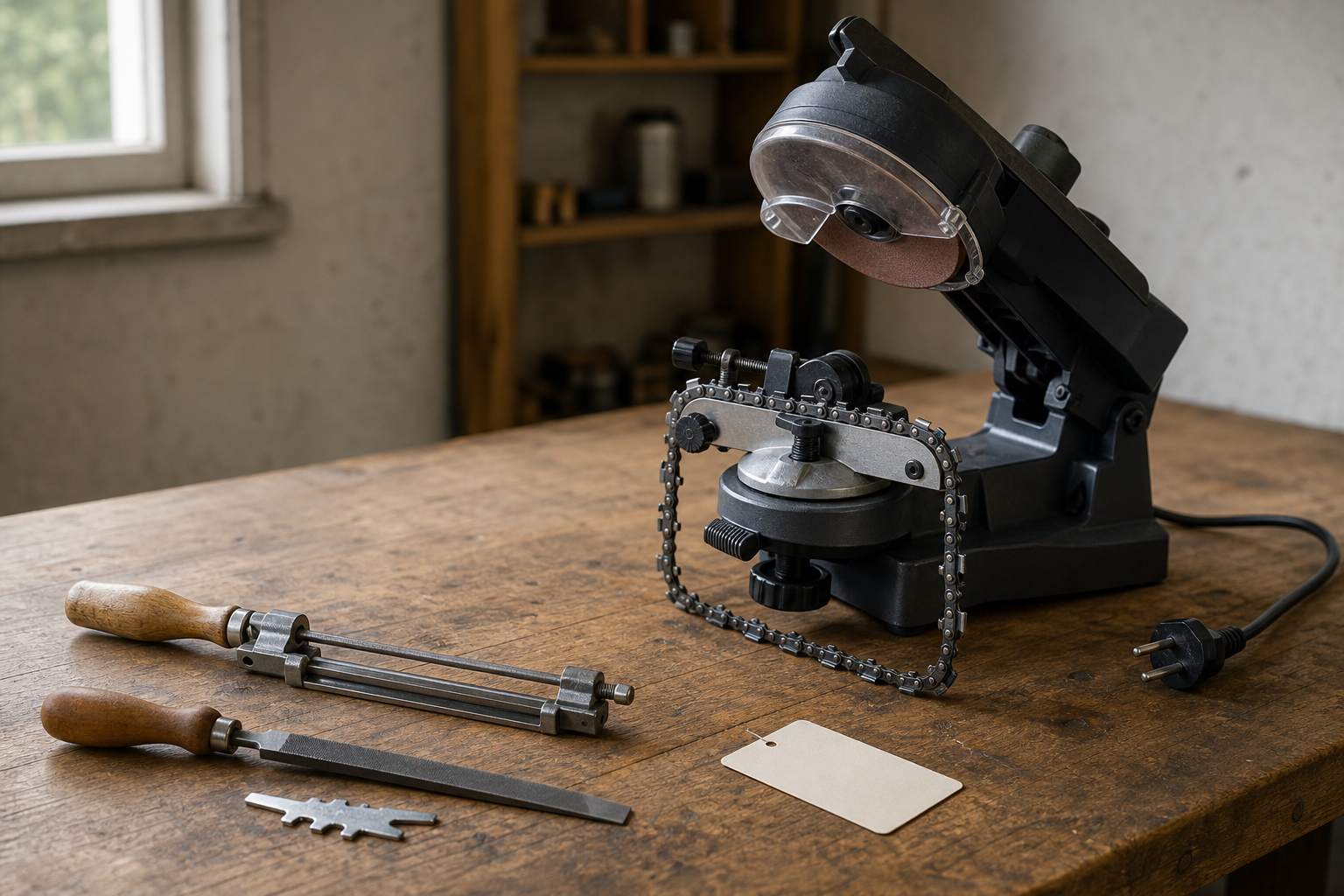
Make a chain card before comparing tools
A sharpener listing is not enough to establish a match. Record the evidence you can verify from the chain package, bar markings, saw manual, or chain manufacturer’s lookup:
- chain maker and chain family or part number;
- pitch;
- gauge and drive-link count, so you do not confuse chain fit with sharpening fit;
- specified round-file diameter or grinding-wheel profile;
- cutter angle and depth-gauge instructions;
- whether the chain has reached a wear mark or has damage that rules out sharpening.
If two sources disagree, stop at the chain identity step. Our chain identification workflow explains which evidence to trust before buying a replacement or a sharpening tool.
Choose by the constraint you cannot work around
Start at the top of this flow. The first “no” usually eliminates more choices than a long feature list.
- Can the tool accept the chain and the specified abrasive? If that cannot be confirmed in both the sharpener information and the chain guidance, reject it.
- Can you secure the work where you sharpen? A round file still needs a stable saw and guide bar. A bench grinder needs a firm mounting surface, light, power, and room to handle a loose chain.
- Are you touching up an edge or correcting uneven wear? A chain-matched guided file is portable and removes metal gradually. A mounted grinder can make repeated settings easier across several cutters, but setup errors are repeated just as efficiently.
- How many chains wait at one time? One lightly dulled chain does not automatically justify a bench tool. Several removable chains, damaged cutters that need controlled correction, or frequent shop work make fixture setup more useful.
- Will you inspect depth gauges separately? Cutter sharpening and depth-gauge maintenance are connected jobs, but not every sharpener handles both. Budget for the chain maker’s specified gauge and flat file when the sharpener does not include that function.
Compare the work, not the marketing label
| Your actual job | Sensible starting type | What to verify before buying | Main limitation |
|---|---|---|---|
| Light touch-ups at the cutting site | Round file with a chain-matched guide | File diameter, guide fit, stable way to hold the bar | Technique and left/right consistency still matter |
| Occasional home maintenance with more angle guidance | Guided manual system | Exact chain variants supported and how depth gauges are handled | Slower when many cutters need correction |
| Several loose chains at a fixed workbench | Mounted electric grinder | Pitch range, wheel/profile match, clamp, readable stops, mounting room | Not a field tool; a poor first setting affects every cutter |
| Uncertain chain identity or damaged links | Dealer or qualified service inspection | Chain identity and whether it remains serviceable | Buying a sharpener does not make a damaged chain repairable |
The dominant search results often sort tools into manual, handheld electric, bar-mounted, and bench-mounted groups. Those labels describe the fixture. They do not confirm that the file, bit, or wheel matches your chain.
Run a first-cutter test before doing the loop
Whichever system you choose, its useful feature is control. With the saw unable to start—or the loose chain secured in the grinder—clean the chain, find and mark a reference cutter, and follow the chain and sharpener instructions for setup.
Work on that one cutter only. Then inspect it in good light:
- Did the abrasive reach the intended cutting surface without contacting other chain parts?
- Is visible damage gone without grinding farther than needed?
- Can the same file position or machine stop be repeated on the opposite-hand cutters?
- Does the cutter remain within its maker’s wear limits?
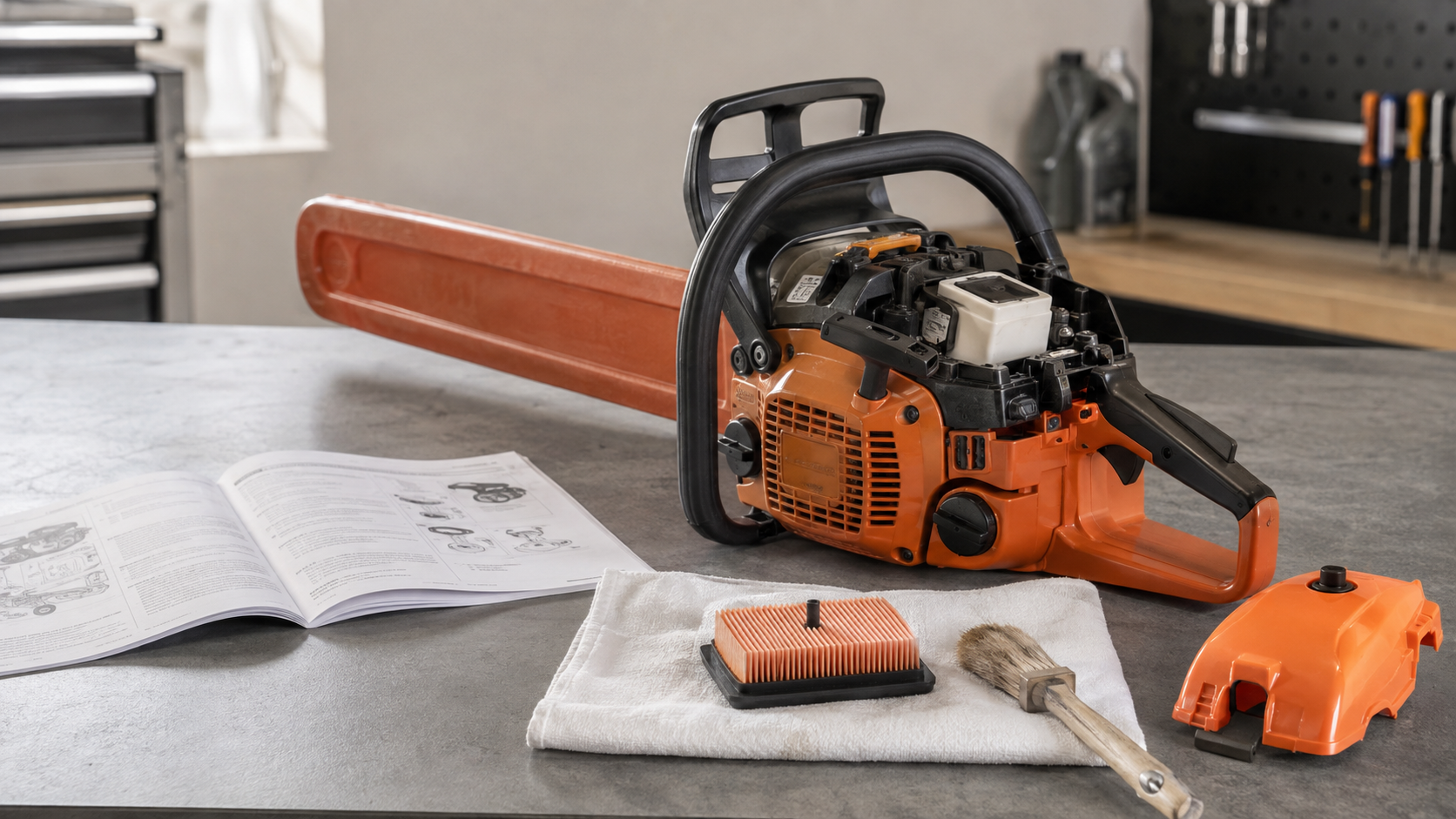
If the answer is unclear, do not copy the setting around the chain. Re-identify the chain, check the abrasive choice, or use a service shop. Our bench sharpener setup checklist covers the controlled first-cutter sequence; the replacement inspection guide covers cracks, broken parts, and wear limits that sharpening cannot reverse.
Where the KonKell bench model fits
For a fixed workshop handling removable chains, the current KonKell 230W Electric Chainsaw Sharpener product page lists a mounted 3000 RPM grinder with a multi-angle turntable, 1/8-inch and 3/16-inch wheels, and stated pitch coverage of 1/4-inch, .325-inch, 3/8-inch, and .404-inch chains. That range makes it a candidate for a multi-chain bench workflow, but pitch alone does not prove wheel-profile or cutter compatibility. Confirm the exact chain and required wheel against its documentation before purchase or setup.
Motor power and wheel speed are not substitutes for a stable clamp, correct abrasive, conservative stop, and first-cutter inspection. If you need to sharpen beside the job rather than at a mounted bench, this model is the wrong format even when the chain pitch appears on the page.