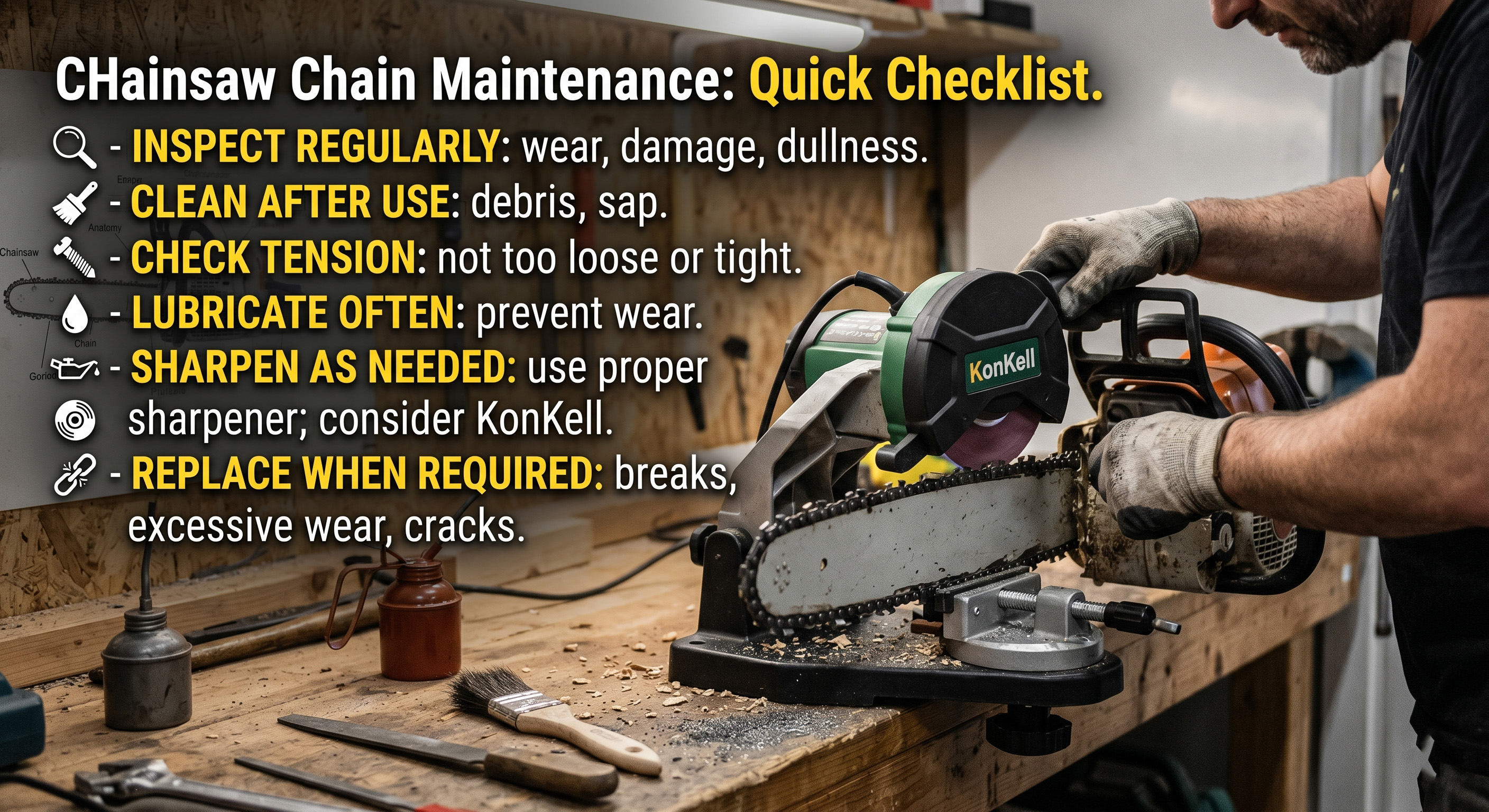
Chainsaw Chain Maintenance Checklist for Safer Cutting
Proper chainsaw chain maintenance is essential for homeowners and light professional users who want to ensure their chainsaw operates efficiently and safely. This guide provides a detailed checklist to help you inspect, clean, tension, lubricate, and determine when to sharpen your chainsaw chain. By following this checklist, you can enhance your chainsaw’s performance while prolonging its lifespan.

Before You Start Cutting: Daily Checks
Before you fire up your chainsaw for the day, follow these daily checks to ensure it’s ready for safe operation:
- Inspect the Chain: Check for any visible damage such as broken links or excessive wear. A damaged chain can pose safety risks.
- Check for Bar Damage: Ensure the guide bar isn’t bent or warped. Inspect the bar for cracks or wear on the nose.
- Tension Check: Verify the chain tension is appropriate. It should be tight enough that it won’t come off but loose enough for easy movement by hand.
- Oil Level Inspection: Ensure that the oil reservoir is filled with the correct type of bar and chain oil for your model.
After-Cut Cleanup
Once you finish cutting, it’s vital to perform a cleanup to maintain your tools and ensure longevity:
- Clean the Chain and Bar: Remove debris, sawdust, and wood chips from the chain and guide bar using a brush or cloth.
- Inspect for Wear: After every use, inspect the chain and guide bar for further signs of wear that wasn’t visible during your initial checks.
- Wash the Chainsaw: If heavily soiled, consider washing the exterior of the chainsaw with water and mild detergent. Make sure to dry it thoroughly afterward.
Service Steps: Chain Tension and Lubrication
Maintaining proper chain tension and lubrication is key to safe and efficient cutting. Here’s how to ensure your chainsaw remains in peak condition:
-
Adjust Chain Tension:
- Loosen the guide bar nuts slightly.
- Adjust the tensioning screw until the chain is snug against the bar but still can be pulled easily by hand.
- Tighten the nuts back securely.
-
Lubricate the Chain:
- Check the automatic oiling function if applicable.
- Manually apply oil if necessary and ensure oil flows evenly across the chain and guide bar during operation.
Warning Signs of Chain Issues
Being vigilant about warning signs can prevent more serious issues down the line:
- Visible Damage: Such as cracks, wear, or dents in the chain.
- Difficulty in Cutting: If the chainsaw struggles or binds during use, it could indicate issues with the chain or bar.
- Excessive Kickback: This can be caused by an improperly maintained chain, leading to safety hazards.
- Unusual Vibrations or Noises: These symptoms may indicate that the chain is not running smoothly or has other underlying issues.
Diagnostic Value: Symptoms & Decision Criteria
To help you assess the condition of your chainsaw chain, here’s a quick reference table:
| Symptom | Possible Issue | Action |
|---|---|---|
| Chain won’t stay tensioned | Worn or broken adjuster | Replace adjuster mechanism |
| Chainsaw pulls to one side | Uneven chain wear | Sharpen or replace chain |
| Sooty residue around the bar | Inadequate lubrication or oil supply | Clean and check oil delivery system |
| Frequent chain breakage | Weak chain links or materials | Replace chain; consider chain compatibility |
Check and address these symptoms immediately to keep your chainsaw functioning effectively.
Final Review Checklist
Before you start using your chainsaw, go through this final checklist to ensure it’s in good shape:
- Inspect chain and bar for damage.
- Verify chain tension and adjust if necessary.
- Check oil level and ensure lubrication system works.
- Clean and maintain chain and guide bar.
- Affix safety gear and review safety procedures.
By following these steps, you can enjoy a safer cutting experience with a well-maintained chainsaw chain.
For those looking to sharpen their chains with precision, consider exploring KonKell Chainsaw Sharpeners for reliable options that make the sharpening process easier.
FAQ
Q1: How often should I perform chainsaw maintenance?
A1: Ideally, you should perform daily checks before use and conduct deeper maintenance after every 5-10 uses.
Q2: What’s the best way to clean my chainsaw chain?
A2: Use a brush or cloth to remove debris after each use, and wash it with mild detergent if heavily soiled.
Q3: How can I tell if my chainsaw chain needs sharpening?
A3: If you notice a decline in cutting performance, increased vibrations, or the appearance of sawdust rather than wood chips, it’s time to sharpen.
Q4: What should I do if my chainsaw chain keeps slipping off?
A4: Check the chain tension, inspect for damage, and ensure that the chain is compatible and properly installed on the guide bar.
Source Note
For further insights into chainsaw performance, check out the supporting video, “Husqvarna T542i XP® and 542i XP®: Husqvarna Battery-Powered Chainsaws Are Better Than Ever” here.
EQUIP YOURSELF FOR THE JOB
Don't let dull tools slow down your workflow. Experience the precision of KonKell chainsaw sharpeners.
View Sharpening Kits construction