If you’re a chainsaw user who’s confused by the intricacies of chain angles, depth gauges, and the markings on the chain itself, you’re not alone. This guide is tailored for both novice and experienced users who want to understand how to properly set up and maintain their chainsaw chain angles for optimal performance. By getting the angles and gauges right, you can ensure sharper cuts, greater efficiency, and reduced wear on your tools.
Understanding Top-Plate Angles
What is a Top-Plate Angle?
The top-plate angle refers to the angle at which the cutting edge of the tooth meets the wood. It is crucial for how the chain bites into and cuts through material. Typically, this angle can vary between different chains and can significantly impact the overall cutting performance.
Why It Matters
A properly set top-plate angle helps in maximizing cutting efficiency and minimizing resistance. An incorrect angle can lead to excessive wear on the chain and the engine, causing the chainsaw to work harder than necessary.
How to Check It
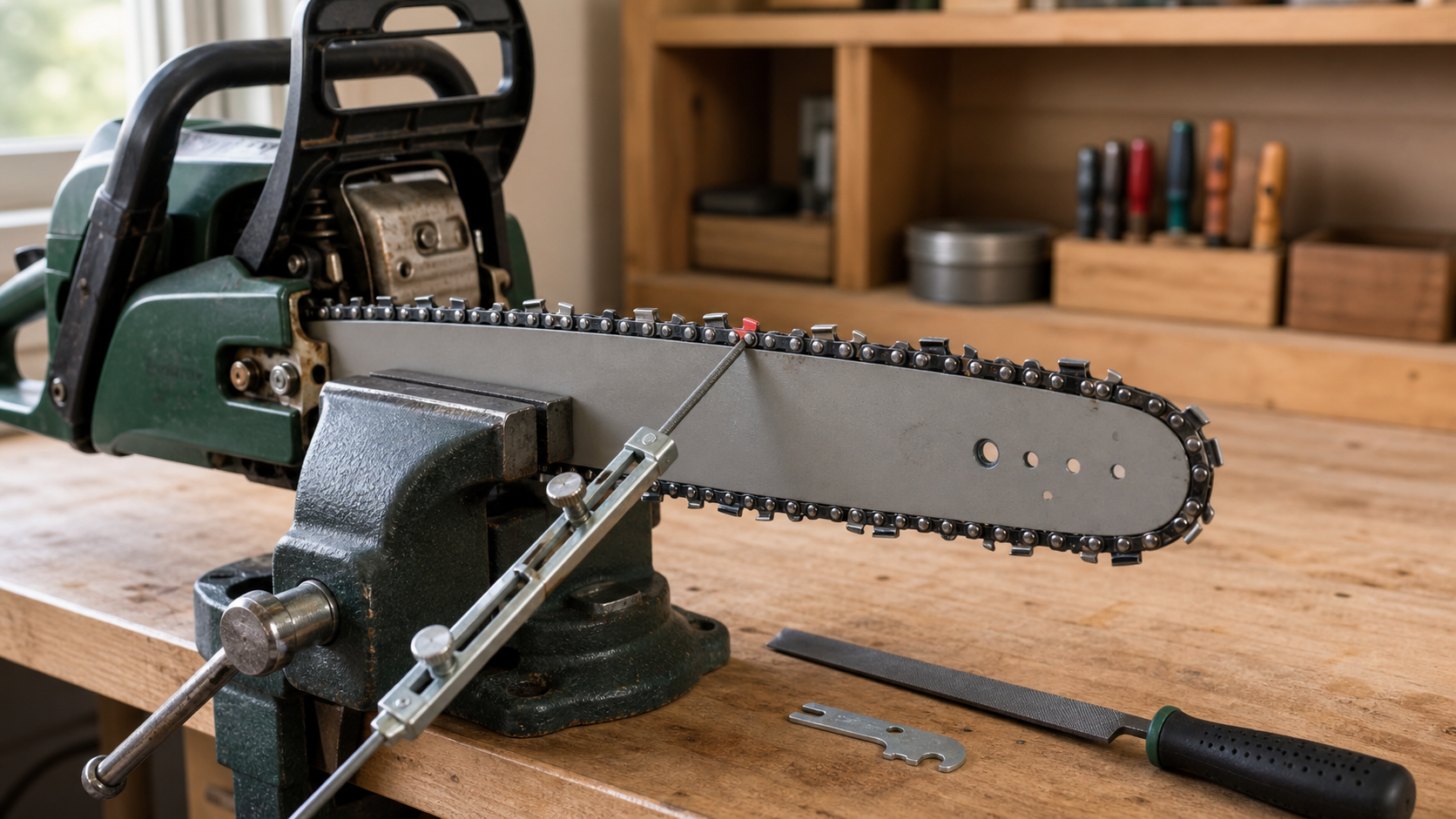
- Use a Filing Guide: Most filing guides come with adjustable angles specific to different chains.
- Observe Markings on the Chain: Many chains will have markings that indicate the correct angle. Always refer to your chainsaw’s manual for specific guidance.
Symptoms of a Bad Setup
- Increased effort required to make cuts.
- Excessive smoke during operation.
- Premature dulling of the chain.
The Importance of Cutter Length Consistency
What is Cutter Length?
Cutter length refers to the length of the cutting tooth itself. Consistent cutter length across the chain ensures a uniform cutting performance.
Why It Matters
Inconsistent cutter lengths can result in uneven cutting, leading to more force needed to guide the saw through the wood. Uneven cut performance not only increases physical strain during use but can also lead to user fatigue.
How to Check It
- Use a tape measure or caliper: Measure the length of several cutters along the chain.
- Compare with the Manufacturer’s Guidelines: Make sure to verify your measurements with your chainsaw manual’s specifications.
Symptoms of Poor Cutter Consistency
- The chain pulls to one side.
- Difficulty maintaining a straight cut.
- Increased wear on the bars and chain.
Understanding Depth Gauges
What are Depth Gauges?
Depth gauges, or rakers, are the small pieces located behind the cutting teeth on a chain. They control how deep the cutter bites into the wood.
Why It Matters
Properly adjusted depth gauges can provide a balanced cutting depth that allows the saw to perform smoothly. If the depth gauge is too high, it may prevent the cutter from making effective contact with the wood, while one that is too low can lead to excessive bite and possible chain damage.
How to Check Depth Gauges
- Use a Filing Tool: Most filing kits come with a depth gauge tool that can easily indicate if the height is correct.
- Refer to the Manual: Always cross-check your finding with the chainsaw’s manual to ensure correct depth gauge settings.

Symptoms of Incorrect Depth Gauge Setup
- A slower cutting speed.
- The chain burns more rapidly.
- Noticeable areas of damage on the chain or wood.
Checking the Chain Manual for Specifications
The Importance of Matching Chain Specs
Every chain has specific manufacturer settings regarding angles, cutter lengths, and depth gauges. Following these specifications closely is essential for maximizing performance and avoiding premature wear.
How to Find the Right Specs
- Check Your Chainsaw Manual: Always start by looking at the manual of your chainsaw for recommended specifications.
- Look at the Chain Markings: Most chains will have engraved markings that offer quick specs.
Cautious Adjustment Workflow
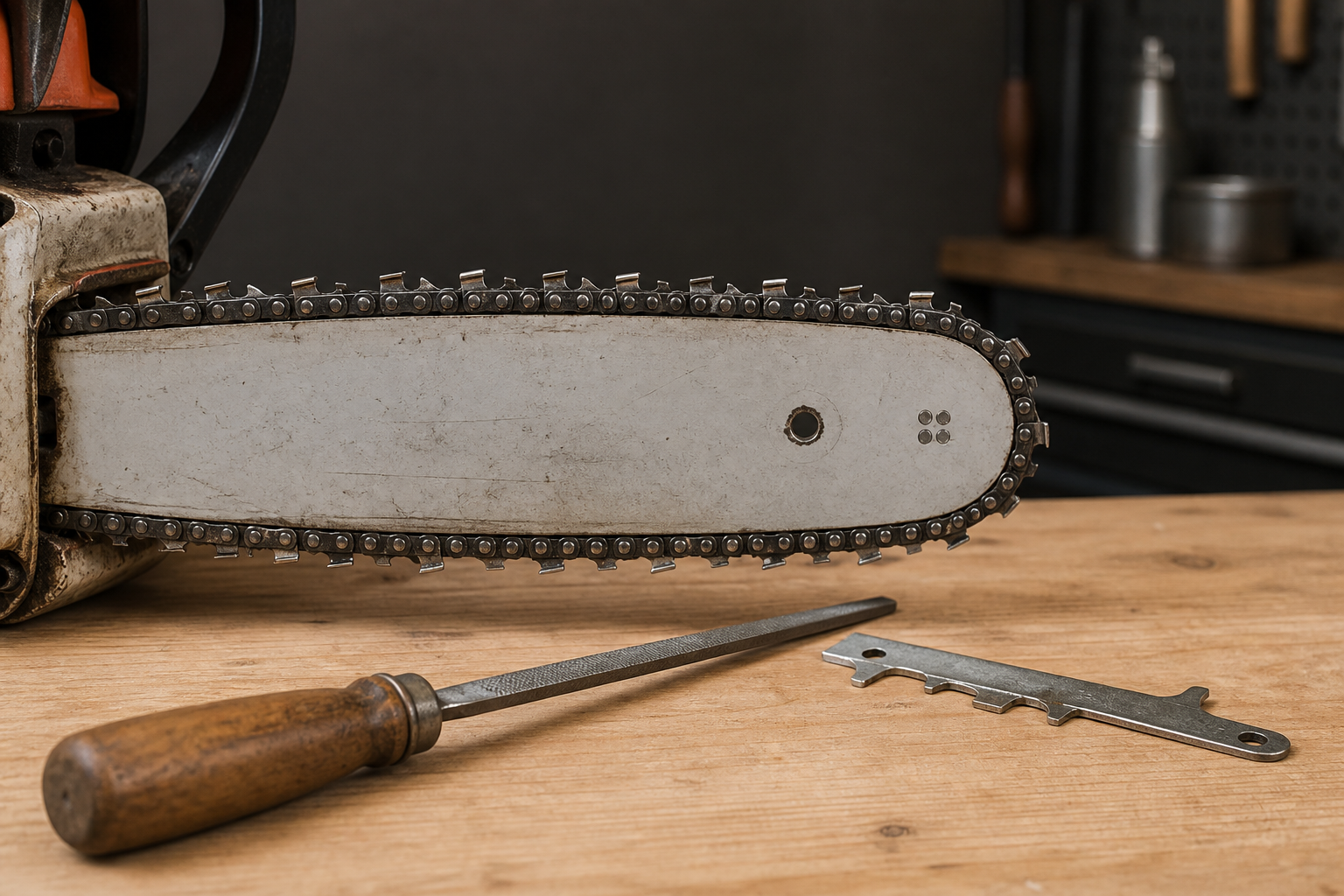
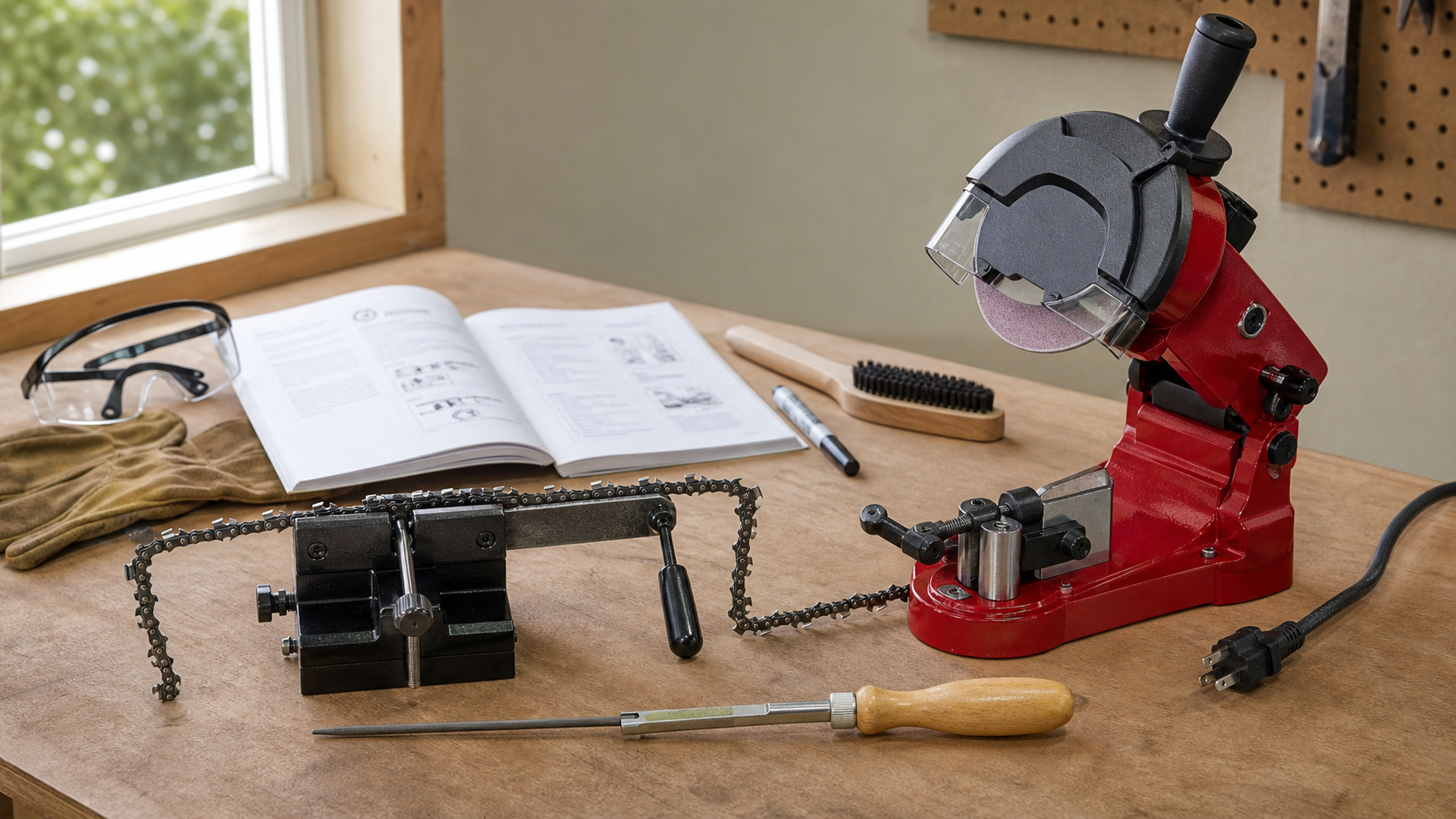
- Gather the necessary tools: files, gauges, rulers, and safety equipment.
- Inspect your chain and record the current settings.
- Compare your findings with the manufacturer’s specs.
- Make necessary adjustments gradually, checking after each change.
- Test cutting performance to evaluate improvements.
FAQs
Q1: How often should I check the chainsaw chain angle?
A1: Regular checks after a set number of cuts or when you notice performance drops are recommended.
Q2: Can I use any sharpening tool for my chainsaw chain?
A2: It’s best to use tools recommended by the manufacturer or those specifically designed for your type of chain.
Q3: What do I do if I find my chain angles are inconsistent?
A3: Measure carefully and adjust to manufacturer specifications for uniform cutting.
Q4: Does the depth gauge affect the chain life?
A4: Yes, correct depth gauge settings can significantly extend the life of your chain by preventing excessive wear.
Source Note
For more visuals and practical demonstrations, you can check out the video titled “Husqvarna T542i XP® and 542i XP®: Husqvarna Battery-Powered Chainsaws” available on YouTube.